Santos upbeat as oil hits new low
Oil prices have slumped to nearly 6-year lows under $US48 ($A51.93) per barrel, hurting the energy sector.
Brent crude for February delivery collapsed to $US47.18 – the lowest since late April 2009 – before recovering slightly to $US47.57. US benchmark West Texas Intermediate (WTI) for February hit a similar trough at $US45.90 a barrel.
The latest heavy falls on Monday came after US investment bank Goldman Sachs cut its price outlook as a glut in global crude supply persists.
“Oil was once more the recipient of dismal data as Goldman Sachs downgraded its forecasts for the commodity, from an average price of $US83 per barrel in 2015 to $US50,” said Spreadex analyst Connor Campbell.

“At this point it’s really just panic selling out of fear of how low oil prices could go,” as the fundamental reasons for the decline are well known, said market analyst Jasper Lawler at CMC Markets UK.
Global oil prices have more than halved since June, dented also by demand jitters arising from the faltering world economy.
In the face of falling prices, South Australian oil and gas giant Santos has taken steps to settle market doubts about its position.
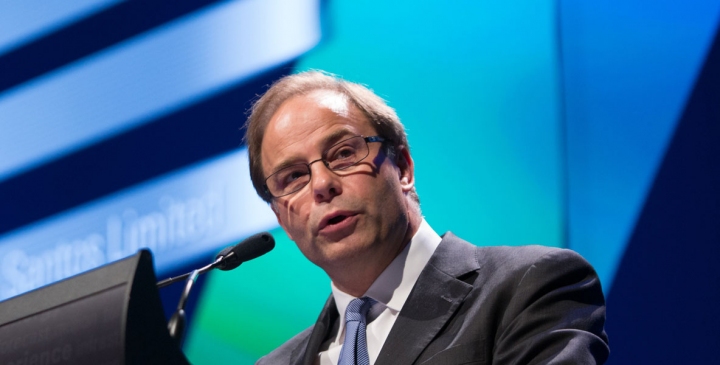
Santos chief executive David Knox told the Australian Financial Review today that the company had the “financial muscle” to make it through to the end of 2015 when its natural gas project in Gladstone becomes cash flow positive.
Knox said the company had $3 billion in liquidity which made sure “our balance sheet is copper-bottomed and will see us through to the end of GLNG (the Gladstone project)”.
Stay informed, daily
He also rejected gloomy assessments of the Santos share valuation, should the price of oil remain low.
Costs in the business were coming down, and he believed that it was possible for Santos to make as much money with oil at $50 a barrel as it would at $100 a barrel.
In December, Santos announced it was slashing capital expenditure by 25 per cent to cope with sliding oil prices.
– with AFP
Want to see more stories from InDaily SA in your Google search results?
- Click here to set InDaily SA as a preferred source.
- Tick the box next to "InDaily SA". That's it.