Budget deficits blows out to $40 billion
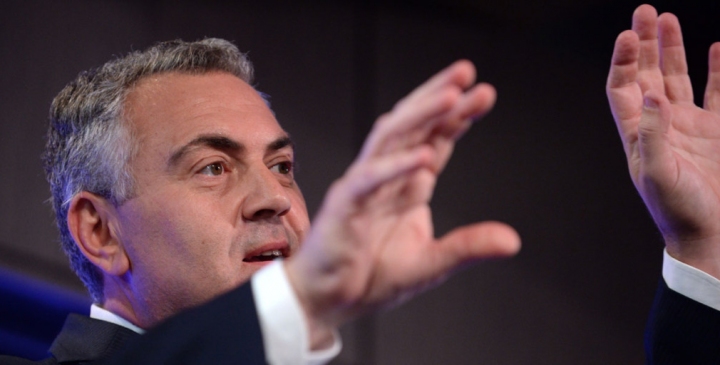
The deficit forecast for the federal budget has blown out to $40.4 billion.
That compares with the $29.8 billion deficit predicted by Treasurer Joe Hockey in May.
The Treasurer released his mid-year economic and fiscal outlook on Monday.
Deficits over the next three financial years are also expected to be larger than forecast in the May budget.
It means the deficit in 2017/18 is now expected to be $11.5 billion rather than the $2.8 billion previous estimated.
The report blames two factors for the $43.7 billion deterioration in the budget over the four-year estimates – the impact of the economy on tax receipts and payments, and the Senate’s handling of May budget measures.
It says a 30 per cent collapse in the iron ore price and weaker-than-expected wage growth has resulted in tax receipts being revised down by $31.6 billion.
You might like

Delays in passing legislation and negotiations with the Senate have cost the budget more than $10.6 billion over the forward estimates, “keeping debt and interest payments higher for longer”.
Despite the deterioration, the budget review says a wafer-thin surplus of 0.8 per cent of GDP is projected for 2019/20.
The update reveals that Australia’s foreign aid budget will be slashed by a further $3.7 billion over the next four years.
The amount Australia spends helping poorer nations will return to levels not seen since the Howard era, when the aid budget was driven by budget surpluses.
The cuts were expected but nonetheless have angered charity groups, who argue it’s the third time foreign aid has been targeted for savings since the Abbott government was elected in September last year.
The aid budget was slashed by $7.6 billion in May – the single biggest source of savings in the coalition’s first budget.
Here are the key numbers:
Stay informed, daily
BUDGET DEFICITS IN $BLN (VS MAY)
2014/15 – 40.4 (29.8)
2015/16 – 31.2 (17.1)
2016/17 – 20.8 (10.6)
2017/18 – 11.5 (2.8)
ECONOMIC FORECASTS 2014/15 IN PCT (VS MAY)
GDP – 2.5 (2.5)
Unemployment – 6.5 (6.25)
CPI – 2.5 (2.25)
Wages – 2.5 (3.0)
(Source: Mid-Year Economic and Fiscal Outlook)
Want to see more stories from InDaily SA in your Google search results?
- Click here to set InDaily SA as a preferred source.
- Tick the box next to "InDaily SA". That's it.