Could this be the death of citrus?
Love your vodka and orange? A slice of lemon in your G&T? Campari with a slice of sweet orange? Cointreau? Curaçao?
Like a hot lemon juice when you’re feverish and gurgling?
Think some well-grown oranges might save your livelihood if you live up the River and can’t make a living from wine grapes?
Get ready. Huanglongbing– The Yellow Dragon – is coming.
Let’s go back a touch. In Yu Kung, a 500BC pæan to Chinese life under the emperor Yu in 2200BC, we find the first reference to citrus, which is tropical and comes from southern China. We have no idea what the first fruit looked like, but by the time Han Yen-Chih took up his calligraphy brush in 1178AD, he could describe 27 different varieties of citrus, all developed from that one original fruit.
Now we enjoy limes both Mexican and Tahitian, mandarins, grapefruit, lemons, kumquats, citrons, pomelos, tangelos and the oranges, from Navel to Curaçao. Bacchus only knows how many hybrids there are, but all came from that single plant in old China. They’ve mutated and been cross-bred and older strains have been bred back in to various generations of hybrids via a confounding web of intrigue, a little like the thoroughbred race horse.
You might like


Which brings me to Professor David Mabberley, a pre-eminent international botanist who came to town last week as a guest of the Botanic Gardens of South Australia to run the most astounding intensive lecture series and workshops called Economic Botany Today – A study of practical ecological biochemistry for humans.
A graduate of both Cambridge and Oxford, Mabberley has a string of credentials like no other plant fiend. His most revered work is Mabberley’s Plant-Book, a 1kg, 1020-page “pocket” book listing and describing more than 24,000 plants and explaining their uses and quirks. You can usually find a copy of this in the Digger’s Bookshop, behind the equally especial Museum of Economic Botany in the Adelaide Botanic Gardens.
Mabberley so loves and reveres that museum, one of only two or three like it left in the world, that he remains a close friend of Tony Kanellos, the keeper and curator, and his boss Stephen Forbes, director of the Gardens. Thus the busy Professor’s presence here.

As Mabberley took us through all the major plant food sources, explaining how they developed and how we spread them around our lonely little blue ball hanging magically but very lonesome over in this stretch of the Milky Way, he wove a tapestry of intrigue and bedazzlement, always leaving us wondering about how vulnerable humans have become through our obsession with training and developing food plants to suit us: homogenising and homologating them so they are easier to grow, transport and sell.
The keystone of this little-considered extravagance is its, and our, weakest point: in our genetic purging and hybridising in search of convenience and profit, we make ourselves and our essential crops peculiarly susceptible to hybrid diseases.
Stay informed, daily
Eventually, at the end of two dumbfounding days, he brought us to the last lecture: Tropical fruits. This included all the citrus, their common roots and their incessant travels. And then to the Yellow Dragon Disease, huanglongbing, also called pinyin, citrus greening disease or HLB.
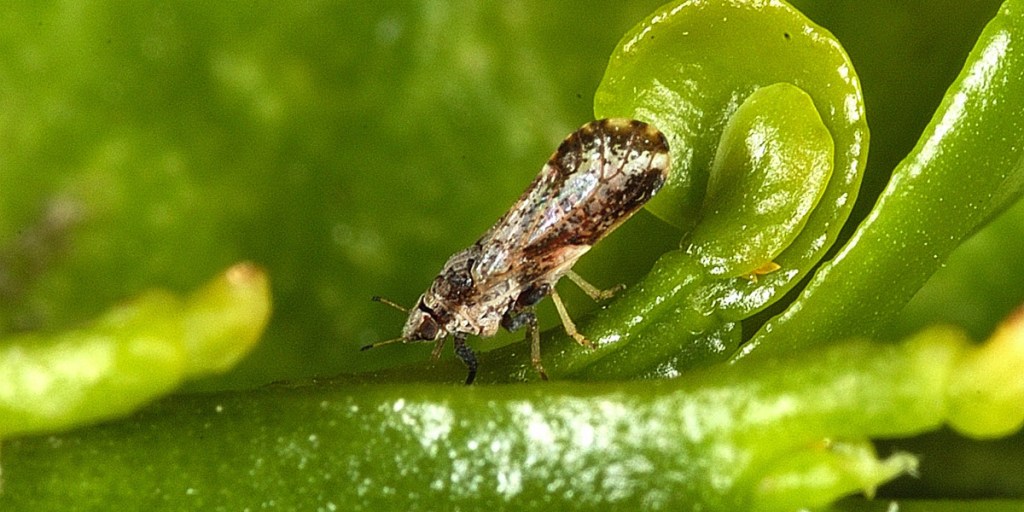
When it hits, this disease is so deadly to the citrus tree that it dies before there’s much chance to investigate it or attempt to fix it. The blight was first spotted in China in 1943; Mabberley believes it came from a gene that jumped into a bacterium, Candidatus liberibacter, which is spread by a bug, the Asian citrus psyllid, Diaphorina citri, and by grafting.
The Yellow Dragon kills the plant quickly and efficiently by interfering with its phloem, its blood. Leaves mottle and yellow then fall off, while the twigs look like they have die-back and the fruit greens and turns bitter and next thing you know your tree is one dead parrot. Deceased.
This scourge is now in every major citrus-growing region on Earth, except Australia. It is in New Guinea, waiting for the right wind. It is destroying the orchards of Florida and California to the extent that the OJ-addicted US is beginning to be dependent on South America for its fruit. But the Dragon’s there, too. It’s all through South-East Asia, India, the Middle East, Europe and the Americas.
Put very simply, it’s everywhere but here.
Great scientists like Mabberley are scrambling to discover a remedy, but to no avail. They rue the fact that there is no example of the source cultivar of citrus extant in China, preventing the opportunity to start the complex web of citrus afresh. We dudded.
Of course, this is a delicious public relations temptation for gene manipulators like the omnipresent (agricultural company) Monsanto. Whether such interferist plant fabricators have a solution is arguable; if they do, they’re waiting till the world realises how close it is to witnessing the death of all citrus, at which point the public relations types will have a redemptive field day, saving the vodka and orange from the vicious Yellow Dragon. In the interests of the shareholders, of course.
Love that citrus while you’ve got it. Riverland, get ready … and you thought wine grapes were tricky.
Want to see more stories from InDaily SA in your Google search results?
- Click here to set InDaily SA as a preferred source.
- Tick the box next to "InDaily SA". That's it.