The Australian dollar is staying near its two-week highs, as a stable interest rate outlook helps keep the currency well supported.
At midday on Wednesday, the local unit was trading at 88.16 US cents, up from 87.72 cents on Tuesday.
Early on Wednesday morning, it peaked at 88.34 US cents, its highest level since September 25.
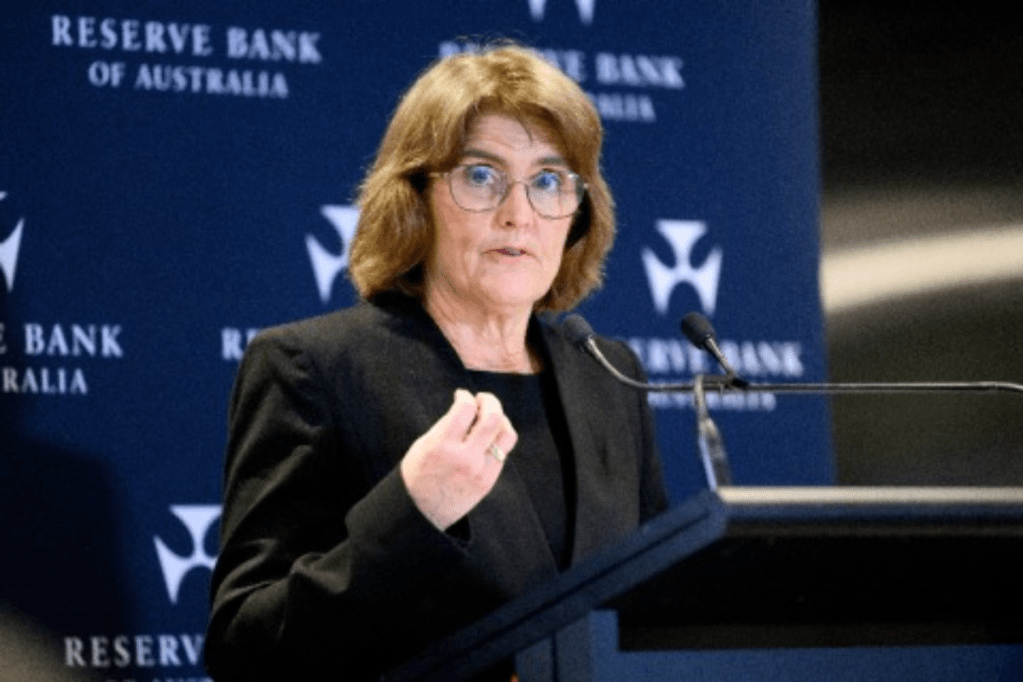
The Reserve Bank, after its board meeting on Tuesday, maintained its stance that its interest rate would remain on hold for some time to come.
Western Union Business Solutions currency strategist Steven Dooley said the Australian dollar had proven resilient against significant falls on Australian, US and European share markets.
The falls came after the International Monetary Fund lowered its global economic growth forecasts for 2014.
“Typically, over the last 10 years, a selldown in the Dow Jones Index would have resulted in a much weaker Australian dollar, but we’re definitely in a different environment at the moment,” he said.
“It just goes back to the fact that the only theme that markets care about at the moment is the US dollar and it’s being traded almost like a risk currency now.
You might like

“So, during times of positivity, the US dollar goes up; during times of gloom the US dollar goes down.”
Mr Dooley said markets were waiting for the release of the minutes of the Federal Reserve’s most recent meeting, which are due out early on Thursday morning, Australian time.
“It will be interesting if they add any colour to their projections that their interest rates could be somewhere between 1.2 per cent and 1.5 per cent at the end of 2015,” Mr Dooley said.
Australian jobs figures for September, due out late on Thursday morning, are expected to show a fall in the number of people employed after an outsized gain of 121,000 in August.
The Australian share market has improved a little from its poor start but is still trading lower, after a sharp fall on markets in the United States and Europe overnight.
The market slide was generated partly by an International Monetary Fund report that lowered its global economic growth forecasts for 2014.
Also, the German economy ministry said industrial output in Europe’s largest economy sank by 4.0 per cent in August.
Managing partner at 100 Doors, Peter Esho, said poor offshore leads had affected the Australian bourse on Wednesday.
“The IMF downgraded global growth. The data coming out of Europe is no good, and commodity prices are heading lower,” Mr Esho said.
“So, that all combined is pulling down our market.”
Stay informed, daily
Mr Esho said commodity prices would have to lift if the Australian market were to show some sustained improvement, or interest rates would have to be cut.
“If neither of those two occurs, I think our market is still caught in a downward trend,” he said.
In the resources stocks at 1200 AEDT, miner Rio Tinto had lost 92 cents to $59.15 after Swiss-based miner Glencore said it had abandoned its takeover bid, at least for now.
BHP Billiton was down 65 cents at $32.59, and iron ore miner Fortescue Metals had dipped two cents to $3.42.
Among the big four banks, Commonwealth Bank fell 63 cents to $75.14, National Australia Bank dumped 18 cents to $32.20, ANZ reversed 21 cents to $31.30, and Westpac backtracked six cents to $32.36.
Telstra lost three cents to $5.36.
Blood products and vaccines provider CSL was off 32 cents at $72.96 after it said it would spend $210 million on expanding its Melbourne plasma manufacturing plant.
KEY FACTS
* At 1204 AEDT On Wednesday, the benchmark S&P/ASX200 index was down 46.1 points, or 0.87 per cent, at 5,238.1 points.
* The broader All Ordinaries index was down 45.9 points, or 0.87 per cent, at 5,238.9 points.
* The December share price index futures contract was 32 points lower at 5,226 points, with 18,445 contracts traded.
* National turnover was 641.2 million securities worth $1.49 billion.
Want to see more stories from InDaily SA in your Google search results?
- Click here to set InDaily SA as a preferred source.
- Tick the box next to "InDaily SA". That's it.