Messages for SA in Stevens’ assessment
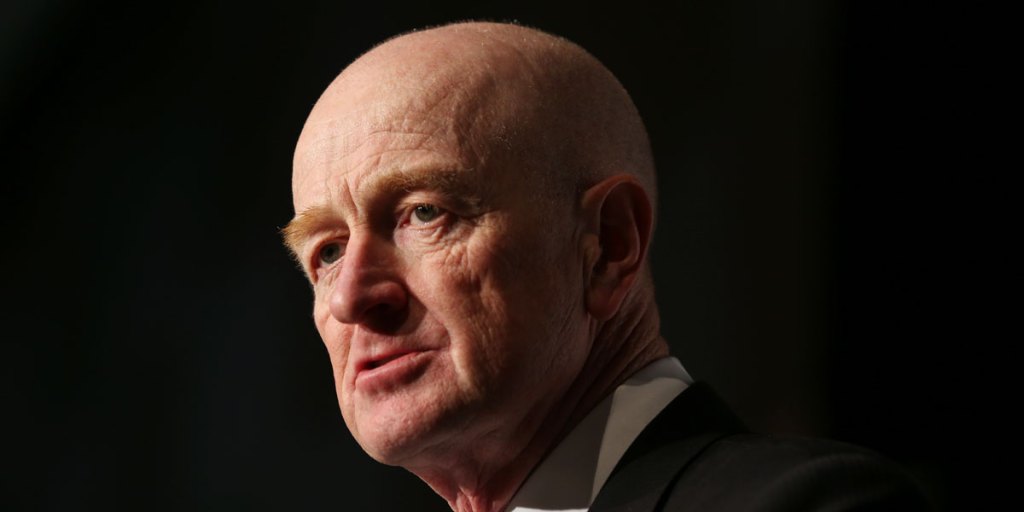
Beyond the dry caution, Reserve Bank Governor Glenn Stevens’ assessment of the national economy has some important messages for ordinary South Australians and the State Government, argues Kevin Naughton.
While the room of 350 suits (and about eight dresses) was keyed in for a clue on whether they should tweak their exposure to the exchange rate or re-assess reliance on global forces such as China, Glenn Stevens’ speech to the Committee for Economic Development of Australia (CEDA) at the Hilton Hotel yesterday appeared to be aimed elsewhere.
Governments looking to stimulate the economy, unions worried about wages and industrialists relying on the Big Build were given food for thought.
So were prospective home owners, job seekers and those getting close to retirement.
The Stevens speeches never respond to polling trends, media debate or political popularity; as a self-described man of “masterly inaction”, Stevens takes the long term view; and its pretty good.
So, let’s paraphrase the good Governor’s detailed and cautious words and see what it all means.
The global economy
Europe’s got its act together. The sovereign debt crisis of two years ago has been replaced by moderate growth and a capacity to borrow funds more cheaply than they did in 2007, prior to the Global Financial Crisis.
Everybody’s worried about growth slowing in China. No need to be, says the Governor. As he pointed out, China’s growth of 10 per cent per year for 10 years was never going to continue. The country’s administration has deliberately scaled it back to 7.5 per cent. And 7.5 per cent of a much bigger China is about the same as 10 per cent of the older China, Stevens points out.
All up, “the world economy continues to grow, inflation remains contained, our terms of trade remain high and financial conditions are remarkably accommodative”, he concluded.
The domestic economy
You might like

Australia’s economic growth has been consistent over the last decade, more so than Europe, the UK, USA, Japan and Canada.
Jobs, however, are a point of concern.
Stevens says monthly unemployment figures aren’t much use – interpretation of single month shifts is “hazardous”. Other indicators, he says, “have suggested a slight improvement in the labour market this year, not an accelerating deterioration.”
The Reserve Bank sees a market with “a degree of spare capacity” and while we won’t see unemployment decline consistently in the short term, the trends suggest long term improvement in a “sustainable way”.
House prices and household spending deserve special mention
The house price surge of the mid-1990s to 2006 was one wild ride.
Stevens notes that the ratio of debt to income went from 60 per cent in 1993 to 150 per cent by 2006. “It seems unlikely that household debt can rise like that again,” he said.
Mortgages make up most of that household debt, so the house price run looks well and truly over as we enter a “new normal” of spending.
The good news is that households have handled that debt explosion well; “arrears are running at about half on 1o per cent, which is low by global standards”, he noted. So, we can take from that that neither a house price bubble burst nor a price surge is on the cards.
It’s steady as she goes and with record low interest rates that’s got to be good news for young buyers, especially in Adelaide where the price spikes that hit Sydney and Melbourne seem to never be repeated here.
The low growth outlook for house prices might also be a warning bell for those close to retirement who may have been banking on higher growth.
“We (baby boomers) have been too keen on investment properties and may be disappointed at some time in the future,” Stevens observed in a later Q&A session.
Government spending
Governments have had a role, especially in SA, of spending big to stimulate economies in short-term responses to economic conditions.
But that spend has to end.
“Most governments in Australia are trying to strengthen their own balance sheets by containing the build-up in debt,” Stevens said. If SA takes note of that trend then its current policy of racking up debt to preserve jobs may well have to end. It will have to get its head around the notion that business can deliver what it can’t … and that’s where Stevens headed next.
Business
Stay informed, daily
Stevens made no mention of Holden, submarines or manufacturing losses.
Instead, he compared the evolution of business credit and cash holdings over time. And he liked what he saw.
There has been a striking surge in business currency and deposits … hundreds of billions’ worth in fact.
“This comparison suggests a very marked improvement in the liquidity of the business sector’s balance sheet over the past five years. My conclusion would be that many businesses are in a position to play their part in the growth dynamic over time.”
Stevens sees a growing role by “small and newer players”.
These are the innovators and they’re almost invisible, Stevens says, because there are few ways to measure them.
“Measuring innovation and so on is less straightforward than measuring how many building approvals were issued in any given month,” he pointed out.
Stevens referred to a “crude gauge of the animal spirits” – the number of new companies registered. It’s been rising strongly since 2010.
“My suspicion is that innovation is occurring … all this is encouraging.”
Wages and jobs growth
Wages growth is steady, he says. The sensible adherence to slow growth in labour costs had protected jobs, Stevens said.
It was here, however, that he added a note of caution.
There is a temptation, particularly at State Government level, to stimulate the construction sector in order to see a faster reduction in the rate of unemployment. The resulting increase in house prices “could leave the economy exposed to nasty shocks in the future”.
So where does that leave South Australia?
Our jobs shortage is worse than any other mainland state and the State Government has enough debt already.
Stevens doesn’t delve too deeply into the the smaller economic levers that states can move.
His broad message, however, appears to be that we should trust in and facilitate the growth of businesses that are small, innovative and new.
In that context, Tom Koutsantonis needs to re-think his budget strategy and learn how to be a catalyst for business development.
On the whole, we as a nation are doing quite well and the outlook is very stable, very secure.
In SA we’ve got some catching up to do.
Kevin Naughton is InDaily’s business editor.
Want to see more stories from InDaily SA in your Google search results?
- Click here to set InDaily SA as a preferred source.
- Tick the box next to "InDaily SA". That's it.