Gloomy business outlook in SA
Business confidence has hit its highest level in 11 years – except in South Australia and Tasmania.
Two reports show varying degrees of confidence at the national level – both, however, rate SA’s prospects as poor.
Nationally, the services sector and retailers have become more optimistic about their sales outlook.
Forty-six per cent of businesses expect higher sales in the December quarter, while only nine per cent are predicting a fall, the latest Dun and Bradstreet’s Business Expectations survey shows.
The services sector was the most optimistic about sales in the fourth quarter of the year, followed by the transportation, utilities and construction sector.
Retailers also expect a recovery from the recent slump in sales.
Dun and Bradstreet chief executive Gareth Jones said there had been a steady improvement in business confidence since the end of 2013.
“While there has been a recent pullback in the profits and capital investment indices, there’s a clear upward trend developing this year and all of the survey’s measures are above their 2013 level,” he said.
You might like

“The sales outlook is particularly solid through to the end of the year, providing encouragement for those businesses concerned that the federal budget had knocked the wind out of consumer confidence and spending.”
Dun & Bradstreet economic adviser Stephen Koukoulas said the surge in business confidence should boost economic growth later in the year.
“The continued resilience in the outlook for employment suggests that the pace of job creation will move to a point where the unemployment rate edges lower over the next couple of quarters,” he said.
“The dip in expected selling prices indicates that the inflation rate probably peaked in the June quarter and will ease to the middle of the Reserve Bank of Australia’s two to three per cent target band.”
The report said that two out of three businesses were more optimistic about increased economic growth in the months ahead, but some parts of the country weren’t so upbeat.
When asked to rate local business conditions, Tasmanian businesses were the most pessimistic, with 39 per cent saying “very bad” and only eight per cent saying “very good”.
In South Australia, more than half of respondents said conditions were average, bad or very bad.
In Western Australia, more than half of businesses described conditions as “average”.
Most positive about local conditions are businesses in the Australian Capital Territory, with 38 per cent rating the ACT as “good” and one-in-four “very good”. No respondents considered the local scene as “very bad”.
The survey comes a day after the Australian Chamber of Commerce and Industry’s latest business expectations study showed business confidence and hiring intentions were down for the June quarter.
Stay informed, daily
ACCI found business expectations weakened after the release of the May budget after touching the highest level in four years earlier in the year.
In that survey, South Australian business conditions continued to show weakness, falling 4.1 index points to 78.6 points in June, 4.7 points short of what businesses expected in the March quarter survey.
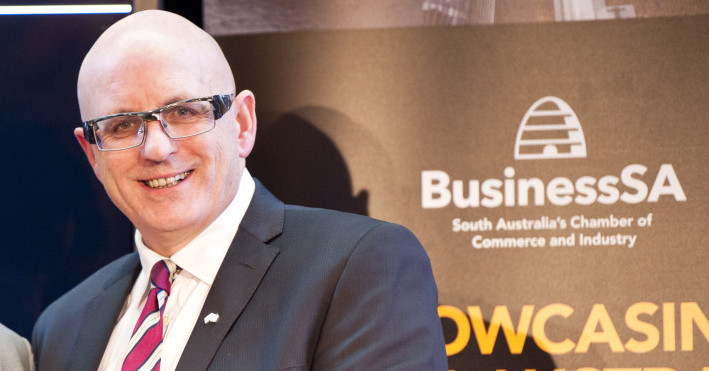
Business SA CEO Nigel McBride said: “The survey also shows that while businesses continue to experience stable customer orders and selling prices, they are struggling with a higher-than-expected increase to the average wage and lower total sales/revenue figures.
“Furthermore, businesses are still reluctant to employ people, with twice as many businesses planning to reduce rather than increase headcount in the September quarter, again highlighting the need for reform to taxes limiting employment such as payroll tax.”
A third report, out today, shows the services sector is still going through a soft patch with businesses remaining unwilling to commit to hiring more staff due to the relatively flat economic outlook.
The Australian Industry Group’s Australian Performance of Services Index (PSI) was up 1.7 points to 49.3 in July.
A reading below 50 indicates the sector is contracting. The lower the number, the faster the contraction.
Ai Group chief executive Innes Willox said the services sector was hovering on the cusp of growth after a couple years of weakness.
“Businesses will be encouraged by the pick-up in sales and new orders,” he said.
“This could be a sign that uncertainties over budget measures and the fall-off in demand for business services connected to slowing mining-related construction are fading in relative importance.
“At this stage, however, services businesses will need more solid evidence of an uplift and they are not yet at the point of adding staff.”
Only three of the nine sub-sectors recorded increases in activity in July.
They were health and community services, finance and insurance, and accommodation, cafes and restaurants.
Want to see more stories from InDaily SA in your Google search results?
- Click here to set InDaily SA as a preferred source.
- Tick the box next to "InDaily SA". That's it.