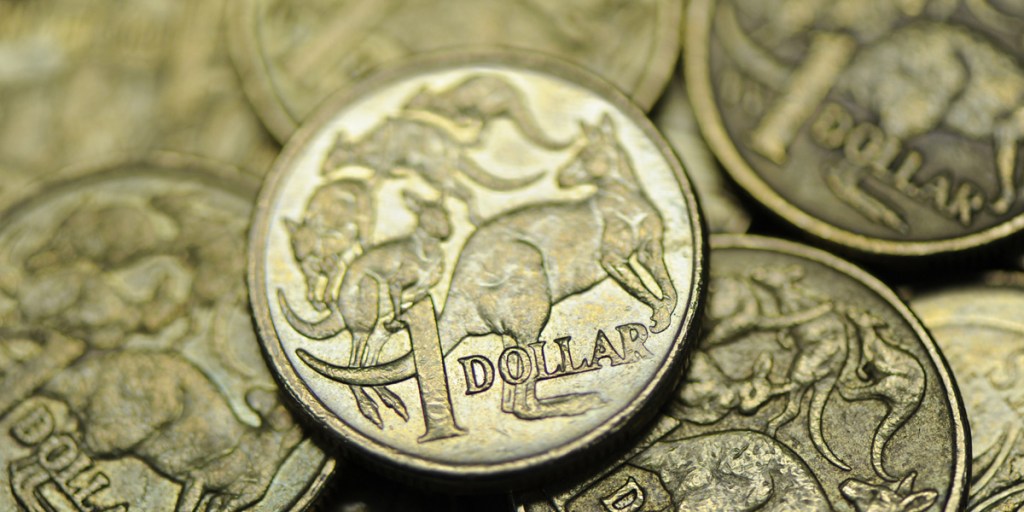
The Australian dollar is back above 93 US cents after US employment data disappointed the market.
Early on Monday, the local unit was trading at 93.10 US cents, up from 92.80 cents on Friday.
The US economy generated 209,000 new jobs in July, the Commerce Department reported on Friday, weaker than the gain of 230,000 the market expected.
BK Asset Management managing director Kathy Lien said the US dollar fell against most of the major currencies after the non-farm payrolls report.
“Not only did payroll growth fall short of expectations but the unemployment rate rose to 6.2 per cent from 6.1 per cent,” she said.
“If the jobless rate held steady and average hourly earnings increased, the decline in the US dollar would have been more modest.”
You might like

Ms Lien said the Australian dollar was still getting support from strong Chinese manufacturing figures that were released during the local session on Friday.
Chinese manufacturing activity increased at its fastest pace in more than two years in July, as the world’s second-largest economy shows signs of increasing momentum.
On the local front, retail trade figures for June have beat economists’ expectations, with spending rising 0.6 per cent, figures from the Australian Bureau of Statistics on Monday show.
Figures for the June quarter were also stronger than expected, with spending dipping just 0.2 per cent.
The data show that consumer confidence is recovering from its falls around the time of the May budget, which outlined a raft of tough spending cuts and tax hikes, CommSec chief economist Craig James said.
“People are just getting back to normal and shaking off the budget blues,” he said.
Stay informed, daily
“We’ve had some of the clothing retailers who have had to discount some stock and Aussie consumers have lapped up the bargains, but it’s also the fact that confidence levels have improved.
“It confirms to us that Aussie consumers are coming out of the budget-driven downturn and confidence levels are improving and spending levels are improving.”
Mr James expects the healing process in retail spending to continue in the next couple of months.
National Australia Bank senior economist Spiros Papadopoulos said the improved retail spending figures would give the Reserve Bank a bit more comfort that any negative impact from the budget was temporary.
“We do expect retail sales to be improving but we don’t expect any spectacular growth rates to be going through,” he said.
Mr Papadopoulos said trading conditions for retailers remained pretty weak.
“Over the past 12 months we’ve seen some fairly soft figures, which have been reversed today, but over the next couple of quarters small positive growth in line with annual consumption growth of 2.5 per cent is what we expect to see,” he said.
The Australia share market continues to slide on negative leads from Wall Street and weaker commodity prices.
Declines in the base metals and oil prices overnight, combined with further falls in US and European equity markets on Friday, are weighing on the local market, CommSec market analyst Juliana Roadley said.
It fall also follows a more than 1.3 per cent slump on the local bourse on Friday.
“The retail sales figures were better than expected, so we might see some of those retail consumer staples gaining a bit of ground,” she said.
“The company earnings season begins in earnest tomorrow, so I think people are also holding back.”
Want to see more stories from InDaily SA in your Google search results?
- Click here to set InDaily SA as a preferred source.
- Tick the box next to "InDaily SA". That's it.