The wine world’s punk movement
To the relief of the fine winemakers of Orange, the vast majority of “orange” wines are not from Orange. Nor are they made from orange juice. Nor, at least to this partially colourblind writer, are they particularly orange in colour.
They are, however, generally murky fermented grape products, much in the manner of good old-fashioned scrumpy cider. Like cider, they vary widely in quality.
It appears that they’re not going away. They’ve always been there, of course, because they’re the sorts of wines that were made all over the world for thousands of years before great South Australian wine scientists like Ian Hickinbotham and Dr Ray Beckwith worked out ways of stabilising wine and clarifying it, so it transports better, lives longer, and generally makes for a happier, longer-living customer.
Such industrialisation certainly made possible the vast lakes of boring, clear, repetitious plonk that floods the shelves today. It also provided honest winemakers of uncommon gastronomic intelligence a better chance at making the sorts of beautiful, sometimes ravishing wines recommended each week in these pages.
To re-awaken my long-standing theory that the making and marketing of popular wine shares many similarities with popular music, I’m convinced that this current wave of interest in orange wines is the wine world’s punk movement.
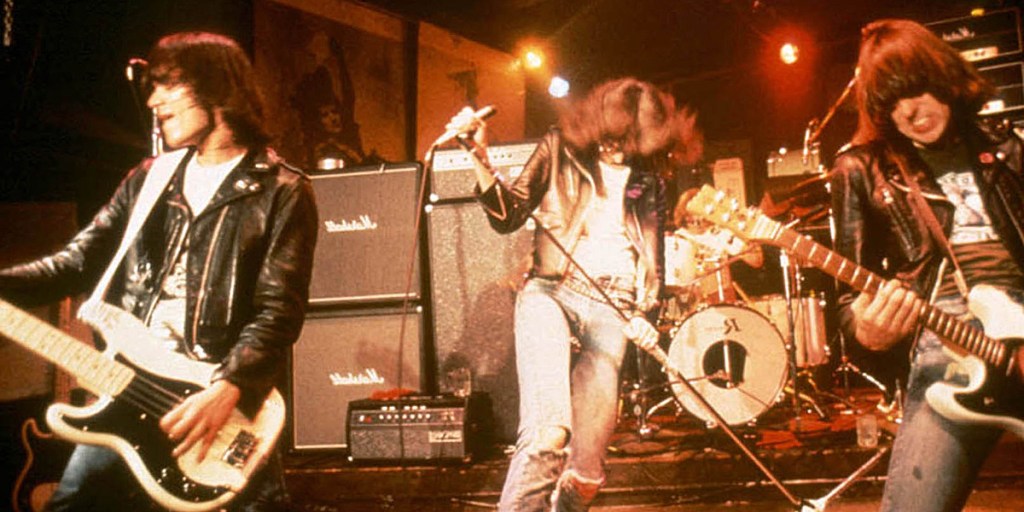
Punk, like that created by The Ramones in the US and totally disassembled by The Sex Pistols in the UK, was a predictable reaction to the industrialisation of popular music. It was made by poor artists who rejected the bland repetitious sanitation of rock ‘n’ roll by the transnational music corporations.
You might like


These faceless mobs, and indeed outright mobsters, needed everything orderly and, to them at least, utterly predictable, so they could better plan their rip-off contracts and marketing campaigns, which often involved sickening slathers of the old payola to the deejays. These celebrity microphone hacks were the music biz equivalent of wine writers of the day.
Tellingly, these obedient scribes are never called “critics”.
Those radio announcers are/were the convenient voluntary promoters of the status quo, all carefully trained and stroked to love and support the next big thing, which was always engineered to look exciting and new when in fact it was usually a jaundiced tweak of a style already established but in danger of waning.
The cornerstone of the punk movement was its denial of traditional musicianship. Where complex jazz chord structures were beginning to sneak in to your standard old 12-bar rock ‘n’ roll, any snotnose gutter rat could pick up a trashed Gibson or Fender, wind the Marshall stack up to 11 and bash away at one or two chords. Sometimes the only bars evident where ones in which the stars drank themselves to death. Attitude replaced scholarly musicianship and the untrained, largely bored marketplace soon enjoyed the brash cheek and audacious disrespect the new practitioners displayed in short aggro bursts between extreme drinking sessions and terminal drug consumption.
Broken equipment that sounded that way replaced the stifling rote standardisation of the studios with their impossible expense and clever, well-behaved producers.
What the punks failed to predict was that in removing the need for scholarly musicianship in their pursuit of their new trademark racket, they made everything much easier for the music companies, who could suddenly get by without engaging all those expensive session players, extravagant studios and millionaire producers.
Stay informed, daily
It seemed just minutes before the revolution was replicated and mass-produced by the very enemy punk was so desperate to take out. The din was quickly sanitised, homogenised and smoothed out, leaving the punks to learn a few more chords, get better studios, and in the sickest piss-take of it all, hire an orchestra and learn Frank Sinatra’s “I Did It My Way”, as Sid Vicious found himself doing as a twisted kind of postscript to seal the whole damned episode.
"Some of it [orange wine] shows the cheeky edge of the punks, some of it the sort of patchouli-riddled shoe-gazing doodles of hippydom"
The post-punk movement added modest slivers of production sophistry and even some more accomplished musicianship to the coarse foundations the punks laid down, and we saw brilliant bands like Magazine, Television, Devo, Talking Heads, Siouxsie and the Banshees and, in Australia, the Boys Next Door and Mental as Anything. Out of this, perversely, came the movement actually called industrial music, led by the likes of Throbbing Gristle and Cabaret Voltaire. Mockingly: a kind of full circle. Metal machine music.
What we have seen so far from our determined orange wine people is pretty much lost somewhere between an ape banging a bone on a rock and the very first shards of punk. Some of it shows the cheeky edge of the punks, some of it the sort of patchouli-riddled shoe-gazing doodles of hippydom. But as most of it has a shelf life somewhere along the lines of unpasteurised milk, this current wave is still far from showing the longevity of the Pistols or the Ramones, the last of whom died last week.
What will put a seal of something approaching permanence to the orangistes will be a Treasury or a Gallo or some other giant wine industrialist releasing its own orange wine. It must be very tempting: it’ll be a lot cheaper for them to make, and they’ll probably convince the market to drink them up pretty much upon release, which will incur faster profits.
The bit I love is the gradual emergence of the vinous equivalent of the post-punk movement, where clever folks are combining the natural influence of wild yeast in additive-free wines, some of which are made in amphorae or concrete egg-shaped fermenters in place of, or as well as, oak containers, and even sometimes filtering them to remove as much active biomass as possible in the pursuit of stable flavour and longevity.
Even stalwart biodynamic evangelicals who’ve so far made very fine wines without additives are dabbling with the use of the word orange as a descriptor of their newest stuff: I see in his latest newsletter, for example, the great Julian Castagna is releasing wines he calls orange, regardless of their colour. I look forward to tasting them.
So while we see the odd decrepit orange person screeching briefly away at their version of “My Way”, this critic tends to scuffle past with eyes averted, to then look forward to something more along the lines of Howard Devoto and his brilliant Magazine peeling off The light pours out of me.
Want to see more stories from InDaily SA in your Google search results?
- Click here to set InDaily SA as a preferred source.
- Tick the box next to "InDaily SA". That's it.