What happens in New York today will happen in Australia next year, the old saying used to go.
Fashion trends, economic shifts and social movements were spotted by regular travellers and found their way back to Australia.
These days it’s more immediate; we travel more often and social media pushes the information our way daily.
And so it is that, after a recent fortnight in the Big Apple, I can confidently predict some eating and drinking trends heading our way – with a particular focus on meat.
NYC does meat better than anywhere in the world. Its famous Meat Packing District dates back to the 1870s and retains its heritage today – and that’s where we begin our Meat Lover’s Guide to New York, in search of what we can expect to emerge in our own backyard.
The Meat Packing District is on the lower west side of Manhattan and back in 1879 it was home to a farmers’ market, where regional produce was sold to the residents and businesses of the busy city.
By 1900, the District had 250 slaughterhouses and packing plants. Some still operate today.
Sitting above this part of New York was the High Line, an elevated rail freight line built in 1929.
It was decommissioned in the 1990s and was set for demolition when local residents started the Friends of the High Line and lobbied for its preservation and reuse as public open space as an elevated park.
The elevated park was completed in 2011 and is the perfect way to start your culinary journey. 
It’s a nice walk, features interesting art and is host to food stalls and drink carts.
The big impact, however, has been a change in the neighbourhood; it’s gone from rundown and rusty to touristy and trendy. Rooftop bars have sprung up where patrons can eat and drink with a view of the greenway and other new structures in the District.
The rooftop bar trend is already on its way to Adelaide – as The Forager revealed last week, a rooftop is set to open above the old Westpac building on the corner of North Terrace and King William Street.
Back, however, to the High Line; at the end of the walk you head down the steps to the old centre of the Meat Packing District, where Bubby’s sits at the corner of Gansevoort and Washington Streets.
You might like


Try the Pit Barbecue Chopped Brisket; slow-cooked, tender and spicy.
Bubby’s, however, offers much more than that. This place is committed to the original notion of sourcing regional produce.
“We buy whole steers from upstate farmers who raise their animals in pastures,” it brags on the back of the menu. “We grind our own burgers everyday. We make buns. And dill pickles. We buy whole hogs for sausages, scrapple, pork chops and bacon. 600 pounds of bacon a week. We know the people who harvest our salt, by hand. They know the people who pick our pepper. We get olive oil from our friends at Frankie’s in Brooklyn who bring it to Brooklyn from their friends in Italy. We fry in organic, non-GMO, expeller pressed canola oil.
“We steal recipes from grandmas and uncles all over America, heirloom family recipes that require stealth and sometimes outright lying to steal them. We render lard from whole hogs we get in every week for pies, pastries and biscuits. We bake all of our own bread in house using organic heirloom grain flour from Wild Hives Farm. We buy maple syrup from a little farm near the Vermont border. We get our honey from the life-long bee keepers at Tremblay Apiaries in the Finger Lakes.”
Bubby’s even has a sourdough it uses for pancakes that is from a nearby family that has kept it alive since 1890.
And to top it off, they are now selling a Serviceberry Pie, a tribute to urban foraging. The serviceberries (similar to blueberries in appearance, texture and sweetness but with a pronounced almond flavor) grew self-seeded on the High Line and that’s where the staff at Bubby’s harvest them.
Try the meat, try the pie and enjoy the original soda fountain. Start walking – you’ll need the exercise.

Next stop, Hill Country.
We first tasted Hill Country’s food at an American Block Barbecue Festival held one weekend in June in Madison Square Garden where huge trucks from Texas and elsewhere had hauled in massive wood ovens and tons of wood, and slow-cooked all manner of meats.

The Black Ribs from Texas Bob (a former world champion barbecuer) were stunning – but Hill Country is something else.
With restaurants in three US locations (New York, Washington and Brooklyn), it is a complete experience. Smoked low and slow over Texas Post oak, its meat is a knockout.
You pay for what you eat; unlike a restaurant where you order a steak and out it comes, at Hill Country you step up to the resident PitMaster and order however many slices of whatever cuts you want.
“You sure you want that much?” he asks.
I should have listened. He wraps it in brown paper and you head back to your table (with some salads and corn bread and other southern-style add-ons) and hop into it.
No plate – just off the paper.

The brisket was the most tender and tasty cut I’ve ever had; the prime ribs were simply stunning, and then there’s the pork, smoked chicken, etc.
The beer is served in old jars (try the Texan Shiner range) and there’s live music downstairs. When you’re done, you head to the cash register where they add up your selections (similar to yum cha) and away you go.
The slow-cooked style of barbecuing has been long overdue in coming to Australia – I suspect, however, that Hill Country is not far away.
With two typical US-style experiences under the belt (an expanding one by now), the next stop on this journey has a Brazilian flavour.
Stay informed, daily
Churra Scaria Plataforma is based on the old Portugese style of cooking that became part of Brazilian culture. The Brazil style features meat roasted over coals or embers of wood on long thick steel skewers.
At Plataforma they charge a fixed price and give you a disc to place in front of your plate. When it’s facing up, (red side), you can use the salad and seafood buffet.
The moment you flip it over to green, the Paassadores (meat waiters) come to your table with knives and a skewer, on which are speared various kinds of meat.

They’ll carve off a slice of beef, pork, filet mignon, lamb, chicken, duck, sausage, fish or any other cut they’ve got. And they keep coming. You can stop (flip to red) and rest – and then start again.
This is perhaps the ultimate classy mixed grill.
The churrascaro-style of cooking and serving has already bobbed up in a couple of Sydney and Melbourne locations and one pub in Darwin is doing an Argentinian version. It won’t be long before it comes to Adelaide. Before it does, I’ve got some serious walking to do.
But before we head to our last stop on this meat lover’s tour, it’s worth mentioning two other trends evident in New York.
Craft beer has become huge. Drinks menus feature long lists of beers from all over the US – a departure from their old Budweiser, Millers or Coors culture. It’s taking hold in Australia as well, but among the young in New York it’s locked in.
Another trend is the food trucks. They emerged several years ago and a couple of Adelaide entrepreneurs immediately brought the concept here via Burger Theory. On that score Adelaide is in step with, or perhaps even ahead of, the Big Apple.
This year, they have turned Greely Square, on the corner of Broadway and 34th Street, into an urban food spot populated by about 40 food trucks. It’s open from 11am to around 9 or 10pm – but only for the northern summer.
And so we head to Gallagher’s, the NY institution that is the definitive steak place.
Before you even walk in the door, you can’t help but notice the meat locker that has a window facing the street (52nd).
It is where the finest US prime beef is hung and aged for at least three weeks in a humidity-controlled room and cooked over hickory coals.

For 88 years, Gallaghers has been in the top 20 New York restaurants. It’s where Joe DiMaggio met Marilyn Monroe, where presidents ate alongside film stars, Wall Street financiers and sporting legends. Its walls are adorned with their pictures.
The cocktail list is classic; the wine list runs to 35 pages, and the bar in the middle of the main room has the aura of days gone by.
The staff wear white shirts and black bow-ties, and their service takes you back to when waiters weren’t actors-to-be, but just first-class waiters.
The original Gallagher’s was owned by former chorus girl Helen Gallagher and the colourful gambler Jack Solomon. You can sit here and imagine they’ll walk in the door any moment.

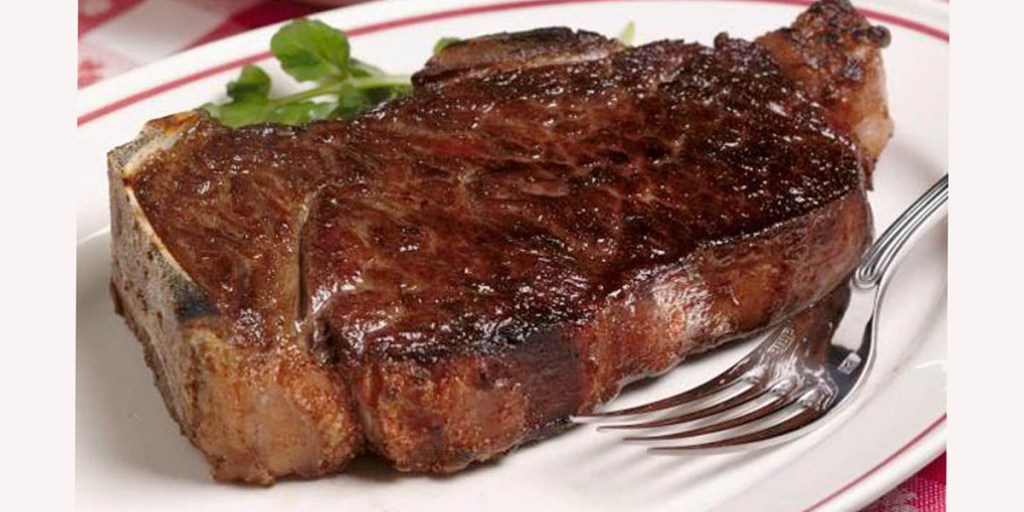
If you’re up to it, order the 800-gram filet mignon with pepper crust and garlic butter.
Gallagher’s has just re-opened after an eight-month refurb where it added a seafood raw bar, so you can toss down a few oysters and prawns before mains.
The central character of this beautiful joint remains; there is no better place to have steak.
Gallagher’s should be the end of your meat lover’s journey in New York – a final, lip-smacking moment of joy to lock in your memory forever.
Then go home – and start walking.
Want to see more stories from InDaily SA in your Google search results?
- Click here to set InDaily SA as a preferred source.
- Tick the box next to "InDaily SA". That's it.