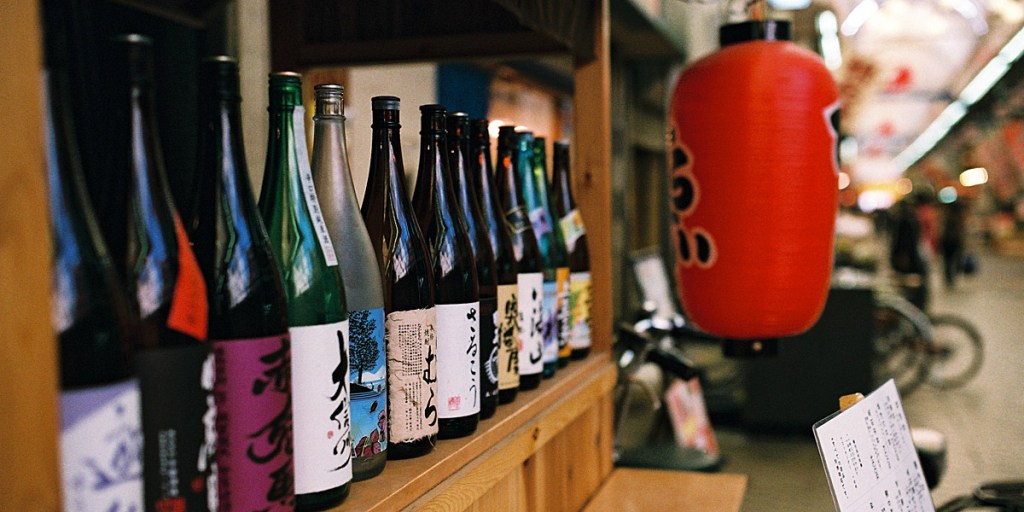
We’ve all admired beautiful sake bottles lined up for display on a shelf. But often, we overlook them as an aperitif or food match because we don’t understand the elegant characters gracing the label.
Luckily, sake brewers are starting to add translated back labels to their bottles, often using a scale as a style guide to the sake inside. They’ve also been on the PR trail, encouraging people to taste and learn.
As a result, sake consumption in Australia is on the rise. It’s finding its way onto wine lists and into fine wine stores, and sakes being brought into Australia – and indeed, being made in Australia – are better than ever.
So, if you’re keen to know more about sake, where should you start?
“If there’s one word you should know, it’s Ginjo,” says sake master Andre Bishop, of Kumo Izakaya in Melbourne’s Brunswick East.
“Ginjo refers to the top two classifications, guaranteeing you a great-tasting sake.
“After this, I’d be looking out for the word Junmai, which means ‘pure’. Junmai sakes haven’t been filtered or cut with extra spirit. The term can be applied to all top tiers, effectively doubling the number of classifications.”
You might like


Sake is made from a finely balanced combination of rice, water, yeast and koji, a mould that converts starch to fermentable sugars and also adds aromas and flavours into the sake.
But where do the grades come from?
“Rice has outer layers of undesirable proteins and oils,” says Leigh Hudson, of Chef’s Armoury in Sydney and Melbourne. “These need to be milled away to get to the core of pure starch, which can be turned into alcohol”.
“The more layers that are milled away, the purer the starch and the better the resulting sake.
“It also means less bran and cereal characters and more fruit characters such as lychee, peach and pineapple.”
The top levels are Junmai Daiginjo and Daiginjo, which are milled down to 50 per cent of size. Junmai Ginjo and Ginjo are only milled to 60 per cent. The bottom classifications are Junmai and Honjozo, milled down to 70 per cent of the grain.
Styles of sake can range from dry through to sweet, and delicate through to intense. They’re best served lightly chilled at 5-10C in a wine glass – warming sake is mostly for the very cheap styles of sake.
And what to pair it with? Light sakes such as Junmai Daiginjo or Daiginjo match well with delicate sashimi, shellfish and crustaceans. “Oysters and sake are a match in heaven,” says Hudson.
Stay informed, daily
Richer foods such as grilled meats and simmered fish are best with heavier sakes such as Junmai and Honjozo.
“Or, you could try pairing it with cheese,” says Bishop. “People are blown away with that!”
Sakes to try:
 Yamahai-jikomi Junmai, $20, 300ml
Flavour notes: off-dry; bright, briny with cereal, malt, orange blossom and ginger notes
 Nagaragawa ‘Tenkawa’ Junmai Ginjo, $15.45, 300ml
Flavour notes: medium-sweet; nutty, malty, with custard apple, white peach and quite a saline finish
Kubota Shuzo Kuranoyado Junmai Ginjo, $41.45, 720ml – great all-rounder
Flavour notes: dry; malty, cereals, dried herbs, with white peach, honeydew and beeswax – really well-balanced
 Oita Onikoroshi Ginjo, $73.45, 720ml
Flavour notes: dry; very cereal-driven, nutty, touch of lychee, green pear, edamame and rice-cracker – slightly hot finish
Dewazakura Daiginjo Yamada Nishiki 48, $29, 300ml – top pick
Flavour notes: dry; green strawberries, white peach, honeydew, pineapple mint, sage – very elegant with a long finish
Where to buy sake:
sakeshop.com.au / sakeonline.com.au
This article was first published on The New Daily.
Want to see more stories from InDaily SA in your Google search results?
- Click here to set InDaily SA as a preferred source.
- Tick the box next to "InDaily SA". That's it.