Dead man’s six month burial delay
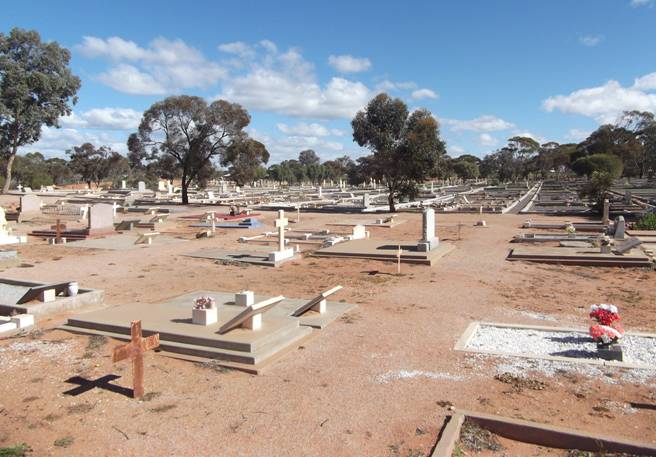
The body of a 38-year-old man has remained in a funeral home for six months while relatives argued where he should be buried.
The family dispute was eventually referred to the Supreme Court for decision where last week Justice Kevin Nicholson ruled “with regret”, adding the law lacked “hard and fast” rules on determining a burial dispute.
The case was brought to the court by the Department of Communities and Social Inclusion after it too was unable to resolve the dispute.
The body of Raymond William Boland, meanwhile, stayed with Fulham Funerals after an on-again off-again “prolonged disagreement”.
Boland, who died on December 3 last year had relatives in Coober Pedy and Port Augusta, some of whom believed he had cultural ties to their area, while others claimed he had relinquished them.
Judge Nicholson said the unusual case led him to a difficult choice.
“…no standard approach or hard and fast rule can be formulated and applied when determining a burial dispute of this nature.
You might like

“The proper approach, ultimately, requires a balancing of common law principles and practical considerations, as well as attention to any cultural, spiritual and religious factors that are of importance.
“A decision has to be made.
“Sadly, the problem before me is really insoluble in one sense. It is impossible in any realistic sense to weight the competing claims and arrive at what one would truly call a legal judgment.
“There is no solution or compromise available to me that will satisfy each side. I can only make a decision and indicate my regret that it will cause pain to the unsuccessful party.”
The funeral had almost gone ahead on 10 February when family members appeared to have resolved their differences, before one changed her mind.
“Later that same day, the first defendant orally withdrew her permission to have the burial in Port Augusta and reiterated her desire to have the burial in Coober Pedy,” the court was told.
“The department arranged for the undertaker to postpone the funeral arrangements.
“Attempts at resolution continued and another possible resolution of the dispute (in favour of Coober Pedy) was almost reached during late March, early April but this also, ultimately, failed to come to fruition.”
Stay informed, daily
At that point the department sought the assistance of the court.
The department had become involved via its funeral assistance program which provides financial and other help when a person has died with minimal financial resources and where there is no other source of funding for a proper funeral.
It had received two applications for an assisted funeral – one from Peter Boland-Wilton, a 17-year0old son of the deceased and a second, from Melissa Gail Smith, the domestic partner of the deceased.
Boland-Wilton claimed that his father should be buried in Port Augusta with his deceased young son and where his other children live.
Smith, who had been living in Ceduna with the deceased, claimed he should be buried in Coober Pedy, in accordance with traditional beliefs.
Neither argument presented a clear path for the judge.
“Where a person has descended from a number of cultural traditions, as is the case with the deceased, it can be difficult, perhaps impossible, to know which of these traditions should take priority and in what circumstances and, in particular, which aspects of each tradition might be regarded as of fundamental importance and which aspects might be amenable to compromise.”
He considered evidence from relatives that the “deceased himself said that he did not have much of a cultural connection with Dieri and that he did not look up to Aboriginal culture and did not like the cultural rules”.
“In this respect, there is no evidence from those who one would expect to know that the deceased observed any particular cultural practices or traditions: Dieri, Antekarinya, Yankunytjatjara or otherwise, as a mature adult as opposed to when a young person.”
In making his decision, Judge Nicholson preferred the interests of the deceased’s surviving children over any other cultural considerations.
“In my view, the court should take an approach that best serves the interests of all three surviving children and in the knowledge that the deceased’s young son, Alvin, is buried in Port Augusta,” he said.
“I am satisfied that it cannot be said that this is necessarily inconsistent with the wishes of the deceased, nor that there is a contrary cultural imperative so clear and so strong that it should overwhelm this consideration.”
He then ordered the Department to “request the undertaker to bury the deceased in a manner that observes, insofar as is practicable, the wishes of Peter Boland-Wilton”.
The judge ordered at least three days’ notice of the funeral is to be given so that family members might be able to attend.
Want to see more stories from InDaily SA in your Google search results?
- Click here to set InDaily SA as a preferred source.
- Tick the box next to "InDaily SA". That's it.