Australia’s “grave concerns” about Thai coup
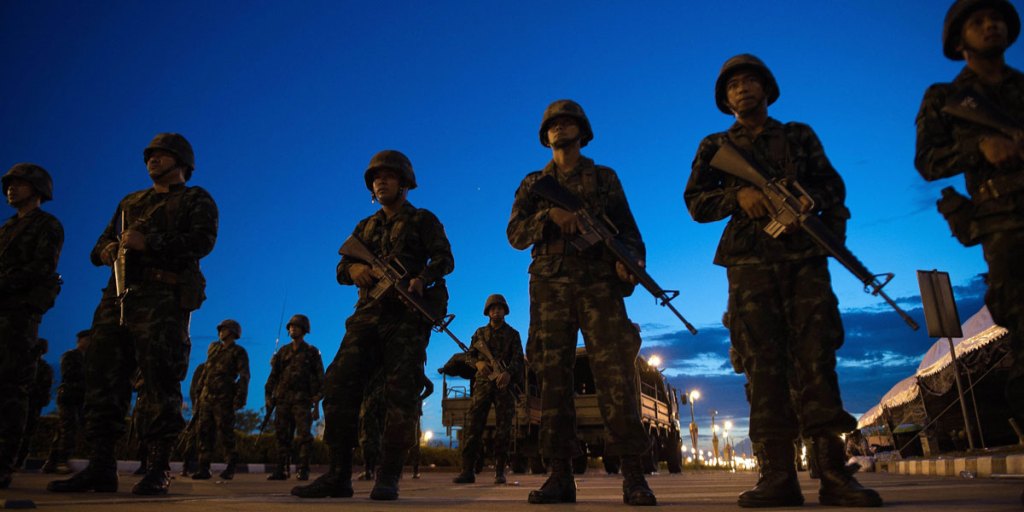
Foreign Minister Julie Bishop has expressed grave concerns about developments in Thailand following confirmation of a military coup, describing the situation on the ground as “volatile”.
Thailand’s army chief on Thursday seized power and ordered demonstrators on both sides of the kingdom’s bitter political divide off the streets after seven months of rallies in the capital.
The junta, led by army chief General Prayut Chan-O-Cha, has banned gatherings of more than five people, ordered the ousted cabinet to report to the army and suspended the constitution – except for the section related to the monarchy.
Bishop says the Australian government is seeking more information about developments in Thailand, and warned Australians travelling to Bangkok to exercise a high degree of caution.
“We are gravely concerned that the army chief has announced that the military is assuming all government functions in Thailand,” Bishop told ABC radio on Friday.
“It is a volatile situation. We are monitoring it closely but people need to pay close attention to their personal security and their travel plans.”
The Department of Foreign Affairs and Trade has updated its website to reflect the developments and continues to advise travellers to “exercise a high degree of caution” and for people to avoid all demonstrations, protest sites, political events and large-scale public gatherings.
You might like

The confirmation of a coup comes after the military imposed martial law on Tuesday and follows the dismissal earlier this month of prime minister Yingluck Shinawatra, in a controversial court ruling that sent tensions soaring.
It is the 19th actual or attempted coup in the kingdom since 1932.
It’s unknown exactly how many Australians are currently in Thailand, with DFAT only aware of 5000 who have registered with its Smartraveller website.
The new military junta on Thursday declared a nationwide curfew from 10pm to 5am and ordered demonstrators on both sides of the kingdom’s bitter divide off the streets after nearly seven months of political rallies in the capital.
“All Thais must remain calm and government officials must work as normal,” junta leader Prayut said in a brief televised address, flanked by four of his top officers.
Moments before the coup, there were dramatic scenes at a military-hosted meeting between the kingdom’s political rivals as army trucks blocked exits after the talks failed to reach a deal to end the deadlock.
Witnesses saw leaders of Thailand’s two main political parties and its rival protest movements taken away by the military.
It was unclear if they had been formally detained but their whereabouts remained unknown hours later.
Stay informed, daily
The US, EU, France and others expressed deep concern over the developments.
Secretary of State John Kerry urged the restoration of civilian rule, media freedoms and “early elections that reflect the will of the people”, while the Pentagon said it was reviewing military cooperation with its longtime Southeast Asian ally.
It is the latest twist in a nearly decade-long political crisis stretching back to an earlier coup in 2006 that deposed the controversial tycoon-turned-politician Thaksin Shinawatra as premier – a move that infuriated his supporters.
A Bangkok-based royalist elite and its backers have engaged in several months of escalating confrontation with the democratically elected government aligned to Thaksin.
Thailand’s democratic development has now been interrupted by 19 actual or attempted coups since 1932.
Martial law – declared by Prayut on Tuesday and reaffirmed under the coup – gives the military draconian powers to restrict freedom of assembly and movement and to detain people.
All television and radio stations including foreign broadcasters were ordered to suspend normal programming and broadcast only an army feed.
The junta also said it would block any social media platforms in the country that carry content provoking violence or criticising coup leaders.
UN Secretary-General Ban Ki-moon was “seriously concerned” by the coup, his spokesman said, and urged a return to “constitutional, civilian, democratic rule”.
Prayut gave no indication how long the military would hold power but said it would “start political reform”, without giving details.
– additional reporting from AFP in Bangkok
Want to see more stories from InDaily SA in your Google search results?
- Click here to set InDaily SA as a preferred source.
- Tick the box next to "InDaily SA". That's it.