Pontius Palate and tales of Grange
First things first: I promise to say nothing about the budget. Why? Because enough has been said about it already. Because it hasn’t yet been presented. And because it won’t bring any change to the wine tax.
Which is a crying shame. It’s a very long time now since Ken Henry explained how the wine tax system is bent and twisted and needs a radical hammering out.
The second prominent issue is the little matter of industry awards. I’ve written about a lot of people getting awards over the last 30 or so years, and I’ve always regarded the silver as something second best. But as the Grange book I wrote with photographer/publisher Milton Wordley has won a silver medal, THE silver medal, in the coffee-table book section at the Independent Publisher Book Awards in New York, like the book Oscars, I’ve suddenly realised how cool it is to accept the silver.
Which leads me to my actual topic. One of my favourite books of recent years, or recent decades, was written by an editor from The Economist, Ann Wroe. In Pilate – The Biography of an Invented Man (Jonathan Cape, London, 1999), she wrote the most fascinating discussion of the bloke who handed Jesus to the baying mob and famously washed his hands, etc. In her incessant travels around Europe, Wroe discovered that there are communities everywhere which all lay claim to being the birthplace of the bloke who let the mob have their way with the son of God.
So like a spiral nebula winding back into itself from these strands, Wroe tracked these claims and nefarious rumours back to their centre, the place they all must meet: that washing bowl. She gets very, very close to explaining the famous Pontius. She even gets down to a precise, visceral description of him shaving before he commits the single act that led to all these obsessive and possessive claims over his provenance. And as we finally get there, after this long and fascinating book, PING! He disappears. We realise he is a fiction, a poltergeist, a boogie man.
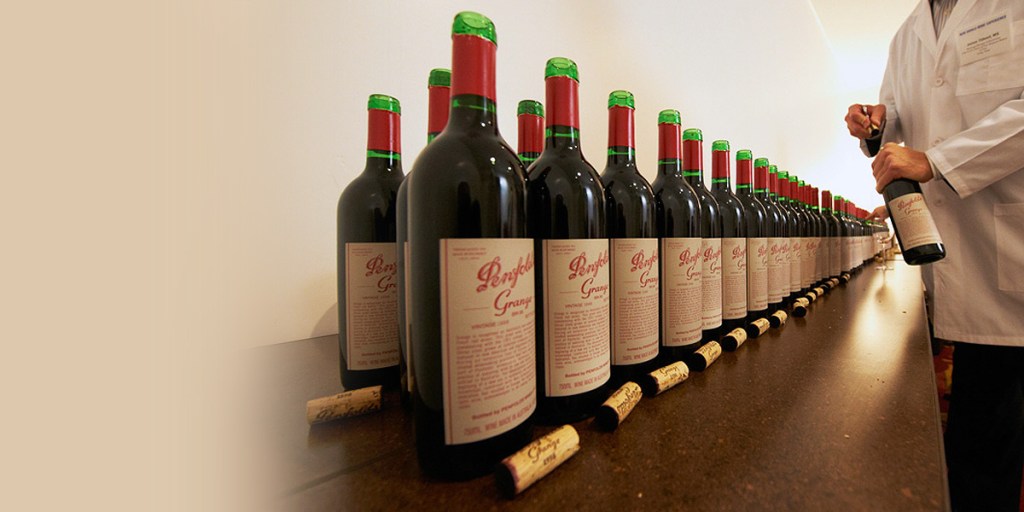
Nobody seems to have noticed yet, but rather mischievously I took the same approach when writing A Year in the Life of Grange. The common presumption, or actual allegation, is that in the course of making this book the Penfolds people plied me with Grange. I was delighted to be regaled with imaginings of being awash in your actual Grange for over a year, just so I got it right. Like Whitey, how much did you get? A bottle a week?
As I set out to suggest, there are no tasting notes in our Grange book. Not one. Neither did I consume one bottle in the course of making the book. As Wroe does in her explanation of Pilate, I write towards a Grange-shaped vacuum which only the reader can fill. Unlike her Pilate, which is not eventually there, the Grange is a bottle of wine that you can go out and drink, even if it is exorbitantly spendy.
You might like


Being at the promotional end of your actual writing job – like now the book’s finished the duties take a different turn – I’ve discovered one powerful factor about Grange. Everybody who’s had it has a story about it. People own it.
And in that whole damn great big write, not once did I tell my top Grange yarn.
Perhaps it’s just as well. It’s no big deal. But to put some Pontius in my Palate I’ll tell it now.
In about 1982 I went to a wine tasting at Quelltaler House, in Gilbert Place. I seem to recall Phil Laffer being there, which indicates it could have been a Lindemans Coonawarra promotion – I can’t remember. What I do remember is being deeply impressed by the prices of the Grange on the wine list. Regardless of whichever wine we were there to taste, I remember working through one bottle of Max’s lovely Grange at that dark steakhouse table, and buying another, to take away.
In those days Greg Clayfield was the winemaker at Rouge Homme. He makes the beautiful Zema Estate wines now. We left that table and went out and sat with our feet in the gutter of a deserted King William Street, where we slugged that bottle away with unreserved glee. No glasses. No brown paper bag.
You could do that sort of thing back in those olden days. For a while I edited Wine and Spirit Buying Guide, which was then Australia’s leading wino’s monthly. It came out of Sydney. I think a subscription was $18 for a year. For a while, every new subscriber got a free bottle of Grange.
And then there was the phone call from my brother Stephen, an undergound hardrock miner at Warrego gold mine in the Northern Territory. At that stage, the Warrego Sports and Amenities Club was the biggest licence in the Territory outside of Darwin. Stephen had grown so disappointed with the wine list he got himself on the management committee and made a call.
“What’s the best wine down there at the moment?” country mouse asked city mouse.
Stay informed, daily
“The current Grange is pretty good, but it’s expensive.”
“How much?”
I explained, he ordered a pallet. The miners had a good month.
And then there’s the one about all the officers’ mess tax-free Grange in the army morgue fridge at Keswick …
See? As you wind closer to Pontius Pilate, you realise he’s a phantom, but at the middle of the Grange nebula there’s a drink.
And the budget? It still won’t address the stupid way wine is taxed …
Want to see more stories from InDaily SA in your Google search results?
- Click here to set InDaily SA as a preferred source.
- Tick the box next to "InDaily SA". That's it.