Make child poverty a priority: Flinders expert says
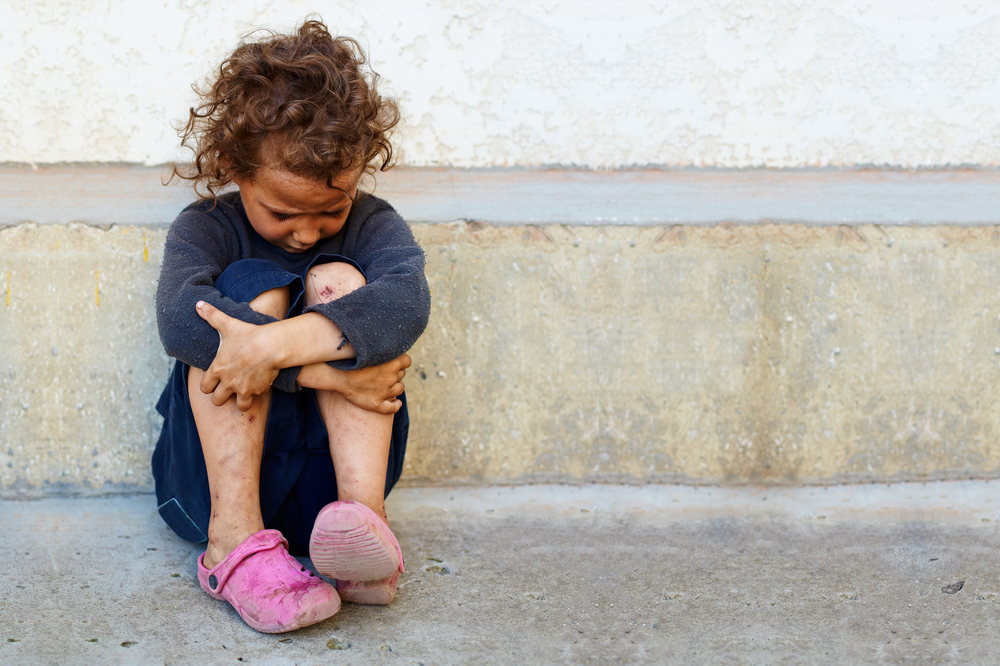
A social welfare expert from Flinders University is calling on the Federal Government to put child poverty on the national policy agenda, arguing that child poverty rates in Australia have remained the same for almost two decades.
According to Associate Professor Gerry Redmond of the School of Social and Policy Studies, rates of relative child poverty have not fallen since the mid-1990s and are unlikely to drop in the future because the Government does not consider child poverty a priority issue.
The Australian Council of Social Service’s latest Poverty in Australia report shows nearly 600,000 or 17.3 per cent of children in Australia are living in poverty.
The issue of child poverty in the context of long-term policies to support families with children is highlighted in a new paper written by Associate Professor Redmond and his interstate colleagues, titled The Global Financial Crisis and Child Poverty: The Case of Australia 2006-10.

Associate Professor Redmond said the research, which has just been published in the international journal Social Policy and Administration, shows that while the Government’s economic stimulus package during the 2007-2008 Global Financial Crisis (GFC) improved the wellbeing and temporary financial situation of Australian families, child poverty remains a serious yet neglected issue.
“A lot of the major payments for families with children were slowly being scaled back in the mid-2000s but when the GFC hit, the Government introduced one-off payments for families with children, pensioners and low-income earners to boost economic growth by encouraging spending,” Associate Professor Redmond said.
“The stimulus payments had a positive effect on poverty in general and the wellbeing of families with children, particularly those who were already poor, but because it was a once-off payment it didn’t represent any significant shift in recognising poverty, especially child poverty, as an issue that needs to be addressed,” he said.
“While the stimulus package served its intended purpose at the time, we still need to be looking long-term at child poverty, which is high in Australia by international standards.”
The research used data from the Household, Income and Labour Dynamics in Australia (HILDA) survey, a panel study that has followed almost 20,000 people across 7,600 households every year since 2001, to examine the impact of the stimulus package on Australian family incomes.
Stay informed, daily
Despite the immediate benefits of the cash-boost, Associate Professor Redmond said the Government has shown little interest in reducing child poverty.
“The HILDA data suggests the stimulus package impacted wellbeing but also interviews we carried out at the same time with young people experiencing economic disadvantage showed they not only knew what the stimulus was, they clearly benefited from it.
“In general, the stimulus proved to us that the Government can do something when it wants to, so it’s not like the issue of child poverty is insurmountable.
“But it remains unlikely that child poverty will fall in the future unless it’s put on the policy agenda.”
Want to see more stories from InDaily SA in your Google search results?
- Click here to set InDaily SA as a preferred source.
- Tick the box next to "InDaily SA". That's it.