The battle for funding of shark patrols on Adelaide beaches this summer stepped up today after four shark sightings on the weekend.
State Government funding cuts to helicopter patrols mean beaches will be less than adequately serviced on week days, surf lifesavers warned.
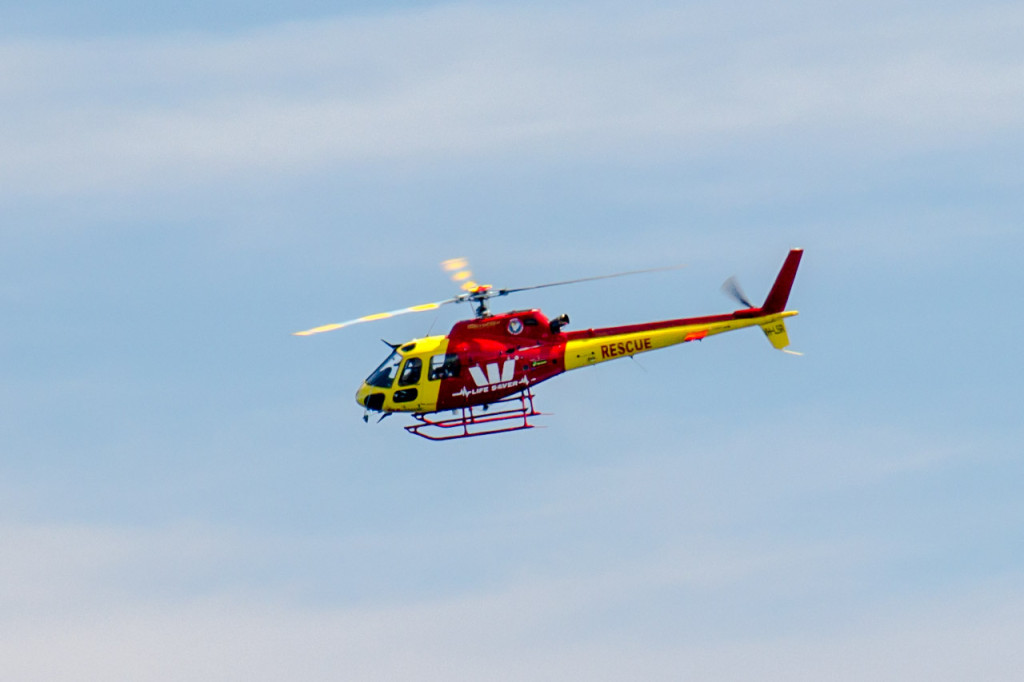
“We spotted a shark at Moana 50 metres offshore on Saturday and were able to drive it out to sea using the helicopter,” Surf Life Saving SA’s John Baker said.
“We can do that with a helicopter, but fixed-wing aircraft don’t have that versatitlity.”
The Moana sighting was one of four shark sightings on the weekend.
Baker said the funding cut of $140,000 meant helicopter-based patrols could not run during the week, making beaches less safe.
“We want the funding reintroduced; the cut’s taken away our ability to be flexible during the week,” Baker told Radio FIVEaa.
You might like


“The truth is, we need more aerial patrols and the helicopter is far more useful.”
Westpac funds the weekend operations of the helicopter service over summer – a total of 220 flying hours.
Another 90 hours had been funded by the State Government, until the cuts were made.
The funding issue became a political hot potato last week when Baker warned Surf Life saving SA would campaign for funding through its members who live in key marginal coastal electorates.
Mr Baker said the $140,000 cut from helicopter funding had been transferred to the fixed-wing patrols. This meant the helicopter’s flying hours had been cut from 300 to 210 over summer.
Emergency Services Minister Michael O’Brien disagreed with SLSA president Baker on which services were more effective.
“It’s wrong to claim that aerial patrols for sharks have decreased under the new arrangements, which came into effect from last summer,” O’Brien said in a statement today.
“In fact, these new measures have seen aerial patrols increase by around 170 hours over the summer period using the fixed-wing aircraft.
Stay informed, daily
“In previous years, shark patrol hours reached just over 730 hours while, under the new arrangements, they will exceed 900 hours.
“Fixed-wing aircraft are an effective means of detecting sharks and warning beach-goers of their presence.
“In addition to the increase in patrol hours, the fixed-wing aircraft also cover a greater distance – ensuring greater coverage over summer.”
SLSA’s John Baker said today it wasn’t that simple.
“Fixed wing aircraft have a big turning circle.
“By the time the aircraft turns around, it can lose sight of the shark.”
It’s been a tragic start to the Australian summer in 2013 with two deaths in recent days.
Beaches on the NSW mid north coast remain closed yesterday as the search for the shark that killed a young surfer continued.
Zac Young, 19, was bodyboarding with three friends at Riecks Point near Coffs Harbour on Saturday when a shark bit off his legs.
His friends dragged him to shore and tried to resuscitate him but he died a short time later.
The deadly attack came a week after a surfer was killed by a shark off Gracetown in Western Australia.
Beaches from Sawtell, just south of Coffs Harbour, to Woolgoolga, further north, remain closed on Sunday.
Police say the search for the shark resumed at first light.
Want to see more stories from InDaily SA in your Google search results?
- Click here to set InDaily SA as a preferred source.
- Tick the box next to "InDaily SA". That's it.