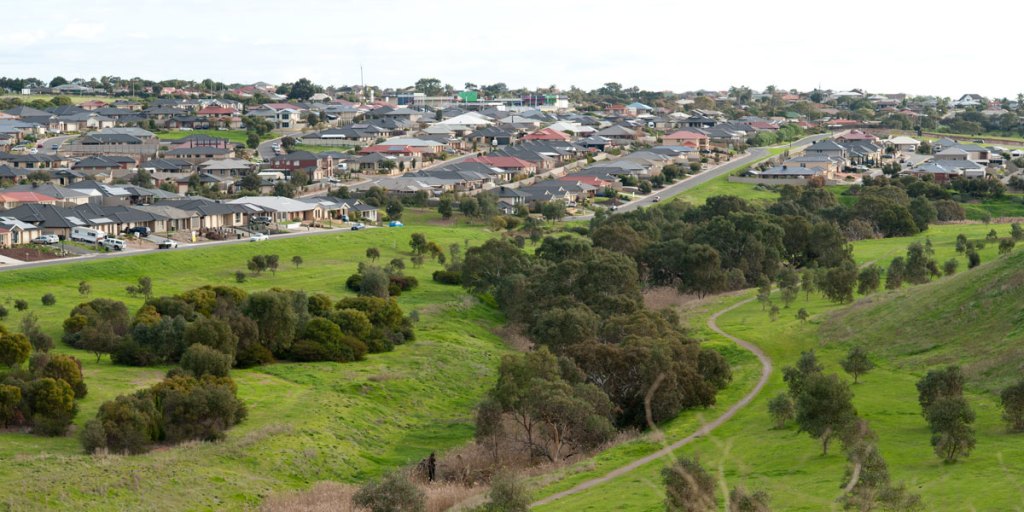
BILL QUEALE: Let me offer that large homes with large price tags can have the potential for unplanned consequences (In defence of McMansions, InDaily, 20 November 2013). While many families in their peak earning years have been able to buy large homes these past several decades, that was not always the case and may not be the case in the future.
Generally speaking, large homes accommodate either large families, or smaller families who can afford some luxury. Now anticipate a time when these expensive homes begin to be occupied by baby boomers living on retirement incomes or pre-retirement families where the kids left the nest and mom and dad do not need all that space. Picture a glut of McMansions and not enough people with the resources to buy them.
If that happens on a large scale, vacancy rates may go up and/or property maintenance may suffer. Prices may drop as a result, but will they drop enough for an average family to buy them? If not, look for two young couples to form a corporation, split the costs, and buy the home together. There is enough space. They will share the kitchen so it is technically still a single family home, but they will divide the bedrooms and baths for privacy. They may either share common space such as living rooms and recreation rooms, or they may find other ways to divide those interior spaces for private use. The rooms will be fully utilized but not violate any occupancy laws. The result would still be one house, but there will be more cars to park (will they crowd the road or clutter the yard?), more traffic volume, more people requiring more water and sanitary sewage collection and treatment (are the mains and treatment facilities large enough?), more trash, and more kids in school (will a new school site and building be required?).
As birth rates move upward (they are cyclical), some future generation can produce twice as many children per McMansion than anticipated. The homes may look just as grand, but the neighborhood will have changed. Is that OK? Or should something this fundamental be up for policy discussions?


MALCOLM KING: You don’t have to be a weatherman to know which way the wind blows at The Advertiser.
The August national newspaper circulation figures were very bad. The Advertiser’s (Monday to Friday) circulation slipped 10 per cent to 155,635 of newspapers ‘sold’. The reason I parenthesis ‘sold’ is that during the football season, more than 10,000 newspapers were hurled off a back of a truck at AAMI Stadium.
The Sunday Mail circulation has fallen by 9.3 percent to 246,007 copies and is heading south at a rate of knots.
The Advertiser has been trending down about 4 per cent year-on-year but a fall of 10 percent is unprecedented.
One explanation may be the migration of readers to the digital form. There are no current figures on take up of the digital paper but in Melbourne, the online Herald Sun take up of just 26,000 in a large market is disappointing.
Stay informed, daily
The tipping point is when production costs cannot be balanced against projected revenue. Will the Tiser’s digital lifeboat float? That remains to be seen.
Send us letters via email to [email protected], including your full name. The editor reserves the right to edit letters.
Or join the discussion on our Facebook page.
Want to see more stories from InDaily SA in your Google search results?
- Click here to set InDaily SA as a preferred source.
- Tick the box next to "InDaily SA". That's it.