What we’d pay for a drink
People drink Coke. Lots of ’em drink ridiculous amounts of it. So it seemed a bit funny this week, the delirium that followed the shock-horror revelation that when the glasses are presented blind, most British wine enthusiasts prefer to drink cheaper wines.
Surely we prefer mostly to drink things we are accustomed to drinking?
An outfit called the London Wine Academy released information it had gathered over two decades. It had tested some 20,000 people who attended its wine education courses. In each instance, it had presented these students with masked wines made from the same variety – one at £4.99 (about $A8.60), and another at £19.99 ($A34.40). Without knowing their actual prices, eight out of 10 of these people preferred the cheaper wine.
When testing, say, Majestic Wine’s Aspen Hills Chardonnay (£4.99) from south-east Australia, against Gerard Thomas’s Saint-Aubin Premier Cru Chardonnay from Burgundy (£19.99), around 80 per cent of those tested preferred the Murray-Darling irrigated cheapie to the posh Burgundian offering.
Presuming this British exercise would be mirrored in the Australian market, vendors of cheap wines here seemed ready to believe these findings vindicate their business. Ridiculously cheap bottled wines aside, nearly half of Australia’s wine is still consumed from bladder packs – that part of the business which attracts less tax per litre than more expensive and presumably better-quality wines.
In the quality stakes, it is this bottom half of the business which uses vast amounts of irrigation water from the troubled Murray-Darling to produce wine which is three times the strength of the average beer, and sold for around the price of popular bottled water imports.
You might like


The current drive to replace the Wine Equalisation Tax with an excise, or volumetric tax, on the amount of ethanol in each container, is led by Pernod-Ricard (Orlando-Jacob’s Creek) and Treasury Wine Estates (Penfolds-Wolf Blass et al), two giant winemakers who’ve decided there’s no future for them in making big irrigation bottom-rung wines to feed the discount bins.
Beer and spirits are taxed by excise.
If taxed by excise (the alcoholic strength of the product), rather than the WET system, which is a tax on the price of the product, cheaper wines would increase in price, while the more profitable expensive wines would be cheaper. The bladder-pack vendors maintain such a change would prove an utter disaster for their businesses.
Most perversely, this British report came within days of another, the results of the study of neurobiologist Kai-Markus Müller, of Aspach, in the Swabian-Franconian Forest region of southern Germany. Having worked for Simon, Kucher and Partners, a big international company which helps manufacturers devise suitable prices for their products, Müller is fascinated by businesses which make their money converting water to something they can sell at a profit.
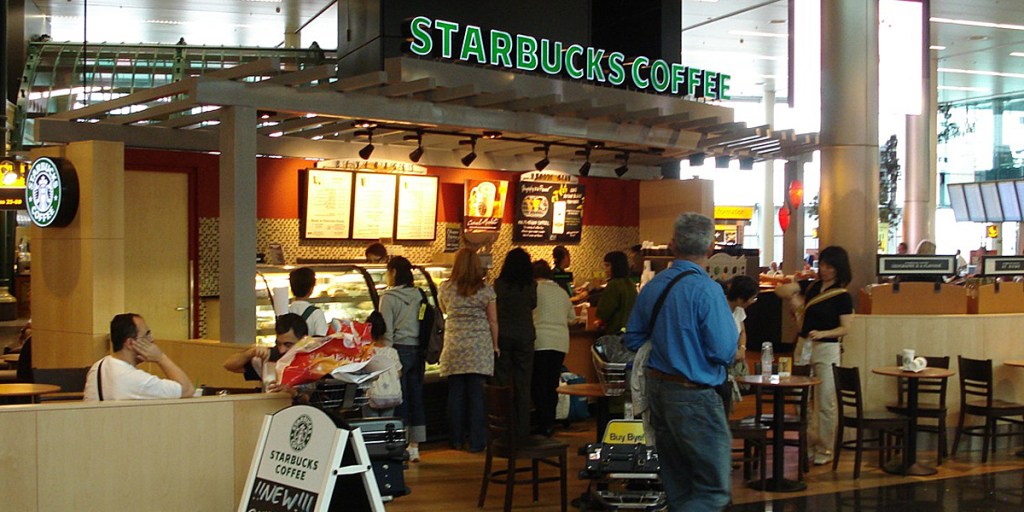
His recent target was Starbucks, the Seattle-based international which makes its billions adding coffee to hot water, and selling this, with a little added fat and sugar, in wasteful cardboard and plastic cups.
"Our feel-good factors indicate that we would be happier paying a little more than what we are actually charged – even for products we are used to consuming"
Stay informed, daily
Instead of testing folks in the tasting room, Müller simply exposed his subjects to the image of a €1.80 ($A2.45) coffee on a screen. The image re-appeared several times, each with a different price tag. He tested the reactionary brainwaves of each person by electroencephalography, and discovered most of those tested would be happy to pay between €2.10 and €2.40 for the same coffee.
“Everyone thinks that they’ve truly figured out how to sell a relatively inexpensive product for a lot of money,” he says. “But the odd thing is that even this company [Starbucks] doesn’t understand it … In other words, the company is missing out on millions in profits, because it is not fully exploiting consumers’ willingness to pay money.
“Classic market research doesn’t work correctly.”
Müller talks of primitive neuronal mechanisms “deeply buried in the human brain, which we can’t just deliberately switch off”.
“When the brain was expected to process unexpected and disproportionate prices, feelings of shock, doubt and astonishment manifested themselves,” he said. But his testing shows that in many instances, our feel-good factors indicate that we would be happier paying a little more than what we are actually charged – even for products we are used to consuming.
Citing the fact that some 80 per cent of all new products fail and soon disappear from the shelves forever, often through lack of precise price research, Müller concludes: “A study like this has never been done before, even though scientists have been studying brain waves for decades. Everyone wins with this method.”
We accept now that supermarkets – and presumably their giant liquor outlets, like Dan Murphy’s and Liquorland – track their customers as we wander through the aisles by the GPS device in our smartphones, and keep precise files on our buying patterns.
Being prone to far-fetched imaginings, this writer can’t help sewing all these factors together. Surely the day’s not far off when the huge scanning laboratory called the supermarket can be tuned to adjust prices for each consumer, not just when we stroll the golden aisles, but when we view products for order and purchase on our screens at home?
Perhaps the wine business that maintains its supply of cheap plonk is a necessity for the nation’s well-being could extend such research to discover that an increase in the price, say, of the bladder pack, might not be such a business catastrophe after all? Could they indeed eventually make enough money to pay a greater price for their irrigation water, thus creating a more sound business model for the management of our greatest river basin?
This is something, surely, that an august body like our Wine Research Institute, or indeed Pernod-Ricard and Treasury, might begin to investigate, rather than repeat the rote application of the sorts of market research Müller claims to be, quite simply, kaput.
Maybe even Coke and the bottled water vendors might make a little more money.
Want to see more stories from InDaily SA in your Google search results?
- Click here to set InDaily SA as a preferred source.
- Tick the box next to "InDaily SA". That's it.