Richardson: As good as it gets?
We’ve just completed the penultimate sitting week not merely of the year, but of the parliamentary term. Not that you’d know it.
There has been no mad push to pass contentious, administration-defining bills. There has been little in the way of agenda-setting speeches, other than by individual backbenchers doing their bit to leave a legislative mark while they are still able.
Indeed, there’s been a general “let’s just get this over with” type of vibe, which can hardly auger well for the incumbent.
But then, we have essentially passed the point at which parliament can contribute much further to Labor’s legacy. John Rau’s strangely knee-jerk bid for upper house electoral reform aside, whatever is promised now by the Government will be predicated on being returned to office.
The Liberals, after dipping their toe in the policy ocean, have now meandered back up the beach to have a bit of a kip on the towel under the umbrella. The only semblance of urgency has been from Jay Weatherill on Holden, but the urgency is misplaced since he is utterly powerless to influence either the company or the Federal Government. Having a Clayton’s debate in state parliament about the auto-maker’s value (unsurprisingly, everyone supported the motion but still managed to disagree with everyone else) was about as enlightening as an episode of Q and A: it was a bunch of people showing off to people who agree with them by denigrating people who don’t agree with them, none of whom are going to actually do anything about it anyway.
All Weatherill has for Holden now is lofty rhetoric. Today he’ll speak to auto industry groups in Victoria, where his simplistic slogans will net him another captive audience. He is tireless, one must admit, but it is clear Holden has now become for his administration a textbook symbol of “Labor values”, a lone branch protruding from the floodwater fast washing the Government away, that the Premier is now gripping with all his might.
You might like

So too the notion of South Australia’s latent mining boom.
It seems strange that long after pinning some of the Labor’s flagging fortunes on Rann-era “overspruiking”, Weatherill remains committed to perpetuating the spin around what amounts to the state’s biggest political myth.
Put simply, he won’t let the mining boom die.
Like the proverbial naked emperor, he prances around entreating all he passes to marvel at the size of his assets (mining assets, that is), oblivious to the fact that it’s not what you’ve got, it’s what people are prepared to pay for it that counts.
Early in his tenure, Mike Rann correctly identified mining as one of the industries upon which South Australia could build a new economic foundation. He poured money into exploration, and relaxed regulations to entice prospectors. But that was 10 years ago now. New Federal Treasurer Joe Hockey is the latest of many highly-credentialed commentators to declare the mining boom over. That point alone is not even up for debate anymore; the conversation has progressed to assessing what it means for states whose livelihoods are inextricably linked.
And yet our Premier, a man who advocates plain speaking in public discourse, refuses to acknowledge the premise that the mining boom is gone. When pressed, he shifts to semantics: “It’s an exploration boom.”
Stay informed, daily
That may sound all very nice, pregnant with the promise of great things to come. But the fact is, having an exploration boom long after everyone else has reaped the economic windfall of a mining boom doesn’t mean you’re next in line to unearth some mineral wealth. It just means you weren’t quick enough to capitalise while everyone else was.
"Perhaps voters don’t care for moral purpose in Government when faced with spiralling unemployment and cost of living."
Now that commodity prices have peaked, having knowledge of your vast mineral resources is, to borrow Vickie Chapman’s phrase, about as useful as tits on a bull.
The enormous start-up costs to establish the infrastructure to dig up SA’s assets, combined with punitive export costs and relatively meagre returns, are unlikely to see a rush of miners jostling for position outside Tom Koutsantonis’s office door.
The state’s mining boom has been a slowly-growing embryo, nourished with Governmental support and media hype, but it has been stillborn. The upside, if there is one, must be that there will be no corresponding bust. No massive rounds of layoffs. A few projects mothballed, a few more never followed through with. Effectively business as usual, and profitable enough for those who do it well.
It’s no surprise to see Labor clinging so stubbornly to its rhetoric of the last decade; without a future for manufacturing and a burgeoning minerals sector, much of its foundation for economic credibility crumbles beneath it. I wrote recently that rediscovering its moral purpose would be the ALP’s challenge in Opposition, whenever that happens. Strangely, this is ever thus: Labor parties everywhere seem to wrestle with their reason for being once the cloak of power is divested. Conservative parties, conversely, tend to bicker amongst themselves over who gets what, and then get on with plotting a return to Government (with varying levels of competence).
The SA Liberal Party, to be fair, once split over ideology, but swiftly decided the best way around the problem was not to have one at all.
As such it appears to have chosen the perfect leader in Steven Marshall, a man so removed from the shackles of political ideology that he only bothered joining a party for the first time eight years ago, of which four have been spent as an MP. He really is the poster-boy for contemporary conservatism; someone who views Government like a businessman views industry, as a problem to be solved.
If he’s the right man for the Liberal Party, perhaps he’s the right man too for the electorate, for now. Perhaps voters don’t care for moral purpose in Government when faced with spiralling unemployment and cost of living. Perhaps they want nothing more than a competent-sounding small-businessman to deliver a few platitudes about stiff upper lips and rolling up sleeves. Which would be all very well if the Liberals would give us the slightest inclination that they actually had an agenda to match their rhetoric.
We can at least say by now that we know what to expect from Labor. I’ve long been cynical about the Liberals’ policy vacuum but even I would have expected we’d hear more from them with one mere sitting week left of parliament.
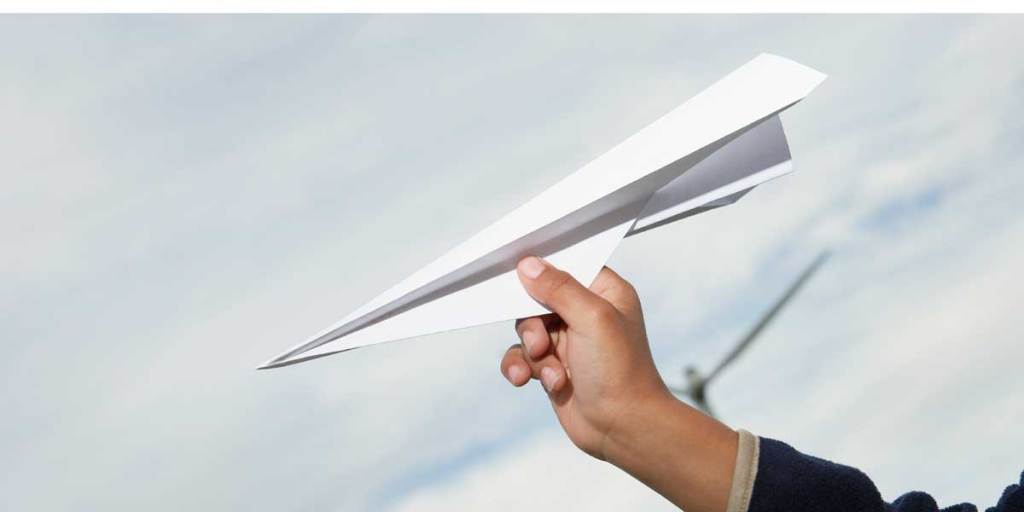
The policy statement that thus far constitutes their contribution to the sum of human understanding was flimsy enough for Jay Weatherill to fold into a paper plane during one particularly lacklustre Question Time this week (one hopes the immortal words of Steven Marshall – “He turned my policy into a paper plane” – will one day grace the title page of his political memoirs). But it was a sadly telling picture of the state of our political fortunes: a bored and listless Premier and an Opposition whose promises are scant and lightweight enough to dispatch into the clouds without a second thought.
Is this it? Is this all we get?
Tom Richardson is InDaily’s political commentator and Channel Nine’s political reporter.
Want to see more stories from InDaily SA in your Google search results?
- Click here to set InDaily SA as a preferred source.
- Tick the box next to "InDaily SA". That's it.