Letters to the Editor
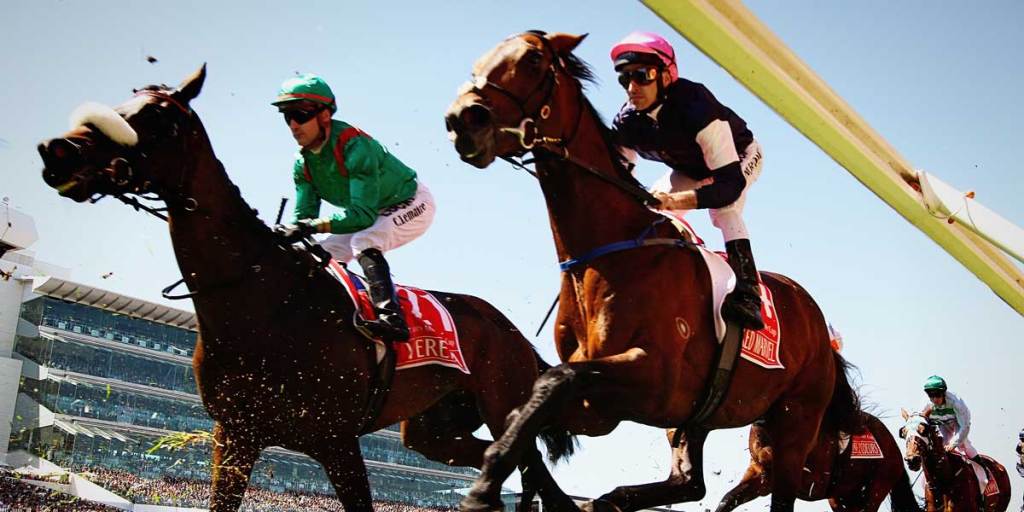
Readers express their views on the Melbourne Cup, Adelaide’s parklands, and the population debate.
SHARON HUTCHINGS: The injury and subsequent death of Melbourne Cup runner Verema, and the dismissive way it was treated by the media, again highlights how heartless, shallow and greedy this industry is.
Spare a thought also for the thousands of unprofitable racehorses that are sent to an early brutal slaughterhouse death every year. In response to those who will inevitably try to defensively attack my view, please remember that the human participants willingly choose to be part of this money-hungry business; the beautiful, innocent animals deliberately bred into it have no choice.
PETER SCHLESINGER: Malcolm King has got it wrong … again (“No growth” lobby damaging community groups, InDaily, 5 November 2013).
We Malthusians are not “no growth” groups – we’re mostly “pro-contraction” groups. I’m no fifth columnist; I’m no columnist at all. I love this country. I just dislike the misguided and destructive path we’re currently on, and with like-minded people am endeavouring to point out a different route.
The world is overpopulated with people, and we’re making it increasingly uninhabitable for future generations (the science is irrefutable).
You might like

There is no alternative rational economic counter-argument to that fact other than to (humanely) contract the client base and consequentially contract business. Which is why King is fighting, as though for his life.
Malcolm King is of the same ilk as Bernard Salt, that other prolifically vocal corporate demographer, although of late Bernard has seen a glimmer of truth by acknowledging there are limits to growth and slow population growth reduction is recommended. King remains hostilely intransigent.
CAROL FAULKNER: I have three words for Malcolm King – water, water, and water.
I joined the Save Cheltenham campaign because of water. For those who don’t remember, South Australia was in the midst of the worst drought on record, the Murray was on its deathbed, and 49 hectares of open space at Cheltenham Park Racecourse could have been turned into showcase wetlands producing 30GL per annum of recycled stormwater. It is now under development for housing.
Before I’d even heard of any pro-stable population groups, I looked deeper into the reasons why the government would choose to waste such a golden opportunity to use the racecourse for water recycling, flood mitigation and recreation in favour of turning it over to developers. I found ample evidence that since its election in 2002, the state Labor government formed a partnership with the development lobby to focus on housing construction as a prime economic driver for SA.
Essential to achieving that objective was creating demand for new homes via population growth. The first formal policy, “prosperity through people – A Population Policy for South Australia”, was released in March 2004. That document, and all subsequent policies and plans since released, rely on overseas migration to achieve substantial population growth in SA. The government has remained largely silent on its population growth agenda.
Stay informed, daily
The much touted justification for the Adelaide Desalination Plant was that it would reduce our reliance on the Murray and insure the present population against drought. In the background, the real reason for building a 100GL plant was to cater for the 30-Year Plan’s population target of 560,000 extra residents (home-buyers). That’s 560,000 extra water consumers.
Mr King can resort to any amount of name-calling he wants. But I will not have my genuine concern for the Murray, the environment, my children, grandchildren and future generations brushed aside by someone who clearly has not considered all sides of the argument. Population growth is a worldwide concern, inextricably linked to climate change and depletion of natural resources. The concept of perpetual growth is unsustainable, illogical and only pushed by those with self interest at heart.
S. BOXALL: I read the article, 100 years of the same parklands debate (InDaily, 5 November 2013) with interest.
I wonder if those who criticise the ‘underdevelopment’ of the parklands have studied maps or walked the parklands to see the large number of playgrounds, formal gardens, sports fields, walking and bike tracks as well as natural spaces that already exist. Many are well utilised.
To keep the parklands green and welcoming would require unlimited water and many more gardeners than we could afford. Adelaide is a small city & will never have the density of population to utilise fully parks like New York’s Central Park or London’s Royal Parks.
Adelaide City Council has recently spent months and considerable community consultation to develop community management plans for its more than 20 individual parkland areas. Each area has been closely studied, its infrastructure and history identified and future development determined. Hopefully the State Government will assist in delivering some of the infrastructure needs identified in this process. Or is this another ‘grand scheme’ takeover (like the Riverbank proposals) touted by a Government desperately appealing to voters in the run up to an election?
CHRISTOPHER ALLAN: The parklands around Adelaide are used for lots of things & they have a diversity from well-manicured gardens to scrub. This is a good thing, especially being able to save native scrub areas so close to the city and being able to use the rest for other purposes.
We haven’t got a single tract of land as in New York City, or Perth; instead Adelaide is ringed by parklands, which isn’t uncommon in Europe. It provides a good buffer between the city and suburbs. It’s a good thing for the psyche to have the parklands as a buffer.
People don’t always need to be using it and some areas will be used more than others.
The following are a lot of what the parklands are used for: North Adelaide dog park, horse riding, Adelaide Aquatic Centre, sport (community clubs, university and schools), restaurants, events and functions, manicured gardens, Cross of Sacrifice, Adelaide Zoo, Torrens Linear Park (walking, cycling, running etc), Adelaide Oval, Torrens Parade Ground, Botanic Park, Botanic Gardens, Adelaide High School, West Terrace Cemetery, playgrounds, BMX track, Victoria Park (car racing and more), and the National Wine Centre.
I can’t go along with Bill Waterhouse in that everything sporting should be centrally located; instead they should be scattered amongst the suburbs and people should be encouraged to get out of the city centre. Go to the Olympic venues in Sydney and see how far you need to travel from the CBD. Diversity in this area is good for local communities, which in turn is good for the city and state.
Send us letters via email to [email protected], including your full name. The editor reserves the right to edit letters.
Or join the discussion on our Facebook page.
Want to see more stories from InDaily SA in your Google search results?
- Click here to set InDaily SA as a preferred source.
- Tick the box next to "InDaily SA". That's it.