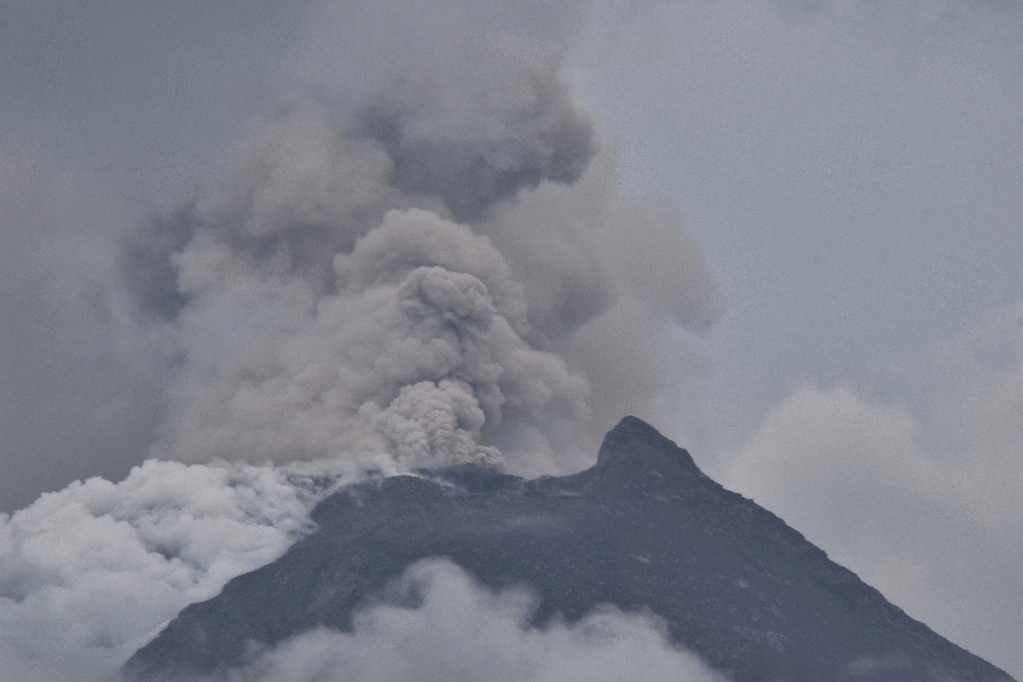
Richardson: The long corridors of memory
A few years back, I was sent by my then-News Ltd employer to cover an amiable riverbank stroll with then-Labor leader Mark Latham and one of his party’s newly-anointed candidates.
Given that such events are generally little more than picture opportunities for photographs that are then slapped on someone else’s copy, they tend to be the bane of the state roundsman’s grim existence, and I was consequently none too happy about being there. Even less so when I arrived to find either I was rather early (unlikely, in hindsight) or, more plausibly, everyone else was late. At any rate, there was nobody there, save for a slightly tense looking state Labor staffer. I’d known her by face since attending a couple of Young Labor meetings in my university days and, some years later, had generally exchanged pleasantries when our paths crossed in the parliament house corridors. Although, like many political staffers to whom one is used to nodding a passing greeting, I had long since forgotten her name, a deficiency one can generally mask with a generic “Hey mate”, or some politically-flavoured small talk. On this occasion, though, I wasn’t much in the mood for small talk and, by her pallor, neither was she.
“They shouldn’t be too much longer,” she assured me.
“No problem,” I reassured her, in a tone that suggested it was really quite a problem.
A few more awkward moments of silence passed, during which I began to realise that even for such a tepid assignment, I was singularly ill-prepared.
“So, who the hell IS the Labor candidate for Adelaide anyway?” I sighed disdainfully, rifling through my armful of media alerts.
She looked at me with a mix of bewilderment and concern.
“Um … I am,” said Kate Ellis.
You might like

More awkward silence.
“Oh, yeah. Right. So … when did that happen?”
It had happened several weeks before. Not that it was much of an excuse, but I was overseas at the time, and deliberately and gloriously disconnected from affairs of state.
But it nonetheless didn’t get the media event off to the most comfortable start. Furthermore it went downhill from there; I seem to recall that when Latham did arrive, Ellis was so flustered that she left her handbag hidden behind the front wheel of a nearby car in her determination not to fumble her big moment. When they returned from their brief but vigorous stroll along the banks of the Torrens, the bag, of course, had vanished.
So, not the most auspicious beginning, although, of course, it would be Ellis that would go on to have a successful political career while Latham would quickly implode and all but disappear. (I continue much in the same vein, shuffling awkwardly between media conferences trying to remember people’s names.)
It sometimes occurs to me that many of those I met briefly at those couple of Young Labor meetings have gone on to glittering careers so I probably should have stuck it out a bit longer, although that probably would have required me to vote Labor more consistently.
At any rate, I was prompted to think back with a shudder on that maladroit encounter this week, as I winged my way to Canberra for a brief sojourn pinch-hitting in the 9 bureau.
It was fortunately timed, as there was nothing much happening locally this week. Well, apart from the ALP state convention, Weatherill’s pledge to shift the Women’s and Children’s Hospital to city-west, Marshall’s election campaign launch, the Liberals’ long-awaited payroll tax policy, Labor’s inner-suburban rezoning scheme and a burgeoning fracas between the State and Federal governments over Holden’s tenuous future.
Which at least lent some symmetry to my peregrination, as Jay Weatherill traded barbs with Ian Macfarlane and matters state and federal seemed to mould into one. State and federal political rounds sit closely but awkwardly together; it’s an awkward juxtaposition – SA’s federal politicians have been bred in the same branches and sub-branches as their state parliament colleagues, and you’re never quite sure when that harried advisor whose name you always forget is going to become the Federal Minister for Sport. Furthermore, while the brow-beaten state MPs have been raised on a diet of bile and ridicule to front media conferences till the bitter end, their national brethren tend to swan in for a lofty photo op, then swan off again after a couple of questions because they have a plane to catch, or somesuch.
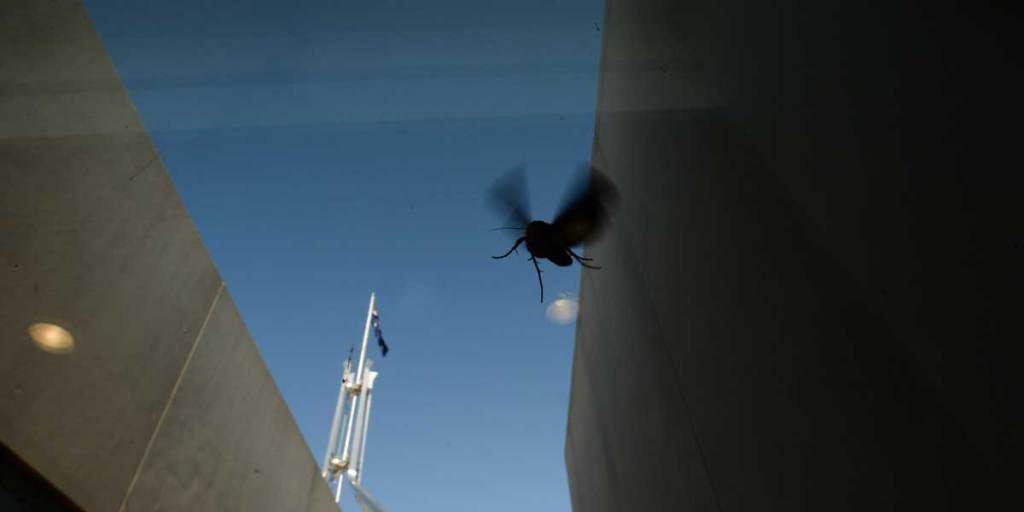
I’ve lived in Canberra (or existed there at least) twice before, as a student and a public servant, and it’s a uniquely funny little place, particularly when parliament’s not sitting and the aura of being some kind of hub of power is rather dimmed. I remember thinking some 10 or so years ago how impressive parliament house was as a building, still relatively young and unwearied. Another decade on though (and indeed, a decade that has seem the world transform apace) and the big white house has grown decidedly tired. Indeed, in the stillness of the weekend quietude its vast corridors and faded ochre carpeting instead resemble the Overlook Hotel from Stanley Kubrick’s The Shining. You almost expect to see an irate, unshaven Jack Nicholson lumbering around brandishing an axe, or to be showered with blood every time an elevator opens. You aren’t, of course. Instead, you’re set upon by hordes of moths. In case you hadn’t heard, the cradle of Australian democracy is infested once a year by a bogong plague. They quite literally take over every office, and authorities have given up trying to move them along.
Stay informed, daily
They are, however, good fodder for the birds, which cluster hungrily in the courtyards like extras in a Hitchcock movie. So, yeah, as I said, it’s a funny little place.
When it livens up, there’s a permanent disheveled buzz, apart from the immaculately groomed young media minders (from both sides) that patrol the corridors, almost always in pairs, dropping in to media offices to scout the news of the day. With their matching slim-line navy suits and born-again zeal, they resemble nothing so much as doorknocking Mormons dogmatically spreading their good word through fixed smiles.
As such, relations between media and minders seem more cordial than in the state bureaus, or at least less liable to collapse in a meltdown of blind rage. There is a certain routine to the national media cycle, such that a drop to a prominent paper is seen as part of the process, rather than as a wholesale affront.
I’ll never forget last summer spending a good five minutes swearing energetically and inventively at one of Jay Weatherill’s press secretaries (who wasn’t even at personal fault) over a drop to the local paper (and not even a particularly good drop, it was about Bank Street getting a makeover); I was only silenced when at length I noticed the terrified work experience student over the partition who was no doubt hastily reconsidering her career aspirations.
The media is, of course, in thrall to politicians to provide copy. Ironically, after lampooning K.Rudd’s 24 hour news obsession and punishing schedules, the laconic pace of the Abbott administration is causing some mild media anxiety.
Where Rudd was obsessed with offering up daily “announceables” to create a cacophony of media noise, Abbott understands the beauty of the silences between the stanzas. His strategy is deliberately underwhelming; to methodically follow through his promised agenda, just that, nothing more.
Regardless of ideology, it is the right pitch for Australian politics right now. We live in an age of diminished expectations and they are diminished, in large part, because of the political promises that have been left undelivered.
If (when?) the SA Labor Government is ousted in March, it will be because of what they pledged to achieve and failed to achieve. People may not remember all the little things that amounted to a one-day headline for Mike Rann – stuff like the local production of the Marcos sports car that never happened – but they tend to remember all too well the hyperbole surrounding the likes of Olympic Dam, and the promise to create 100,000 new jobs. People tend to notice when that kind of thing doesn’t eventuate.
But when one considers a sample of Labor’s infrastructure accomplishments in SA in the past decade — the Bakewell Underpass, the Gallipoli Underpass, the South Road overpass, the Aquatic Centre, the Port River Expressway, the Northern Expressway, the Southern Expressway duplication, the SAHMRI, the beginnings of the new RAH and the Adelaide Oval – it’s a fair old achievement.
Labor’s trouble is it’s increasingly being judged not on what it has done, but on those things it told us it could do.
When the Olympic Dam expansion fell over, Weatherill tried to hose down the widespread alarm by explaining that nothing bad had happened per se; rather, a good thing wasn’t going to happen (?). The problem is, the Government (across its various guises) has led us to believe a great many good things would happen, and a great many of them haven’t. And that tends to feel like something bad has happened at some point along the way.
The other night, I made the mistake of mentioning the possibility of ice-cream for dessert to my two-year-old son. I neglected, however, to check that this offer could be honoured, resulting in an impassioned and well-deserved tantrum. If I’d never opened my big mouth, he’d have been none the wiser and happy with his bowl of steamed pears. But because I’d raised the bar higher, anything else I could offer was only ever going to be a bitter disappointment.
That’s about where Jay Weatherill’s at right now; politically, it’s five minutes to 7pm and he’s got a screaming child on his hands and no ice-cream in the freezer.
He’s determined to pursue this stoush with the Abbott administration over Holden, largely because he has to, and partly, I suppose, because if all else fails he can at least attempt to pin the failure on the Federal Coalition. Except that Abbott, true to form, never promised to save Holden. Indeed, he never even promised to throw a bunch of cash at it (quite the opposite). It was the State Labor Government that was going around telling anyone who’d listen it had saved the ailing automaker. If (when?) this Government is sent packing, its tombstone will certainly read: “Died of overspruiking”.
But there have been achievements too, overlooked now but likely acknowledged in the final wash-up. It might not be enough to stem the flow of disappointed and disaffected votes, but it could be enough to contain the losing margin. That is important. Labor’s next Premier may not yet be in parliament, but the seeds of its next Government can be sown at this election. The nexus between the state and federal party is crucial here; the talent pool in state parliament must be deepened, and the best and brightest mustn’t be merely siphoned off to fill the backbenches of the federal caucus. A new generation of potential ministers and leaders must be not only elected, but elevated.
There may even be one or two I once met at some university Young Labor meeting. Let’s just hope I remember their names when I see them round the corridors of power.
Tom Richardson is InDaily’s political commentator and Channel Nine’s state political reporter.
Want to see more stories from InDaily SA in your Google search results?
- Click here to set InDaily SA as a preferred source.
- Tick the box next to "InDaily SA". That's it.