Education gap a grave concern: Uni Chancellor
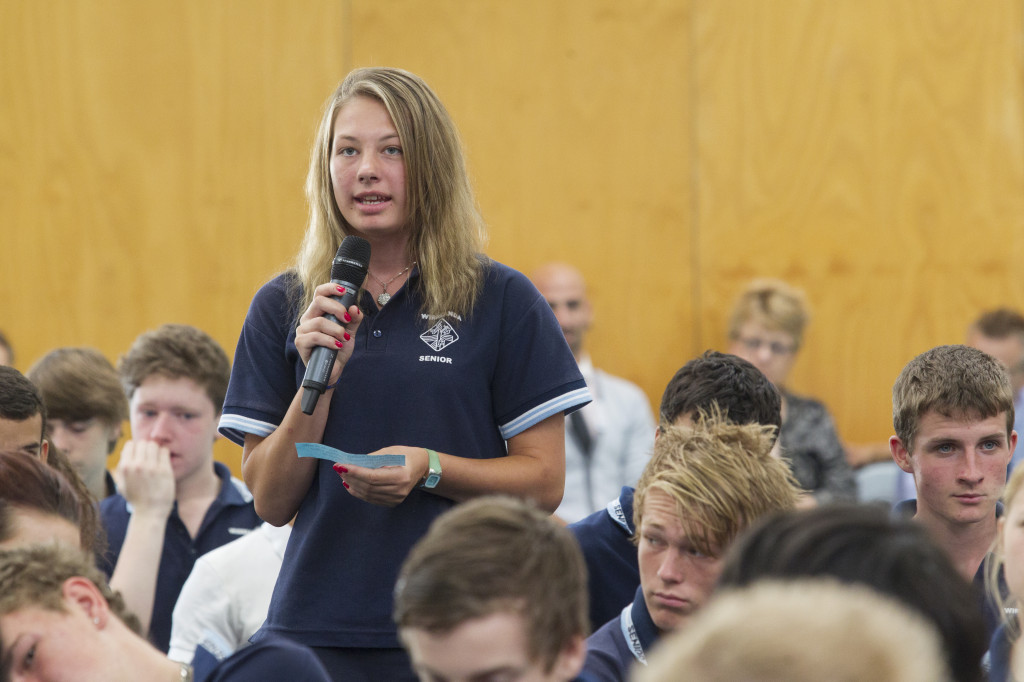
A lack of focus on technical subjects in the secondary education system is a “matter of grave concern”, a leading educator says.
Resources industry stalwart and Chancellor of the University of South Australia, Dr Ian Gould, says secondary school educational principles that led to some of Australia’s most significant resource discoveries and development are sadly languishing today.
Dr Gould made the comments in the 39th annual Essington Lewis Memorial Lecture – one of the most prestigious lectures on the Australian resources industry calendar.
He told the Adelaide audience on Friday night that if Australia was seeking to restore its productivity in the sector, and remain an international minerals province and “processor of influence”, an answer could lie in re-emphasising technical and selective high schools.
“If we are to secure ourselves as a world leader, and an international minerals province and processor of influence, then it is the quality and the relevance of the knowledge we create and impart that will largely help us reach that goal,” he said.
You might like

“What technical high schools, for example, did so well was to act as great champions and practitioners of STEM subjects – the Science, Technology, Engineering and Mathematics subjects that are fundamental to ensuring we’re able to train and utilise the skilled, professional workforce that the mining and processing industries amongst others require,” he said.
“It is a grave concern for our nation today that quality STEM education is languishing.
“In 2002, Australia had 22 per cent of graduating first degree students in STEM subjects, and that compared to 64 per cent in Japan and 52 per cent in China. A decade later, that proportion in Australia had dropped to just 18 per cent.
“Furthermore, a report released by the Australian Industry Group earlier this year found evidence exists that Australian employers cannot find the STEM skills that they need.”
Stay informed, daily
Gould – a former leading executive with Normandy Mining and Rio Tinto Australia – said this educational plight was being widely criticised, including by the Chief Scientists of the Commonwealth and South Australia, and The Academy of Technological Sciences and Engineering, among others. He acknowledged the issue was being partly addressed, including through a $54 million commitment by the former Gillard Government to support science, mathematics and engineering education.
While Gould applauded that commitment – and other similar pledges from governments and industry – he questioned whether enough was being done.
“There are many educators and researchers who believe that any form of ‘streaming’ or academic selectivity is undesirable and inequitable, although it is clear that within Australia, our few selective – and often ‘technical’ – schools dominate the top echelons of the Our Schools ranking,” he said.
“Streaming is a major element in the education system of Germany, which is a powerhouse of applied scientific and engineering excellence, and where high quality crafts and trades are traditionally accorded the respect they deserve.
“Perhaps we should look more objectively for an Australian version of this approach.
“Education of secondary students capable of fulfilling their academic and career potential is essential to the social and economic wellbeing of South Australia, and the nation.”
The Essington Lewis Memorial Lecture honours one of the founding fathers of the Australian resources sector – a former Chief Executive and Chairman of BHP.
Want to see more stories from InDaily SA in your Google search results?
- Click here to set InDaily SA as a preferred source.
- Tick the box next to "InDaily SA". That's it.