Richardson: The fast train to oblivion
JIM HACKER: “After all, we do need a Transport Policy!”
SIR HUMPHREY: “If by “we” you mean Britain, that’s perfectly true. But if by “we” you mean you and me and this Department, we need a transport policy like we need an aperture in the cranial cavity.”
– Yes Minister
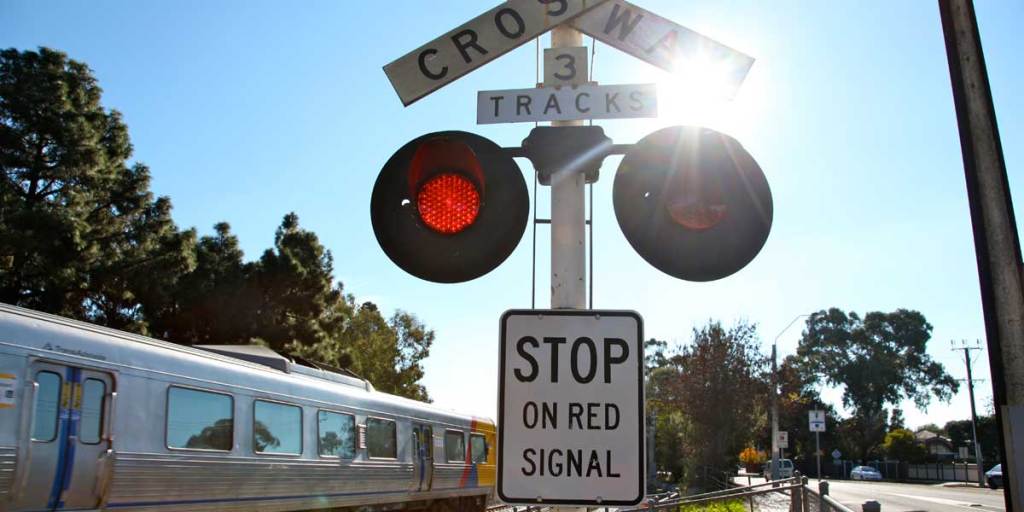
The phrase “integrated transport policy” always makes me think of that classic episode of Yes Minister, wherein Jim Hacker is duped into becoming Transport “Supremo” (or, as the public sector vernacular has it, Transport Muggins), tasked with coordinating every bus, train and underground timetable in Britain and with re-aligning vast stretches of rail and motorway.
His department secretary, Humphrey Appleby, is suitably appalled, finally convincing him to try and relinquish the poisoned chalice with advice that is close to his politician’s heart: it is the ultimate vote-loser.
You might like

That was evidently not advice that was suggested to Jay Weatherill, who clearly began this week in need of what George Bush Snr once disparagingly called “The Vision Thing”. Labor, drowning in scandal and incompetence, had to find a way to break out of the devastating news cycle of Holden doom and gloom and child protection failure, and decided transport infrastructure was just the ticket.
Never mind that, as Sir Humphrey warned, if you can pull it off no-one will feel the benefits for 10 years, or 30 in Weatherill’s scenario, and long before then you’ll have moved on or out.
Despite the extended time-frame, the transport plan is largely designed to stand up to scrutiny for approximately five months. Once the state election’s out the way, it probably doesn’t much matter to the Government whether it’s achievable or not, or even whether it’s affordable.
Unfortunately though, the plan didn’t even survive the week.
Stay informed, daily
It was always a risky folly for Labor to unveil a re-election blueprint that relied heavily on its political opponents for capital. And it was certain that the fledgling Federal administration would continue as they have begun, determined to trample underfoot any vestige of Labor legacy, from political appointments to long-debated policy to (yep, you guessed it) transport infrastructure funding commitments.
Thus, on Tuesday a beaming Weatherill was out at Salisbury railway station, shaking local palms and telling the world how a canny use of funds had allowed authorities to extend track electrification beyond the planned Dry Creek depot to Salisbury. Within 48 hours though, this assurance had been steamrolled by a Federal edict that the Abbott administration wasn’t in the business of funding urban rail, and that the whole thing was off (yes, even the Dry Creek bit).
Cue much finger pointing and increasingly indiscreet barbs, most of it blissfully dancing over the key point that commuters in marginalised outer suburbs had been dudded yet again.
Not to mention the fact that if rail electrification (one of the more fundamental measures in modernising the state’s transport infrastructure) can’t secure Commonwealth funds, there’s no way in hell a new metro-wide light rail network ever will.
The Federal intervention in Weatherill’s comeback quest was probably not unanticipated (albeit its timing was possibly unappreciated by State Liberal Leader Steven Marshall, who made an all-too rare policy announcement about flexible apprenticeships on Thursday that was completely upstaged by his colleagues’ grandstanding), but it provided an apt glimpse of what’s to come over the coming months. Labor’s last mainland state government isn’t simply battling the Opposition, it’s battling a Commonwealth foe that wants to see the back of it. And yet, the cash-poor state administration still relies on the Commonwealth to keep it alive in the meantime. It’s like some awkward hostage scenario, a bitterly combative relationship punctuated by the occasional flash of Stockholm Syndrome.
The other obvious pre-election sampler was that, like it or not, we are going to see an awful lot of Weatherill, Tom Koutsantonis and John Rau in the coming months. Generally, they’ll all be clutching glossy brochures with “Building a Stronger South Australia” emblazoned on the front. But it’s clear Labor strategists believe it’s in these three protagonists that its re-election hopes lie. Chloe Fox, whose Transport Services portfolio is obviously fundamental to much of Weatherill’s Transport Plan, was nowhere to be seen. Instead, she seemed to spend much of the week falling in and out of legal wrangles with a cartoon flamingo.
There is a (generally) tried and true political principle that you do your best to promote marginal candidates at every turn, to boost their public profile. That’s why, for instance, the most marginal seat-holders are always strategically placed to appear in shot behind the Prime Minister’s head in Question Time, under some deluded logic that the sight of them nodding away out of focus for three years will somehow compel voters in their electorate to put a “1” by their name on polling day.
That’s also why candidates such as Chloe Fox tend to be given ministries; beside any particular aptitude they may have, it’s considered that boosting their profile will help their chances of re-election. Which does beg the question why the hell the woman who holds the state’s most tenuous margin was given perhaps the most fraught ministerial portfolio. Weatherill couldn’t have planned it better if he was actively trying to unseat her. Every time something goes wrong with public transport (which is pretty damn often), there is Chloe Fox to defend it. One of the biggest issues, indeed, affects commuters in her own southern suburbs seat of Bright, with the Noarlunga line still in limbo.
It does make one wonder whether Weatherill offered Fox the gig with the words, “I’d like you to be my Transport Supremo”.
And whether some wily old departmental stalwart has yet summoned up the courage to tell her that the public service vernacular is Transport Muggins.
Tom Richardson is InDaily’s political commentator and Channel Nine’s political reporter.
Want to see more stories from InDaily SA in your Google search results?
- Click here to set InDaily SA as a preferred source.
- Tick the box next to "InDaily SA". That's it.