Weatherill office wanted less incident detail: official
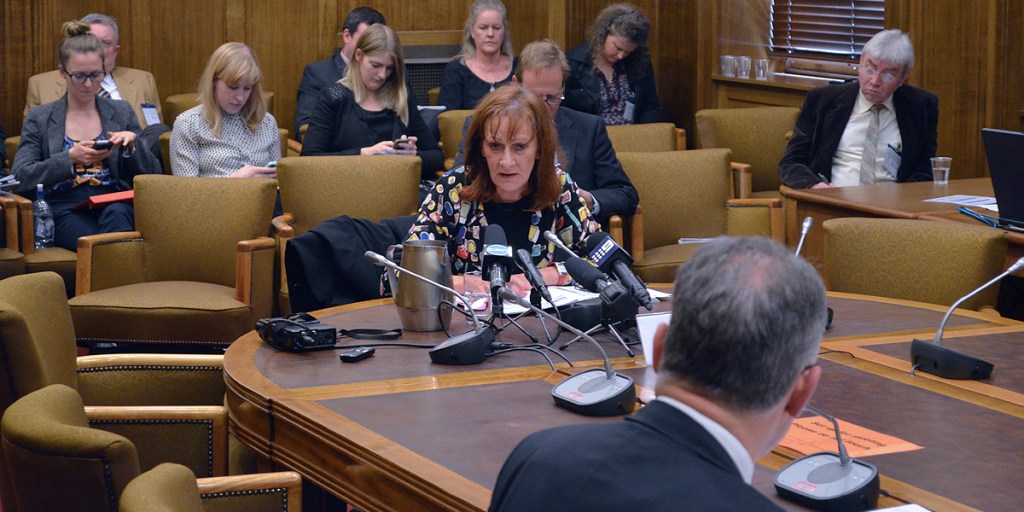
When Premier Jay Weatherill assumed the role of Education Minister his staff requested significantly fewer critical incident reports be sent to his office, according to evidence given to a Parliamentary Committee this morning.
Jen Emery, the former director of the Office of the Chief Executive of the Education Department, told an inquiry into matters arising from the Debelle royal commission that Weatherill’s office wanted less detail than his predecessor in the role, Jane Lomax-Smith.
Emery said Lomax-Smith had requested highly detailed critical-incident briefings on each school whenever the minister made a school visit. This process was significantly toned down under Weatherill, she said.
“She (Lomax-Smith) previously had required quite detailed briefings. Mr Weatherill’s procedures were a little bit different in that they didn’t require… quite the detail that had previously been required.
“There was a particular pro forma to use, and one of the sections of that was any critical matters that the minister needed to be aware of.
“(Lomax-Smith’s) pro-forma included any critical incidents at the school. It was any incidents that the minister needed to be across.”
Emery said the instruction from Weatherill’s office meant the minister would only be informed about more serious critical incidents, rather than the “full gamut” – which included, for example, children falling off swing sets on school grounds.
“We were in discussion … most likely to be with the office manager at the time who said that the minister’s office didn’t need to receive, as they had been in the past, all of the critical incidents. So we didn’t send any. But I don’t think the intention was and therefore never tell us about them. The implication was that of course they would be told.”
You might like

Former Supreme Court justice Bruce Debelle produced a scathing report about the department’s behaviour following the 2010 arrest of an after school hours worker for the sexual assault of a child at a western suburbs school. Parents weren’t told about the man’s arrest, trial and conviction until October last year – a delay which sparked the Royal Commission.
Debelle found that the department had written an email to then Education Minister Weatherill’s staff informing them of the man’s arrest. Debelle found that Weatherill’s staff failed to pass on the information to the Minister.
Earlier today, one of the Education Department bureaucrats at the centre of the Debelle inquiry’s findings said many of the problems raised were caused by a lack of clarity in the rules surrounding school governing councils.
But he’s denied ever pressuring parents on the governing council at the school in which the alleged sexual assault investigated by the Debelle royal commission took place.
Don Mackie, who was the Education Department’s legal services unit manager in the aftermath of the case, told a parliamentary committee investigating matters raised by the Debelle report this morning that governance arrangements for school governing councils were unclear and confusing.
“The constitution and the governance arrangements that we have in place for councils are in my view … very very confusing, not helpful at all as I see it, and need to be resolved and need to be clarified,” he said.
“Wherever you look, there is this fundamental issue about what does governance mean and where is this boundary between school operations and governance.
“A lot of that stuff could have been resolved if we had clearer governance.”
Mackie took the opportunity to defend his conduct during the department’s response to the incident – which was repeatedly and strongly criticised in the Debelle report.
He denied ever exerting pressure on the governing council, and claimed to have what he thought was a good relationship with Danyse Soester, the mother at the school whose complaints about the department were a catalyst for the Debelle inquiry.
Stay informed, daily
“I’m not here to particularly defend myself or whatever. I can only say that it’s not my nature to be abusive to members of the public. How Ms Soester formed that view is a matter for her,” Mackie said.
In relation to the advice he provided to the governing council, he said: “I certainly don’t believe in a way that was abusive.”
In prior evidence to the committee, Soester had claimed she was pressured when she wanted to inform school parents about the alleged sexual assault which happened at the school’s out-of-school-hours care service.
She said she was told she would lose her legal indemnification and open herself to risk of litigation if she did so.
“With respect to indemnification… [my advice] was simply on the basiss that the governing council had made a decision, and as a member of the committee she was bound by that decision,” Mackie said.
Once the council had made a decision not to inform all parents at the school about the alleged sexual assault, if Soester decided to act against it she would lose her legal indeminification, Mackie said.
“I made that point very clear to her. I … thought I had a good relationship with her. I thought it was important for her to know that indeminifcation has limitations.”
He said he didn’t feel he brought pressure to the council – “I’ve not done that and neither have any of my staff.”
Unlike sacked education department bureaucrat Jan Andrews who testified at last week’s committee meeting, Mackie said the current disciplinary process going on in the education dept was appropriate and said he didn’t consider himself a scapegoat to protect the dept.
“There were significant issues raised in the report. I’m disappointed that I wasn’t given an opportunity by the Chief Executive to respond to those, but I don’t believe that I’m being scapegoated.
“I believe that I acted to the best of my abilities. I find that everything that I’ve done I’ve been able to priovde a response back to the chief executive as to why I took those steps, and he will make a decision. I don’t believe that‘s scapegoating.”
Mackie has since been removed from his legal role in the department. He said the way that announcement was handled created the perception that his removal from the role was linked to matters raised in the Debelle report, when it wasn’t.
“I think the timing was probably unfortunate. I would have been perhaps a bit more comfortable with that decision being taken a bit earlier or later. There will be a significant proportion of the population … that will see me as some brain-dead public servant that doesn’t care about children and that’s clearly not the case.”
He had sought a redundancy from the department, which has been put on hold while disciplinary processes are still ongoing.
Want to see more stories from InDaily SA in your Google search results?
- Click here to set InDaily SA as a preferred source.
- Tick the box next to "InDaily SA". That's it.