
The Australian dollar has soared more than one-and-a-half US cents after the US Federal Reserve unexpectedly decided to leave its economic stimulus program in place.
Early Thursday, the local unit was trading at 95.18 US cents, up from 93.58 cents on Wednesday.
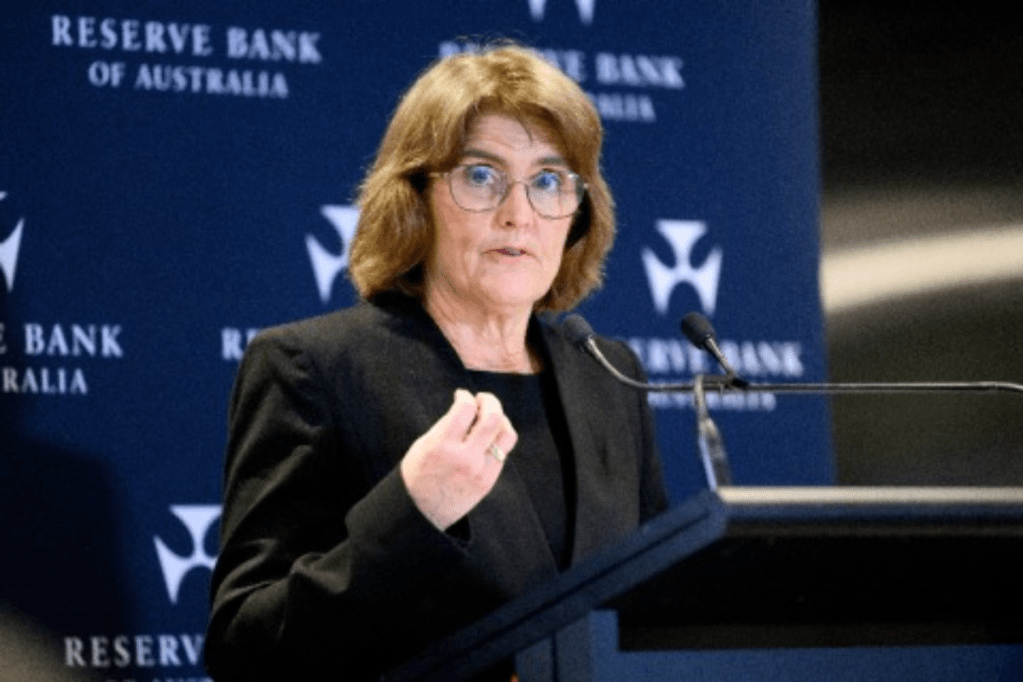
The rising dollar poses another challenge for Australia’s Reserve Bank which has been cutting interest rates pull the dollar back.
US Fed policy makers were widely expected to announce the tapering of their $US85 billion-a-month bond-purchasing program on Thursday morning, Australian time.
They instead left it in place and cut their growth forecast for this year and next.
You might like

The Federal Open Market Committee said that although the US economy appeared to be holding up amid government “sequester” spending cuts, it “decided to await more evidence that progress will be sustained before adjusting the pace of its purchases”.
Westpac chief currency strategist in New York Richard Franulovich said the decision saw the US dollar take a big hit across the board.
“Given it was so widely telegraphed and the Fed did nothing to disabuse the market of thinking it was going to taper in September, there’s been a big reaction,” Franulovich said.
“The market has clearly tacked back towards pricing in a more dovish profile for Fed tapering and a potential rate hike from the central bank.”
Stay informed, daily
For most analysts, the debate was only over how much the quantitative easing (QE) bond purchases would be cut – with the guesses from $US5 billion a month to $US25 billion a month.
But the FOMC decision was not a departure from what Bernanke has stated publicly.
He has consistently said the taper of the QE program could begin sometime late this year, if the economy continued to gain broadly.
The FOMC acknowledged that the economy was still expanding “at a moderate pace,” and that labour market conditions – a central focus of current Fed policy – had improved in recent months.
However, it noted, the jobless rate at 7.3 per cent in August “remains elevated.”
The FOMC reduced its growth forecasts for the US economy, cutting the 2013 outlook by 0.3 percentage points to a range of 2.0-2.3 per cent, and lowering the prediction for next year to 2.9-3.1 per cent.
It slightly improved its prediction for the fall in the jobless rate, to 6.4-6.8 per cent by the end of 2014.
Yet, even though that put labour market conditions at the FOMC’s threshold for tightening monetary policy, the large majority of FOMC members continued to see the Fed’s benchmark interest rate being increased only in 2015.
The US federal funds rate has been locked at an ultra-low 0.0-0.25 per cent level since the end of 2008.
Want to see more stories from InDaily SA in your Google search results?
- Click here to set InDaily SA as a preferred source.
- Tick the box next to "InDaily SA". That's it.