UN leaders “agonise” over Syria report
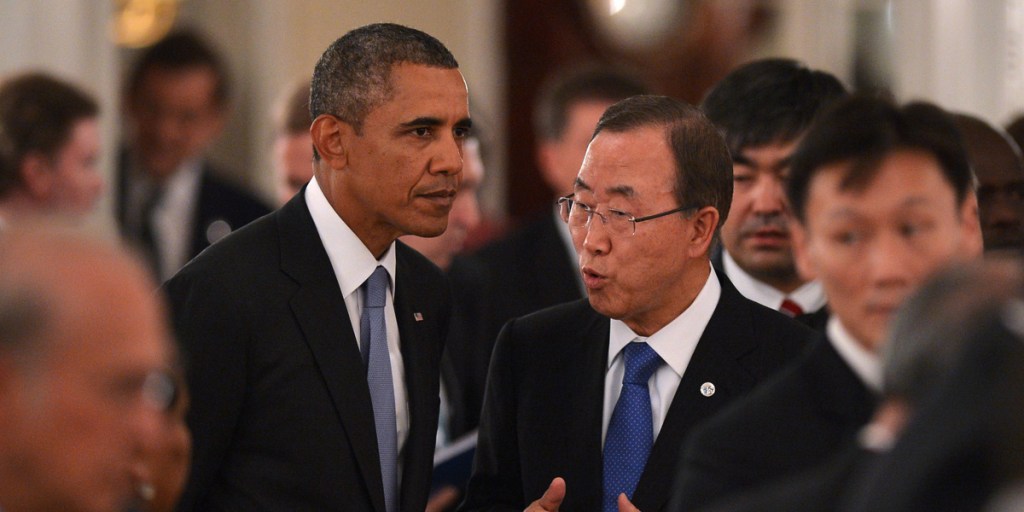
UN leaders have “agonised” over a report that Secretary General Ban Ki-moon will present on chemical weapons in Syria that could renew pressure on President Bashar al-Assad.
Ban will present the report to the UN Security Council on Monday at 11:15am (0115 Tuesday AEST).
He has already revealed that he expects the report by a UN investigation team to give “overwhelming” confirmation that arms were used in an attack near Damascus on August 21 in which hundreds died.
But the UN team is not allowed to say who carried out the attack, which the West blames on Assad. While diplomats say the detail will give a clear pointer to who is responsible, opponents and supporters of Assad – who pleads innocence – will be looking for evidence to back their case.

A Russia-US accord on the dismantling of Syria’s chemical stockpile will also weigh heavily on Security Council consultations expected to be called on Monday.
Russia’s Foreign Minister Sergei Lavrov on Saturday slammed what he called attempts to “retouch” the UN report. Syria’s UN envoy, Bashar Jaafari, has also said his government will not accept a “politicised” report.
“Russia, the Americans, all sides, have been putting on pressure over this report,” a UN official told AFP, speaking on condition of anonymity. “Ban’s office has agonised over every word. The message has to be how serious this attack was but also support the Russia-US initiative.”
The head of the UN team, Swedish expert Ake Sellstrom, arrived in New York on Sunday and met Ban, officials said.
The UN experts went to Damascus on August 18 to investigate claims that chemical weapons were used near Aleppo on March 19 and at two other sites, which have been kept secret.
Stay informed, daily
They were in Damascus when the attack on opposition-held Ghouta in the suburbs was staged on August 21. The US says 1,400 people were killed, and, backed by Britain and France, has blamed the Assad government.
The UN report promises to be very technical, with details of the missile used and possibly the trajectory of the missile, according to diplomats.
“They have collected a considerable amount of evidence – evidence through samples, evidence through witness interviews – and they can construct through that a fact-based narrative that can get at the key facts of what happened on August 21,” a UN spokesman said.
The samples of blood, hair, urine, soil and other elements have been analysed at laboratories in Germany, Switzerland, Sweden and Finland, according to officials.
Alongside the report, Ban will make his own presentation, which could also influence the next stages of the diplomatic debate.
Want to see more stories from InDaily SA in your Google search results?
- Click here to set InDaily SA as a preferred source.
- Tick the box next to "InDaily SA". That's it.