Four Mile mine’s long march
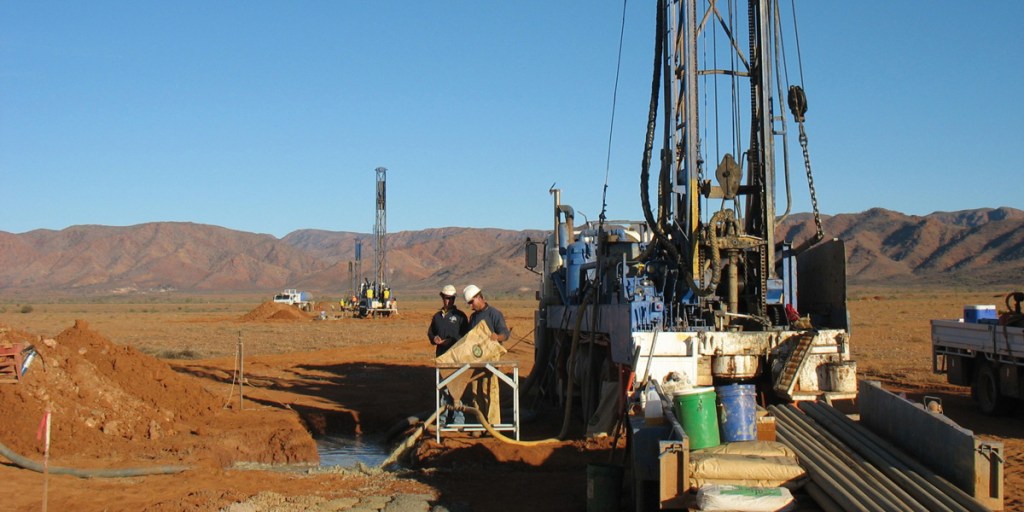
Australia’s fifth uranium mine, Four Mile, made another small step yesterday in its troubled path to becoming an actual operating mine.
More than four years after then-Federal Environment Minister Peter Garrett approved The Four Mile uranium mine’s environmental regulations, the remaining paper work from that decision has just been completed.
The mine, a joint venture between Adelaide-based Quasar Resources Limited and Melbourne-based Alliance Resources, has been spruiked for years as either a great leap forward for our uranium stocks, or an environmental hazard.
The share price of Alliance Resources has been to dizzy heights – $2.50 in 2007 when former Premier Mike Rann threw his support behind the development – down to 75 cents when Garrett signed up in 2009 and just 10 cents earlier this year before rallying yesterday to 16 cents.
Back in Rann’s day it was one of those “mining boom” projects: it was expected to start in 2010 and provide hundreds of jobs in construction and production phases.
Yesterday’s announcement was a mere ripple in the pond for this much-troubled project.
“Alliance Resources Ltd advises that the Four Mile Uranium Mine Monitoring, Mine Closure and Community Engagement Plans as submitted on 27 June 2013 as required under the Commonwealth Environment Protection and Biodiversity Conservation Act (EPBC Act) conditions were approved on 2 September 2013,” the company’s managing director Steve Johnson announced.
“This is the final regulatory approval for the Four Mile Uranium Mine.”
These final steps had been alluded to in Garrett’s 2009 conditional approval where he said the company would be subjected to monitoring and reporting requirements and would be required to process all waste at the nearby Beverley mine.
You might like

Concerns were expressed at the time by Greens MLC Mark Parnell who said the proposed in-situ leach method was not world’s best practice as claimed.
“The in-situ leaching process is highly controversial,” he said.
“Pumping acid into the soil and aquifers will leave behind acid and radioactive wastes for many years to come.”
It’s taken a long time to sort out that part of the project, albeit still not to Parnell’s satisfaction.
There has, however, been an even bigger hurdle – a legal stoush between the joint venture partners that dragged through the courts for five years.
Mineral Resources Minister Tom Koutsantonis alluded to the stoush in his media conference yesterday when he said: “I had grave concerns about this mine initially.
“I had long discussions with them in my office separately about trying to come to a resolution. I think they’ve come to those resolutions, they’re proceeding now and I think it will be all well.”
The legal dispute was complex and at times seemed almost petty as arguments centred on who would be able to tape what at meetings.
In 2002 Alliance and Heathgate (the company that owns the Beverley mine) entered into the joint venture agreement in respect of the Four Mile uranium project.
Heathgate was appointed as the first manager of the JV.
In December 2002, Heathgate assigned all its rights, title and interest in the JVA to a company called Quasar.
Heathgate and Quasar had a close relationship, given that the shareholdings in both Heathgate and Quasar are controlled by Baywood Holdings Inc.
Stay informed, daily
Court files show that difficulties in the relationship between Alliance and Quasar appear to have emerged on 12 November 2008 when Alliance indicated that it had not been provided with a program or budget as required by the JVA.
The first management meeting was held on 14 November 2008 and was adjourned to 25 November 2008. Alliance refused to participate unless the meeting was recorded and when the meeting resumed on 21 April 2009, the committee decided against making a recording.
On 15 April 2009 and 23 May 2009 Quasar provided Alliance with some updated budget documents.
Under the Quasar budget and the 2009 updates, cash calls were made upon the joint venturers, Quasar and Alliance.
Alliance contended that the costs had not been properly identified and claimed that it required records relating to the expenditure before it would approve the budget.
As a result of the alleged nondisclosure of records, Alliance filed a claim for damages and the matter went before a judge in 2010.
There was a decision, an appeal, contentions of new evidence and an eventual decision in March 2013 that left Alliance with the bill for its own legal costs and those of Heathgate and Quasar.
The State Government, meanwhile, was doing its bit. The Department for Manufacturing, Innovation, Trade, Resources and Energy (DMITRE) has approved the Program for Environmental Protection and Rehabilitation (PEPR) and the Environment Protection Authority (EPA) Licence for Mining and Mineral Processing and other required plans.
Assuming the three corporate parties are now getting on, there are still a few more steps to be completed before mining operations start.
Alliance Resources said yesterday it was now working on modifications to the existing Beverley and Beverley North PEPR regulations to accommodate the integration of Four Mile operations; payment of the Rehabilitation Liability Bond, and submission of key design, construction and commissioning reports at progressive stages of mine development.
Going by the share price, market investors aren’t completely convinced this project is yet a goer.
That wasn’t going to dampen yesterday’s exuberance by Tom Koutsantonis.
“The $110 million Four Mile project, the most significant uranium discovery anywhere in the world in the past quarter century, is ready to go,” Koutsantonis said.
“This mine reinforces our State’s global reputation as a frontrunner in developing the nation’s uranium resources.
“The new mine means construction jobs in regional South Australia and the ongoing employment of Heathgate Resources’ 200-strong workforce at its existing operations.
“There are many more projects in the pipeline that will eventually join Four Mile on the list of operating mines.”
The problem with those statements is that the mine is not ready to go and is not operational.
Given its troubled 11-year history, you wouldn’t be betting on anything happening soon.
Want to see more stories from InDaily SA in your Google search results?
- Click here to set InDaily SA as a preferred source.
- Tick the box next to "InDaily SA". That's it.