New Age – Oxigen’s Halifax Studio
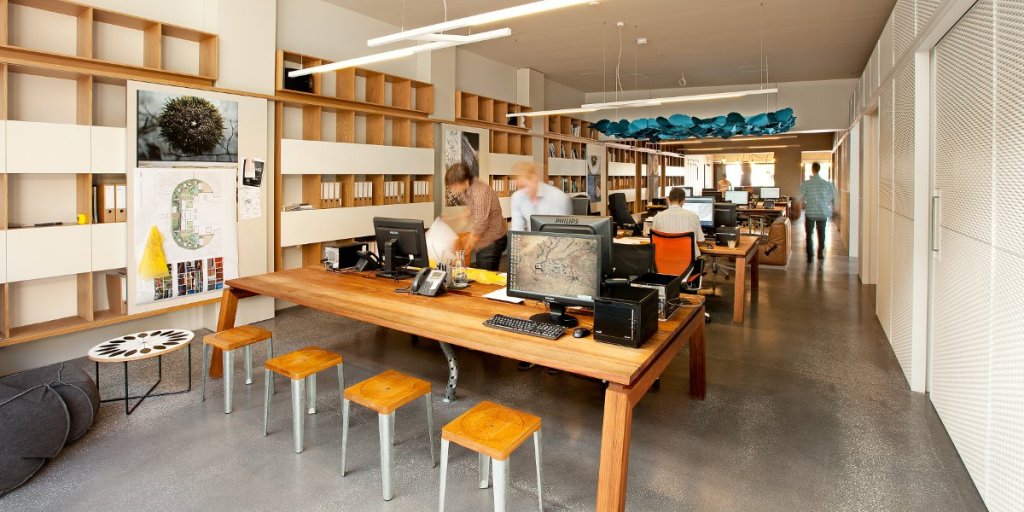
Halifax Street is the nearest thing Adelaide has to a New York village, says James Hayter, whose Oxigen landscape architecture firm chose the location for a hip new home that already looks as old as the streetscape.
Hayter’s studio has been nominated for an Australian Institute of Landscape Architecture award. Here, he takes InDaily Design through the build.
What brief did you give yourself?
We really wanted to be part of the debate on how to re-engineer the traditional notions of what the workplace is, and how the physical environment can affect creativity and efficiency. The studio is clearly a design emanating from the sensibilities of a landscape architect. Spaces engage and flow from indoors to out, from street to private space. The result is a wonderful, open crafted space that is exuberant in sharing a love for design, materiality, craftsmanship and art.
"What came out was quite unexpected and random; we had no real control of the ageing. The result is like a primary school watercolour print and it’s beautiful."
Can you describe the finished space?
It’s a fun place to work in. Full of light, warm in winter and cool in summer. We designed the space mindful that good design doesn’t need to be overly complex or expensive. It displays our character – a sustainable space using honest materials, a bit edgy and really comfortable to be in.
You might like


What’s your favourite part?
Part of our front façade is copper. We didn’t want to wait 400 years for it to patina green like the Notre Dame Cathedral’s roof, so we artificially aged it. A friend interstate had in her library a book from the 19th century describing how to patina metals. We found the recipe for ageing copper – mixing common salts like sodium chloride and copper sulphate into a slurry and applying this on cotton wool mat to the surface and leaving the mix for 20 hours. What came out was quite unexpected and random; we had no real control of the ageing. The result is like a primary school watercolour print and it’s beautiful. It will also change and “grow” through time. It just proves you don’t have to control everything – when you don’t, the unexpected can work better than the planned.

Did you have to respond to anything already existing in the space, or nearby?
In every way, the design responds to its context and the street. The front opens up to the footpath and invites interest and sometimes participation from passers-by. We provided ledges with comfy cushions for pedestrians to stop and rest. Last summer we found a motorist sitting on the cushions with her six-week old baby waiting for the RAA – her car had broken down and it was too hot to stay in the vehicle. We offered her coffee and kept her company while she was waiting. This casual social meeting is what our cities and cultures are about. Through design we can make a real difference to the health of our city and its residents.

Stay informed, daily
The blue ceiling artwork – why did you choose it? Where was it sourced from?
We were concerned that the office interior would be noisy, given we have a polished concrete floor and hard surfaces on the walls. The lowered fabric ceiling, which looks like a blue cloud – if there is such a thing – both defines a space in the centre of the office for hanging out and has a positive acoustic effect.
The fabric pieces fit together to provide a textured effect, breaking up the more industrial and functional lines of the rest of the fit-out. It was an innovative way to use the fabric horizontally – it is made to mount vertically on a wall. A simple wire mesh frame hung from the ceiling supports the fabric.
What materials did you use?
The material selection is a combination of a palette of materials we know and love, and new innovative materials that we wanted to explore. Our aesthetic is “raw” – we love using natural materials like concrete, steel and timber, avoiding finished materials like stainless steel. We like materials that grow and change, sometimes (like our copper façade) unexpectedly. Finished materials often look great on day one, but after that gradually become shabbier through use. We accept the proposition that architecture, like landscapes, should grow and change over time, not remain static. This is a timeless, crafted way of building.
Obviously it’s an office. What considerations did you make for the way people will use the space?
Apart from incorporating the idea of a workplace that offers multiple spaces for work away from a dedicated desk, first and foremost we wanted the office to be comfortable. Many offices simply aren’t comfortable or attractive to be in.
While we have installed air-conditioning, we only used it seven times last summer – the building is designed sustainably to avoid heating and cooling and yet it is the most comfortable office I have worked in. The layout and materials selection has been arrived at to minimise energy consumption. Underfloor heating provides a passive and very comfortable ambient temperature in winter. The building responds admirably to the seasons and embraces the temperate Adelaide climate. The studio has embraced this and our motto is: “In winter, put a jumper on; in summer, wear shorts”.

How is the space lit? I see a lot of natural light, accentuated with bare bulbs…
The big move was to “chop” off the northern end of the existing concrete block warehouse to create a small north-facing courtyard at the rear. This transition space allows natural light and summer air to penetrate the linear space of the studio. Sliding doors open at both ends to promote air flow in summer. This also lets us zone the workspace lighting and provide effective but localised levels of artificial light. The artificial lighting is considered integral to the interior fit-out.
Want to see more stories from InDaily SA in your Google search results?
- Click here to set InDaily SA as a preferred source.
- Tick the box next to "InDaily SA". That's it.