Transport plan author favours cross-town buses
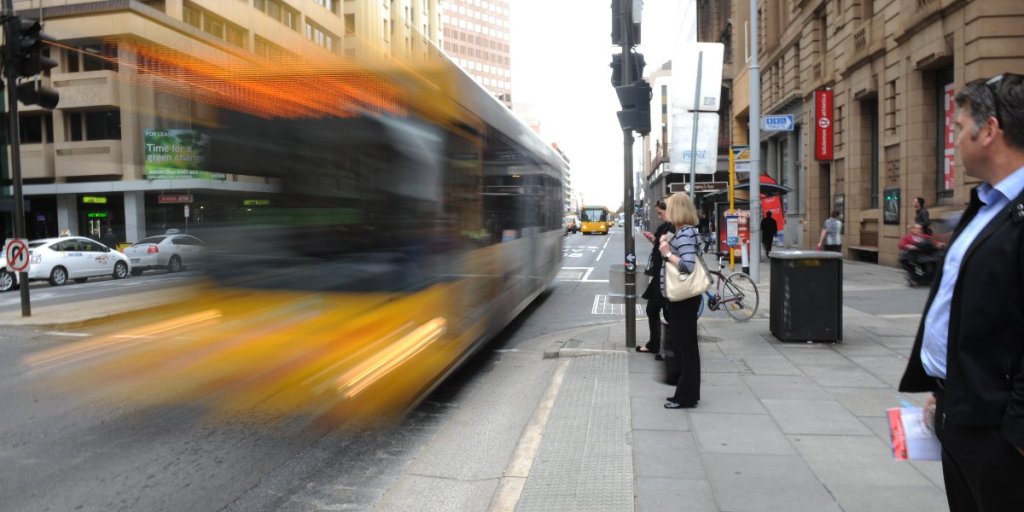
The man writing South Australia’s transport plan says cross-town bus links “make sense” in Adelaide’s future transport network.
Tony Canavan, who led the redevelopment of Southern Cross train station in Melbourne and authored a major investigation into the city’s transport needs, is a consultant currently working on the State Government’s Integrated Transport and Movement strategy.
While very coy on what the final strategy would look like, he talked InDaily through his general approach to transport planning, which includes an alternative to tolls, whereby all beneficiaries of new infrastructure are required to pay a charge.
Adelaide’s bus network is designed as a series of spokes of a wheel – nearly all cross-suburb journeys require one trip to the city and then another back out. Canavan said ideally a bus network would also incorporate cross-suburb routes.
“They both make sense. Most cities are experiencing a gradual reduction in the radial nature of their journeys. We’re seeing more cross-city trips. And that’s where buses are particularly effective.
You might like

“There’s no more effective mode of transport when it comes to flexibility of cross-city trips than buses.”
The public transport network’s city focus is highlighted by the low number of non-city workers who use it to travel to work.
Thirty-eight per cent of workers who work in the city take public transport to work, according to RAA figures.
Only 3.6 per cent of workers who don’t work in the city take public transport to work.
Stay informed, daily
The most important way to reduce transport congestion was to reduce the distance people had to commute to work by making sure there were jobs available near where they lived, Canavan said.
“If you want to impact the journeys that people are making it’s probably as much about where they work and where they live, the distance between those two things, as is it about the transport system.”
Canavan backed the establishment of an independent state infrastructure body to oversee and coordinate the state’s infrastructure program – similar to one proposed by the State Opposition.
“If it were to consider such a thing, it’s important that the roles of determining what your priorities are in infrastructure are separate from responsibilities for delivering infrastructure. Provided they’re separate, then I think it could have merit.”
Earlier, speaking at a transport and infrastructure forum hosted by the Committee for the Economic Development of Australia, Canavan floated the option of “beneficiary” charges as one possible source of infrastructure funding.
“There’s a great aversion to tolling,” he said. “But when we invest in transport infrastructure, it isn’t just the direct users of that transport infrastructure that benefit from it.
“There’s also quite a bit of research about other indirect beneficiaries from transport infrastructure, particularly through property value uplift, increased amenity and so on.
“In the same way that we talk about usage charges, perhaps we should also be talking about beneficiary charges? How can we seek a contribution that people accept and understand from beneficiaries, people who are benefiting from the value that we’re promoting with our investment and our taxes, and convert that into a contribution to the upfront capital cost of the project?
“If that’s done well, that’s a way of increasing the fairness of funding some of our infrastructure needs, and I think worthy of our consideration.”
Want to see more stories from InDaily SA in your Google search results?
- Click here to set InDaily SA as a preferred source.
- Tick the box next to "InDaily SA". That's it.