Heart-wrenching stories of strength, courage and survival are emerging from a Flinders University study into the social and emotional effects of bladder cancer.
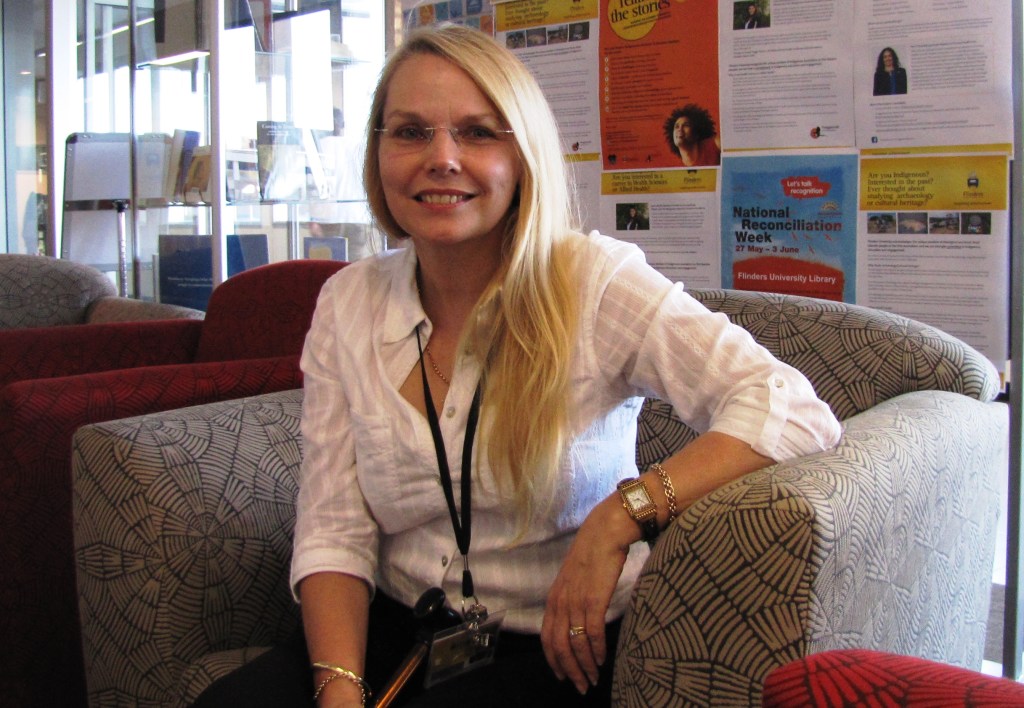
As part of her PhD, Flinders researcher Susan Heyes (pictured) is documenting the everyday struggles of people with bladder cancer and their partners, family or carers, in the wider aim of developing a new nursing model of care to better support those affected by the disease.
Bladder cancer is a rare and highly aggressive cancer which usually affects people aged over 50 and increases with age, with men three times more likely to be diagnosed than women.
During the past year Ms Heyes has documented the experiences of 10 bladder cancer patients and their partners at Adelaide’s Repatriation General Hospital, finding significant social and emotional impacts due to the invasive, ongoing nature of treatments and monitoring.
“A lot of the treatments can make the bladder so raw that the patient becomes incontinent which causes a great deal of embarrassment,” Ms Heyes, a registered nurse and tutor in the School of Nursing and Midwifery, said.


“One man had to quit his job as a driver because his bladder was so sensitive to the bumpy roads, and another man couldn’t make a 10-minute trip to the local hardware store without stopping to go to the toilet,” she said.
“There were tears from both patients and partners when they talked to me – one man said he had contemplated suicide and another man’s wife said she’d never talked to anyone about what she was going through because there was no one to talk to.”
Despite the significant and lasting impacts of bladder cancer, including high recurrence rates between 50 and 70 per cent, Ms Heyes said there were no bladder cancer support groups in South Australia.
“Although bladder cancer accounts for only two per cent of all cancers in Australia, the incidence rate is increasing and when you do have it, it takes over your entire life.
“While Lifeline and the Cancer Council SA do a wonderful job of providing support, there are no support groups in SA with specific knowledge and experiences of bladder cancer.”
Now in the second phase of her study, Ms Heyes is hoping to recruit a further 200 people with bladder cancer and their partners, family members or carers to explore the full effects of the disease by completing a questionnaire each.
Stay informed, daily
The information, she said, will be used to develop a nursing model of care “so from the moment someone is diagnosed they have support”.
“My mission is to find out exactly what these families need, what will make life easier for them and then develop a model of care to improve their quality of life.
“It’s about ensuring they have someone to see who knows all about bladder cancer and can help them overcome some of the adversities they might face.”
For more information about the study or to volunteer contact Susan Heyes.
Want to see more stories from InDaily SA in your Google search results?
- Click here to set InDaily SA as a preferred source.
- Tick the box next to "InDaily SA". That's it.