Female oncology patients will have a better, faster option available to them to protect their fertility if a new Flinders University study proves successful.
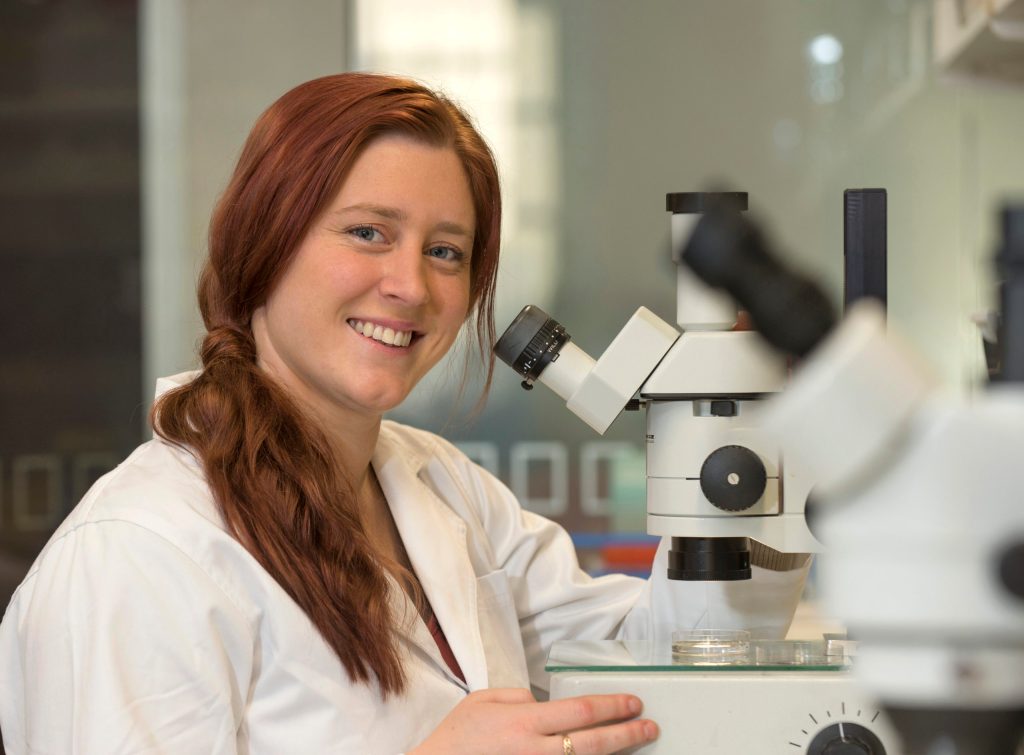
PhD candidate Jessica Miller (pictured) aims to develop a technique that will enable women to harvest their eggs for banking and start cancer treatment concurrently.
Ms Miller, based in Medical Biotechnology and the Flinders Centre for Innovation in Cancer, said the current conventional method for harvesting eggs from female cancer patients meant women had to wait two to four weeks before starting their cancer treatment.
“The most common fertility preservation option for women with cancer is controlled ovarian hyper-stimulation (COH), which basically stimulates the ovarian process so the patient can produce more fertilisable mature eggs,” Ms Miller said.
“But the downside is the patient can’t start their oncology treatment until the COH cycle is complete,” she said.
You might like


“This is obviously not ideal for a woman who’s just been diagnosed with a highly-aggressive cancer, and that’s why we want to eliminate that gap.”
The study, funded by IVF and infertility clinic Flinders Fertility, aims to isolate and harvest under-developed eggs just before they mature, and then develop a new in vitro maturation technique whereby both the egg and surrounding follicular cells are cultivated together.
Ms Miller said the process will hopefully trick the eggs and follicular cells into thinking they are still inside the ovary, thereby making it easier for them to mature in vitro.
“IVF success rates are much higher if you harvest a woman’s eggs right at the end of the maturation process,” Ms Miller said.
Stay informed, daily
“Unlike COH which removes only the mature eggs, we’re going to take out immature eggs with their surrounding follicular cells and develop 3D culture conditions that mimic the conditions inside the ovary.
“Eggs and follicular cells send signals to each other back and forth so by taking out the whole unit we hope to increase the success of egg maturation – and by doing it with immature eggs in vitro the patient won’t have to wait to start their treatment.”
Medical Biotechnology senior lecturer Dr Fiona Young, who is supervising the study along with Flinders Professor Bogda Koczwara, said the team was believed to be the first in the world to collect both immature eggs and surrounding follicular cells specifically for research in cancer patients.
“Until now, researchers have collected only the eggs, and a few others have cultured the surrounding follicular cells as well, but we haven’t heard of anyone who has looked at applying this approach to oncology patients,” Dr Young said.
“The reason it hasn’t really been done before is because growing any 3D cell structure in vitro is very difficult but we believe we can draw on recent developments in other areas of medical biotechnology to apply to this fertility preservation problem,” she said.
“Hopefully the techniques we develop will give women a better chance of having a family after cancer without negatively impacting their treatment.”
The study is one of 13 new PhD projects on show today (Friday, July 26), as part of Flinders University’s 2013 Medical Biotechnology Research Revealed seminar.
The event will showcase a variety of PhD research in medical biotechnology, including the discovery of novel compounds and the role of marine organisms in bioprocessing, human health, functional foods and cosmetics.
Want to see more stories from InDaily SA in your Google search results?
- Click here to set InDaily SA as a preferred source.
- Tick the box next to "InDaily SA". That's it.