Say it ain’t so, Stuie
South Australian sporting legend Stuart O’Grady is worried his record will be tainted by his admission he blood doped during the Tour de France.
It is – and so it should be.
O’Grady has had plenty of chances to “fess up” during cycling’s long-running drug sagas.
The revelations have been extensive – none bigger than Lance Armstrong’s eventual admission on a TV show that he was a doper and drug taker.
Armstrong had denied it for years. It was only when the evidence collected by US anti-doping authorities started to mount that he came clean.
It’s worth recalling O’Grady’s reaction when the Armstrong story broke.
“Like anything in sport, you have your questions and doubts,” he told Adelaide journalist Reece Homfray last year.
“But you want to believe that what you’re seeing is real.
You might like


“I believed that he (Armstrong) won those seven Tours clean. I wanted to believe that like everyone else.
“He has come back from cancer and in my mind there was, ‘Why would you ever go down this avenue?’.
“There’s so much damning evidence against him that it’s obviously looking like this happened and I’m as shocked as anybody.
“I’ve been around through the good, bad and ugly. From 1998 in the Tour when the Festina affair blew up and what’s happened recently. I’m in as much shock as anybody.”
You’re right, Stuart; we do want to believe that what we’re seeeing is real.
Cycling’s saga of dopers makes for a long list – and there’s been many opportunities for O’Grady to put up his hand. Yesterday we reported that a French government report was about to name more cyclists, most of whom showed substantial variations in blood tests during the 1998 Tour.
French media reported that one of the names in the report was Tour Down Under 1999 stage winner Erik Zabel; the German star had won the green jersey in the Tour de France in 1998.
Zabel has admitted in the past to using EPO; in 2007 Zabel and former Team Telekom team-mate Rolf Aldag admitted using EPO to prepare for the 1996 Tour de France.
The latest names add to the big ones: Lance Armstrong, Alberto Contador, Floyd Landis and more.
O’Grady remained silent throughout those reveleations.
Stay informed, daily
This week he announced his retirment from cycling. There will be no bans for O’Grady.
He says it was a “one-off”; tried it, didn’t like it, didn’t inhale; whatever.
“I’d like to believe him,” cycling commentator Phil Liggett said today.
So would we all.
But we had already believed him when he said he was a clean rider.
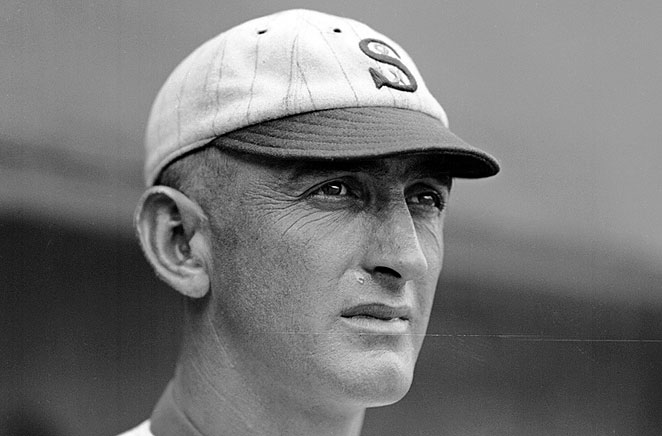
Whenever sporting scandals break, I’m reminded of the almost-100-year-old story of a US baseball star, idolised by kids, as an example of the impact these disappointments have on fans.
In 1919, eight Chicago White Soxs players were banned for life for intentionally losing games to the Cincinnati Reds in the World Series.
A US newspaper reported at the time that when star White Sox player Shoeless Joe Jackson was leaving the courthouse during the match-fixing trial, a young boy begged of him: “Say it ain’t so, Joe”.
The Minnesota Daily Star reporter wrote: When Jackson left the criminal court building in custody of a sheriff after telling his story to the grand jury, he found several hundred youngsters, aged from 6 to 16, awaiting a glimpse of their idol. One urchin stepped up to the outfielder, and, grabbing his coat sleeve, said: “It ain’t true, is it, Joe?” “Yes, kid, I’m afraid it is,” Jackson replied. The boys opened a path for the ball player and stood in silence until he passed out of sight. “Well, I’d never have thought it,” sighed the lad.
Jackson was banned for life while he was at the peak of his abilities.
Stuart O’Grady will suffer no such consequence.
But our young cyclists are entitled to sigh, and wonder why a talented lad from Ingle Farm would stick a needle in his arm and inject blood booster erythropoietin (EPO).
And all sports fans are entitled to ask why it took this long – and an about-to-be-published report – to bring on the admission.
Want to see more stories from InDaily SA in your Google search results?
- Click here to set InDaily SA as a preferred source.
- Tick the box next to "InDaily SA". That's it.