EVONNE MOORE: A recent column by Mateo Szlapek criticised as “greatly exaggerated” my argument that Adelaide’s low-density housing is under threat, but I don’t believe he presented a strong case to support his claim.
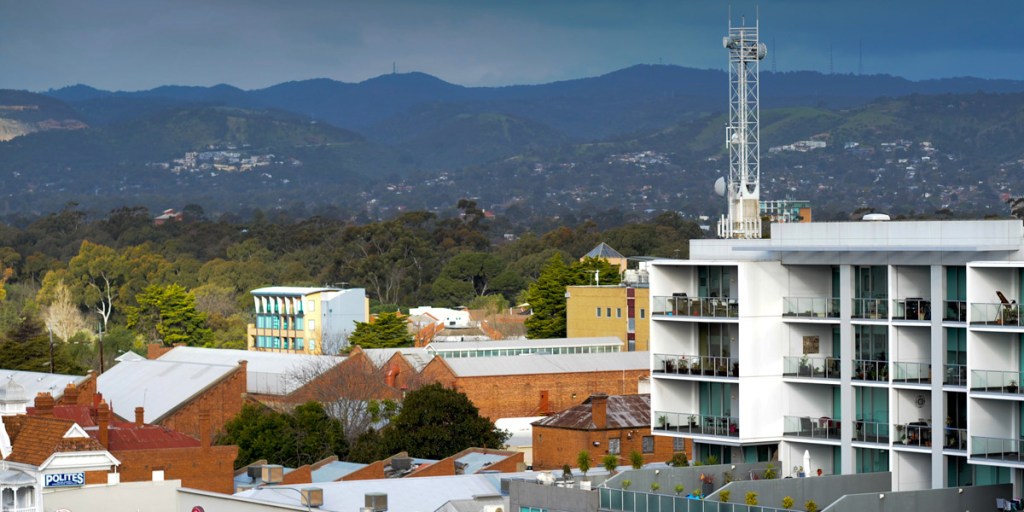
My article described some of the impacts of infill policies imposed by successive state governments over the past 30 years, before pointing to the latest plans for multi-storey flats in our inner suburbs. The Development Plan Amendments currently being considered by several inner suburban councils show that 10-12-storey residential tower blocks are clearly on the agenda for several sites.
The most surprising aspect of Mr Szlapek’s opinion piece is his attempt to pit older home-owning residents against younger, not-yet-home-owning residents. The former are apparently selfish hoarders of good property, while the latter are deprived people who yearn to live in a nice high-rise flat built on someone else’s backyard in the inner suburbs. But this dichotomy between two sets of residents is a false one. Many older home-owners have children and want them to be able to buy a residential property.

Mr Szlapek argues that larger and larger houses being built means that low-density living is not in decline. However, the rise of McMansions in our suburbs is a further unfortunate pressure which is increasing the density of buildings on residential allotments. We are seeing suburban gardens shrink in size as a result of this trend and many trees are being lost. In our hot climate, trees are essential to cooling our houses. Without space for trees to grow around new houses, they will be more reliant on air-conditioning, thus pushing up costs for homeowners and contributing to energy demands and greenhouse gas production. Councils which once imposed stricter rules on the proportion of a suburban lot which could be built on now allow most of a block to be built on.
Australian houses are among the most expensive in the world. But are Australian home-owners more self-centred hoarders than those in other countries? Of course not. Rising house prices are not due to selfish homeowners daring to remain happily living in their homes, but to restrictions on the release of new land by state governments as they pursue housing containment policies.
You might like
Urban consolidation pushes up the price of land by restricting supply. Where land once represented about 25 per cent of the cost of a new house and land, it is now more than 50 per cent. State governments should be releasing more land for new housing and encouraging decentralised development in regional centres where land is cheaper and regional economies are seeking more people. Residential tower blocks have been built in the central city area for some time now. The Adelaide City Council is seeking to roughly double its population by supporting such developments. Provided these towers are not built where they overshadow and decrease the amenity of single-storey heritage areas and newly built two or three-storey apartments, this is the probably the most appropriate place for them. This could cater for the people who want to live in high-density apartments for some years to come.
Multi-storey residential tower blocks in our residential suburbs, whether in the inner, middle ring or outer suburbs, are not wanted by most residents of those suburbs. Future generations will not thank us for continuing to concrete over what our ancestors bequeathed to us.
Evonne Moore is vice-president of Save Our Suburbs and spokeswoman for St Peters Residents Association.
Send us letters: Email us at [email protected], including your full name. The editor reserves the right to edit letters.
Want to see more stories from InDaily SA in your Google search results?
- Click here to set InDaily SA as a preferred source.
- Tick the box next to "InDaily SA". That's it.