Why Rudd’s FBT assumptions are flawed
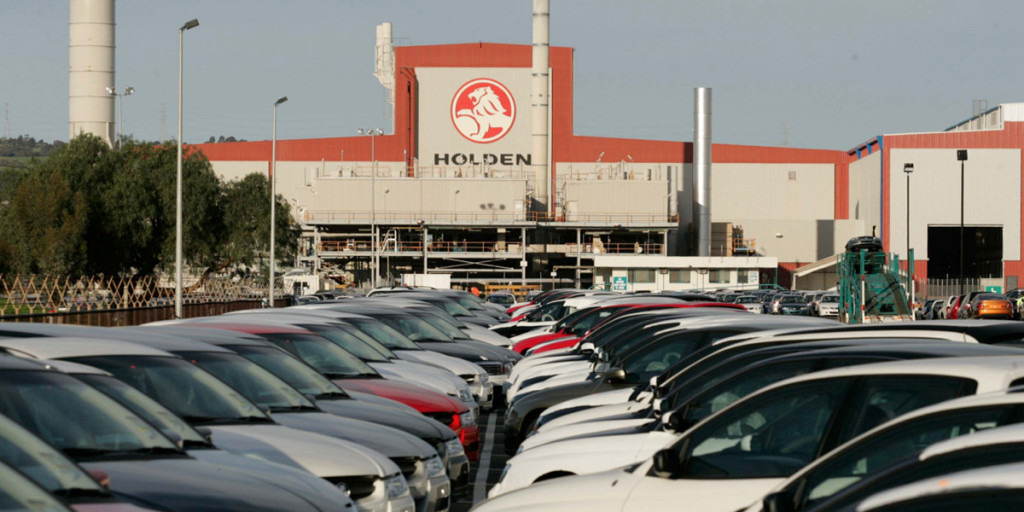
The Federal Government said this week it would make $1.8 billion in extra Fringe Benefits Tax (FBT) by cracking down on so-called rorting of company car use for private purposes.
The essence of the change is that the Australian Tax Office’s automatic acceptance that private use of a vehicle is around 20 per cent should now be documented by keeping log books.
The new policy assumes that the log books will reveal a higher use for private purposes, thereby increasing the amount of FBT that has to be paid.
FBT was brought in during the mid-1980s to solve the ongoing problem of capturing the value to a taxpayer of being able to use a company car for private purposes.
Under the old Income Tax Assessment Act, section 26(e) stated that a taxpayer was liable to pay tax on the value of any benefit arising from their employment.
But how do you value that benefit?
The argument proposed by many taxpayers was that while it was nice to have a company car in the driveway, that should it be taken away they would revert to their old car, or public transport.
You might like


Various legislative attempts to arrive at a formula that would capture the value were failures.
That’s why Paul Keating settled on the concept of a Fringe Benefits Tax in 1986, where the tax is levied on the employer, not the employee.
The calculation of the tax was removed from the old Act and enshrined in a new piece of legislation, the Fringe Benefits Tax Assessment Act 1986.
In the years since the tax’s introduction (and like many other parts of the tax system) the administration and monitoring of the tax has been simplified.
That’s why the ATO decided to accept a set figure that the employee used the car for private purposes around 20 per cent of the time, unless they could prove otherwise.
At the same time, all wage earners are given a set amount of accepted tax deductions for work related expenses.
All salary and wage earners’ tax returns are also processed on a “self-assessed” basis, because its a much more efficient system for the ATO.
The change to a manual system of record keeping for the 350,000 taxpayers with company cars could backfire on the Federal Government.
Stay informed, daily
Treasury’s assumption that many of those 350,000 will suddenly declare that they use their car privately more than 20 per cent of the time should be balanced against the likelihood that there will be many who discover that their private use is less than 20 per cent.
In cases where the private use is found to be higher and the FBT liability also higher, then the near-certain next step is that the employer will stop providing the cars.
And that’s why the leasing companies and the car makers are up in arms.
The quaint notion that people with company cars are rorters doesn’t match up to my memories as a tax assessor with the ATO during the 70s and 80s.
I’ve checked with my former colleagues, many now working as tax agents and they agree -the most common (and ATO accepted) split of private and business use of cars that were used for both purposes was 90 per cent business/10 per cent private.
Like so many Treasury estimates of the impact of tax changes, the change in the bottom line assumes no change in behaviour.
When the first Income Tax Assessment Act was published it was a small 40-page document.
The ITAA now runs to some 14 volumes, is interpreted alongside thousands of published Tax Determinations (TDs) and is concurrent with the FBT Act, the GST Act and other pieces of legislation.
The ever-mounting legislative pile is testament to the fact that conditions and behaviours are always changing.
And that’s the fundamental flaw of this latest FBT policy – it assumes 350,000 taxpayers will keep doing what they’re currently doing.
It also assumes that there is some wondrous benefit from having a company car – something that was impossible to establish in the 1980s and remains so.
*Kevin Naughton worked for the Australian Taxation Office from 1976 to 1984.
Want to see more stories from InDaily SA in your Google search results?
- Click here to set InDaily SA as a preferred source.
- Tick the box next to "InDaily SA". That's it.