Winemakers embrace marvels of terroir
Having spent three decades imposing its modern irrigated vineyard technology on the ancient landscape of Australia, much of the wine industry here is rather belatedly discovering the marvels of terroir.
From the ’70s through the ’90s, most big commercial outfits seemed to think their viticulture could be imposed on the country in such a way that it would supply a constant line of flavour, regardless of site. Of course, this still occurs on a vast scale, and there are still many winemakers who think this strange French term – which covers aspect, geology, topsoil, micro-climate, altitude and latitude – and the way the vines react to this complex web of influences, is merely old-world voodoo. There’s still far too much Roundup being mindlessly squirted around, and irrigation water we can scarcely afford, but things are gradually changing.
As it has long been the Australian industrial norm to blend batches of fruit from vineyards spread vast distances apart in pursuit of a standard, unchanging product, the determination to overwhelm terroir with science was a powerful leveller of flavour in most of the wine made here.
But while even the broadacre grapeyard mentalities are changing, the smartest winemakers have always been aware of the special distinctions of their favourite sites – they simply didn’t use the French word for it.
David Wynn’s acute eye spotted the essential nature of cool(ish) Coonawarra and its limestone when he virtually created that grand region in the early ’50s. At Penfolds, Max Schubert knew the value of unique vineyards like Magill Estate on the rubble of the Adelaide Hills piedmont and the ancient siltstones of Morphett Vale when he wrote his recipe for Grange in 1951.
Wolf Blass fell in love with the minty muddy soulfulness of Langhorne Creek, on the Murray River estuary, in the early ’70s. Peter Barry and his brothers were then learning from their father, Jim, the unique beauty of wines from disparate sites like Florita and Armagh in the Clare Valley. And in the Barossa, smarter vignerons like the Lindner family spotted the distinctive style of vineyards like their 1843 planting of Shiraz in the alluvium of Langmeil, while the great Peter Lehmann, just across the creek, was discovering the wonders of the ironstone of his famous Stonewell Vineyard.
You might like


The Henschke family was then beginning the repair of the priceless Hill of Grace vineyard. I once took some British wine merchants to visit that remote site beside its tidy Lutheran Church to find the ground had been planted with radishes between the rows. Years of horse and tractor work had compacted it as hard as a kettle drum. Master viticulturer Prue Henschke had planted fast-growing root veggies in there which she let rot in their place, leaving thousands of little cone-shaped holes in the ground, each filled with nutrient, each admitting air and water which would have normally run off. To plough it would have seen it blow away or erode by rain. I knew then that Australian viticulture was changing to better respect terroir.
Peter Gago, chief winemaker at Penfolds, understands better than any the bewildering array of terroirs Australia offers. He uses this knowledge not just to make stunning wines like the single-vineyard Block 42 Kalimna Barossa Cabernet (1880s planting), which filled the $168,000 Penfolds ampoule (12 copies; sold out), but also to spectacular effect when he’s selecting vineyards for the mighty Grange, which can include parcels of fruit from a web of special sites hundreds of miles apart.
It’s ironic that in this case we use a constantly refining knowledge of terroir to make a blend to a certain style, but it’s little different to what the Krug family does in Champagne when it selects the parcels for its ravishing vintages.
It’s just bigger here.
"The most exciting development in Australia’s new yearning for better knowledge of terroir is the move to understand its geology."
Gago’s encyclopaedic understanding of hundreds of special terroirs spread over great distances is a vital tool in coping with the recent changes of climate.
Stay informed, daily
“Thanks to Max Schubert, who pioneered the method, travelling vast distances and shopping round for fruit to be made and blended to a specific Penfolds style is a great advantage in presenting wine of the best possible quality,” he says. “Our main weapon in our engagement with climate change is our geographic flexibility. Starting with our usual appreciation of the unique individual vineyards, our best advantage is our ability to use both latitude and altitude to suit our goals.
“After that forensic vineyard selection, the more wines that survive our severe classification tasting procedure, the deeper is the pool of flavour, complexity, and structure of the Grange.”
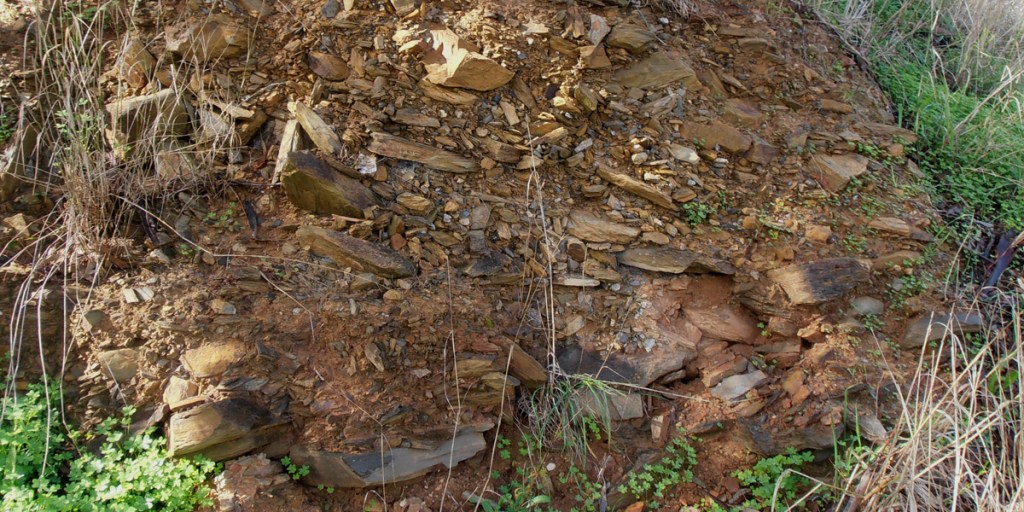
The most exciting development in Australia’s new yearning for better knowledge of terroir is the move to understand its geology. Much study has gone into the influence of altitude, proximity to the ocean, and local climate patterns, but now the vignerons are beginning to look deeper beneath their feet. Soil is scant in this ancient land, and winemakers are realising the rocks that feed their vine roots offer a bewildering range of flavours.
Nascent geological studies are underway in the Barossa and Clare vignobles, but the leader in the research of its true geological history is McLaren Vale. The established producers, like Wirra Wirra, Olivers’ Taranga, Coriole, d’Arenberg and the Jackson Family’s Yangarra Estate and Hickinbotham Clarendon Vineyard, and of course the ancient Kays Amery, all pick individual blocks according to their terroir.
Smaller, newer outfits are showing this respect from the start, actually choosing their vineyard sites with this in mind. Previously, vineyards were simply planted on the flattest ground because it was easier.
“With the South Australian Government’s Geological Survey, we finally published a precise scientific map of McLaren Vale in 2010,” says Dudley Brown, former chairman of the local winemakers authority and proprietor of the tiny Inkwell winery.
“Great geologists like Bill Fairburn and Wolfgang Preiss spent decades combing this region. Local rock doctor Jeff Olliver helped finish the work. We’re learning that we were already growing grapes on around 50 unique exposed geologies from seven distinct epochs covering 750 million years of history. This is profoundly changing decisions on what varieties and clones people are planting and replanting, and where.
“This has a deep influence on the range of flavours this place can offer.
“We’re discovering that McLaren Vale could well have the most complex geology of any major wine region in the world. Even on my little 30-acre plot, I have two quite disparate geologies which I now pick separately. Completely different flavours! It’s very, very exciting.”
Want to see more stories from InDaily SA in your Google search results?
- Click here to set InDaily SA as a preferred source.
- Tick the box next to "InDaily SA". That's it.