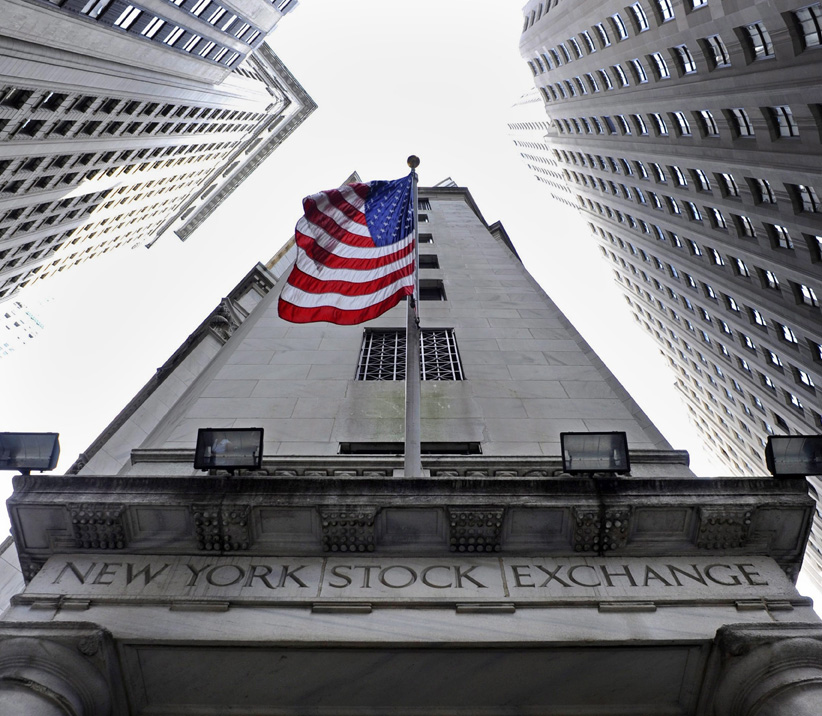
The Dow Jones Industrial Average and S&P 500 have vaulted to new records, after Federal Reserve chairman Ben Bernanke pledged to maintain the Fed’s easy-money policy for the foreseeable future.
The Dow surged 169.26 (1.11 per cent) to 15,460.92, well above the previous high of 15,409.39 on May 28. The S&P 500 gained 22.40 (1.36 per cent) to 1,675.02, up from it prior record of 1,669.16 on May 21.
The Nasdaq Composite meanwhile added 57.55 (1.63 per cent) to 3,578.30, its highest level since September 2000.
Bernanke, speaking in Boston late Wednesday afternoon, promised to keep interest rates low due to the weak economy, suggesting a slower time-frame to tapering the Fed’s aggressive bond-buying program.
The comments surprised markets, which have been bracing for the Fed to scale back the bond-buying program as soon as September.
You might like

“I don’t think there’s any immediate Fed tapering in the future,” said William Lynch, director of investments at Hinsdale Associates.
Lynch said markets are also hopeful that the upcoming earnings season will surprise to the upside, given that expectations are low.
As Wall Street rose, the Australian dollar fell.
Early Friday morning, the local unit was trading at 91.89 US cents, down from 92.71 cents on Thursday.
Stay informed, daily
The currency slipped on Thursday evening, at the start of offshore trade, following a 1.8 US cent surge in the Australian dollar that morning that briefly saw it touch 93 US cents.
Westpac New Zealand senior market strategist Imre Speizer said a re-assessment of Dr Bernanke’s assertion that “highly accommodative monetary policy” would remain for the foreseeable future hit the Australian dollar.
“It’s not obvious but the Bernanke speech yesterday was probably at play here,” he said from Auckland.
“Pretty much after the Sydney close, it reversed the whole reaction.
“This is only conjecture and opinion, but it’s that upon a rethink, the market took the view that: ‘Well no, Bernanke really didn’t say anything new’.”
The US dollar tends to lose value if the market thinks the Fed will continue with its $US85 billion-a-month stimulus measures, known as quantitative easing.
Bond buying increases the supply of US dollars, thereby reducing its value against the Australian dollar, but financial markets accept that tapering of stimulus will start occurring from September.
Traders overlooked data showing US unemployment benefit applications rose by 16,000 last week to 360,000, with weekly job application figures for early July usually coinciding with school holidays and temporary car factory shutdowns.
Speizer said the Australian dollar was likely to trade in a tighter range on Friday.
“There might be, gun to my head, a little bit more upside in the Aussie.”
Want to see more stories from InDaily SA in your Google search results?
- Click here to set InDaily SA as a preferred source.
- Tick the box next to "InDaily SA". That's it.