‘Clean tech’ the key to new industries
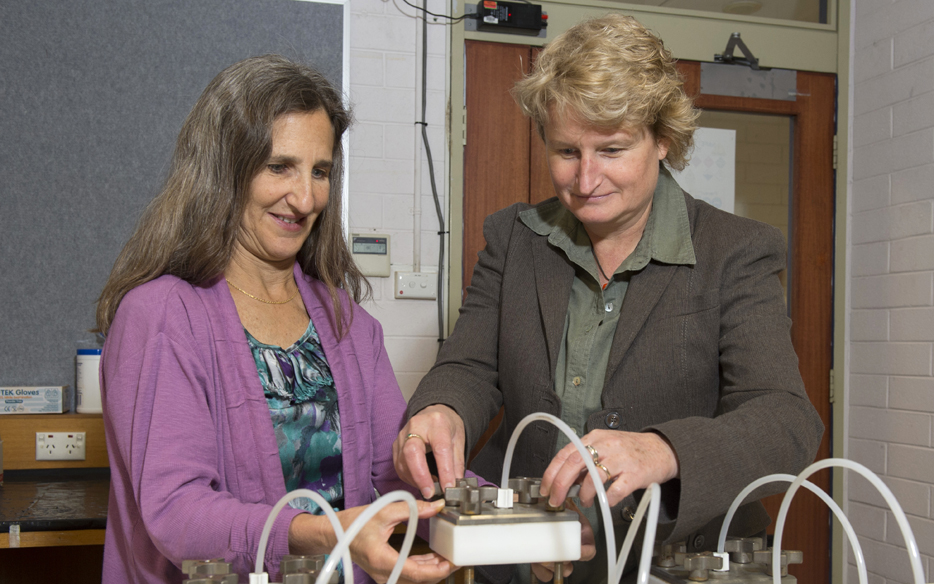
Emerging technologies require graduates – and industry – to acquire problem-solving abilities and the capacity to adapt, according to visiting American researcher Dr Audrey Levine.
Dr Levine, whose visit is supported by an Australian-American Fulbright Senior Specialist grant, is in Australia to contribute to Flinders University’s ground-breaking courses in Clean Technology.
Former national director of the US Environmental Protection Agency’s drinking water research program. Dr Levine joined the Fulbright program from the Battelle Memorial Institute in Washington DC. She said that the University’s Clean Technology program was both innovative and exciting.
“I’m not aware of any program like it in the world,” Dr Levine said.
She said “clean tech” is a way of pulling together different disciplines to develop new approaches in scientific and engineering techniques.
You might like

“We want to create our next generation of problem-solvers; the world has gone as far as it can with the traditional single-discipline approaches used by chemists, biologists and physicists. What we need now is a trans-disciplinary approach that builds on elements from individual disciplines.”
Dr Levine said that very often the design of new technologies focuses on their immediate function.
“In the water world, for example, we tend to teach people to design water and wastewater treatment plants that treat water at the lowest possible cost – we don’t tend to think about what happens downstream.”
She said new technologies to access energy, such as unconventional oil and gas extraction from shale and coal seams, had paid little attention to the risks and the consequences of their activities.
Stay informed, daily
Associate Professor Amanda Ellis, who co-ordinates the course at Flinders, said that as a discipline, clean technology looks to find ways to make new technologies not only sustainable but also more efficient and profitable.
The specialisation is being offered at Flinders as a Bachelor of Science with honours and also as a one-year Graduate Diploma.
“The Diploma is designed specifically for industry,” Associate Professor Ellis said.
“It is designed to leverage existing industry knowledge and go beyond this to understand how to successfully meet the challenges of resource limitations, a changing climate, alternative sources of energy, green infrastructure, and new technologies that we can’t even begin to imagine.
“The course is all about a step change in the way we view the world and current technologies.
“People are not going to be spending their lives designing one thing.
“We’re really teaching students skills so that they can think about how to apply a set of principles so that they can then tailor integrated technical solutions to meet specific applications.”
Want to see more stories from InDaily SA in your Google search results?
- Click here to set InDaily SA as a preferred source.
- Tick the box next to "InDaily SA". That's it.