Worries over China’s economic slowdown and the possible end to the US Federal Reserve’s stimulus have sent global markets into a tailspin.
International investors also deserted the Australian market, adding to yesterday’s two per cent fall on the ASX.
An afternoon rally saw the local market close around the same level as yesterday.
From Tokyo to Turkey and Paris to Wall Street, stocks racked up steep losses across the board, gold and oil prices sank, and the US dollar jumped higher against most other currencies.
A two-percent-plus drop in US stocks completed the dismal day for investors.
The Dow Jones Industrial Average lost 353.387 points, or 2.34 per cent, to 14,758.32. It was the blue chip index’s largest points loss since November 9, 2011.
The broader S&P 500 sank 40.74 points, or 2.50 per cent to 1,588.19, while the tech-rich Nasdaq Composite tumbled 78.56 points, or 2.28 per cent to 3,364.64.
You might like

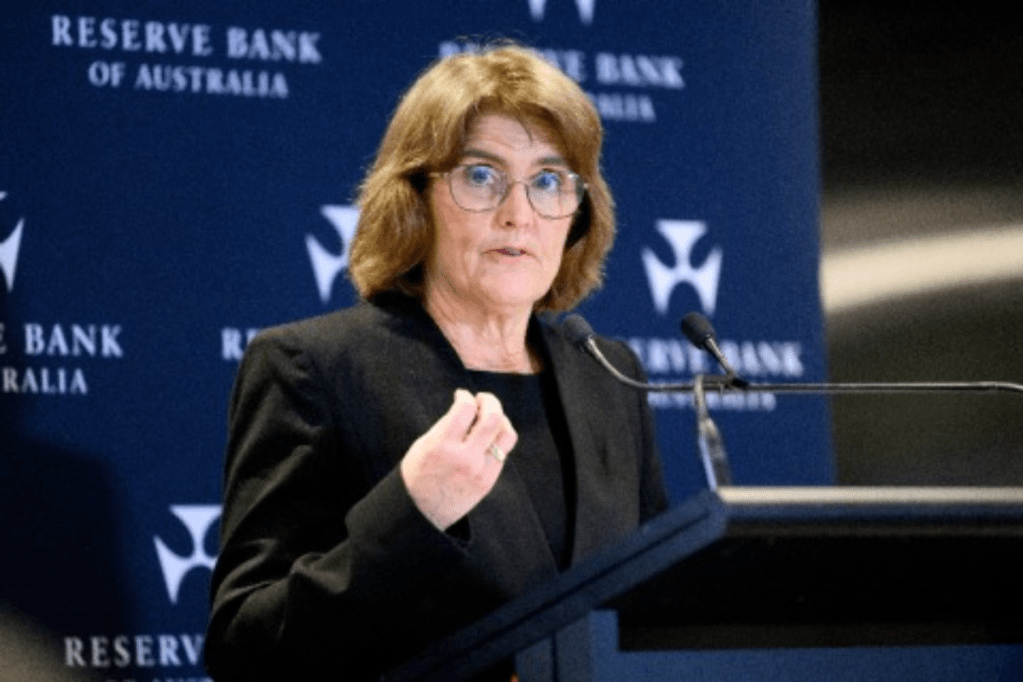
For the US markets, the plunge followed one per cent losses on Wednesday sparked by Chairman Ben Bernanke’s statement that the Fed could begin pulling back its $US85 billion-a-month stimulus program late this year and wind it up by mid-2014.
US bond prices jumped to their highest levels in more than one year and, despite the Fed’s reasoning that the US economy is strengthening, investors took it as bad news for the easy money that has helped power US markets to record highs this year.
Michael Hewson, Senior Market Analyst at CMC Markets UK, called the reaction “a classic case of perverse logic,” given that Bernanke was clearly signaling stronger US growth.
“The sell-off was given added momentum by rising concerns of a credit crunch in China as well as a simply horrible manufacturing PMI print, as concerns about the trajectory of Chinese growth continued to build up,” he said.
China’s troubles appeared to mount, with Interbank interest rates surging after the People’s Bank of China tightened the spigot on funds for overextended lenders and HSBC said its manufacturing purchasing managers index indicated the sector was in contraction for the second straight month.
The US dollar bounced 1.0 per cent against the yen, to 97.36 yen, while the euro gave up 0.6 per cent on the dollar, to $US1.3220.
The combination of worries over China and the foreshadowing of possible real monetary tightening in the United States – still only expected in 2015 – was a potent blow to investor expectations.
Despite Bernanke’s repeated exhortation that Fed moves will depend entirely on economic indicators, the market focused on the possible end of quantitative easing, which has kept interest rates low and powered the market.
Stay informed, daily
“Market participants concluded that the Fed sounds as if it is leaning more in favour of tapering its asset purchases sooner rather than later,” said Patrick O’Hare of Briefing.com.
“There was a demonstrative judgment in the market that the Fed chairman didn’t give the market what it wanted.”
“It does feel as if the Fed chairman has pulled the rug from underneath the stock market rally, and he certainly seems to have dealt a killer blow to gold,” said analyst Yusuf Heusen at trading firm IG.
For the US markets, the falls did not erase the strong gains from the beginning of the year. The S&P 500 remains up 11.4 per cent for the year, and the Dow remains up 12.6 per cent.
Australian shares are weaker as an Australian dollar trading below 92.50 US cents encourages overseas investors to sell banking and resource stocks.
Local shares are subdued today, following a two per cent-plus plunge on Thursday, following the US Federal Reserve’s plan to end by mid-2014 its $US85 billion-a-month quantitative easing measures.
The Australian market has recovered from steeper opening dips but RBS Morgans Ipswich manager Tony Russell said a fall in the Australian dollar to below 92 US cents, earlier on Friday morning, had given global investors another reason to sell.
“Our Australian dollar is weakening which is causing the international players in our market to probably exit in anticipation of further weakness in our dollar,” he said.
“They’re mainly in the top 100 stocks. The banking sector, the resource sector: they’re the main two sectors that they focus on and we’ve seen that weakness across the board there.”
The big four banks have fallen, with Commonwealth Bank losing three cents to $66.23, Westpac shedding 27 cents to $27.89, ANZ losing four cents to $27.61 and National Australia Bank giving up seven cents to $29.15.
On the resources front, BHP Billiton shed six cents to $32.09 while Rio Tinto lost 15 cents to $52.45.
BHP told the market it is selling a 15 per cent stake in its West Australian iron ore Jimblebar mine to the Japanese conglomerates ITOCHU Corporation and Mitsui for $US1.5 billion ($A1.64 billion).
The Australian market appears to be minimising its losses, despite the US Dow Jones Industrial Average losing 2.34 per cent and the broad-based S&P 500 dropping 2.50 per cent.
“We’re holding up not too badly,” Mr Russell said.
Want to see more stories from InDaily SA in your Google search results?
- Click here to set InDaily SA as a preferred source.
- Tick the box next to "InDaily SA". That's it.