Inner city high rise unlikely for 5-10 years
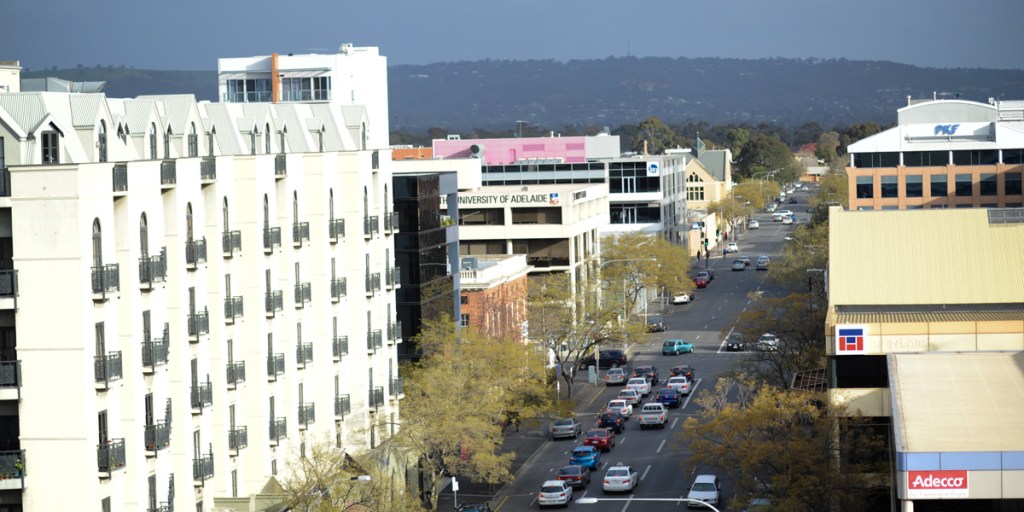
Apartment blocks are unlikely to go up in the inner suburbs within the next 10 years despite the State Government’s rezoning plans, Property Council Executive Director Nathan Paine says.
“In terms of the development industry’s view on what the potential is within the inner-metro area, certainly speaking to my members they think it is a great thing that the government is rezoning these corridors, but it’s not something they’re necessarily looking at for the next five or 10 years,” Paine told InDaily this morning.
“It is a longer term proposition.”
In December the State Government announced a development plan amendment to increase building height and density limits along major roads on the city’s fringe.
The Government hopes the development industry will use the new rules to create a range of higher-density housing in the zoned areas, including multi-storey apartments.
The DPA has attracted fierce opposition from several residents’ groups who are worried increased density will damage the character of their suburbs.
You might like

However, Paine said that before any high rises were put up in the inner suburbs, developers would look to exhaust the CBD market.
“It really is about the demand, and the economics. and it’s also about if you can deliver a successful apartment project, you can pretty much deliver that at a similar price point in the CBD, where people are far closer to the amenities.
“[Developers] see the opportunity once the CBD market starts taking off, to then start to replicate some of those sorts of projects within the inner metro area.”
The other major barrier to new developments is South Australia’s flat housing market.
The number of new housing projects fell by 13.4 per cent last year, after a 19.3 per cent fall the year before, according to Housing Industry Association figures.
This year new dwelling starts are projected to increase by 6.9 per cent and then follow a steady path of growth.
Stay informed, daily
“Across the board we’re seeing historically low levels of demand in South Australia,” Paine said.
“Denser product, or apartments and townhouses, are a smaller subset of the overall demand – they’re also struggling quite significantly, because the financial model for delivering apartments is harder in terms of being able to access development finance.
“We know that those projects are increasingly harder to actually deliver.”
Paine said opposition from residents groups was very unlikely to have an impact on development decisions.
A housing forum at the University of Adelaide last night drew many of those dissenters.
Despite that, the university’s urban sociologist professor Susan Oakley, who moderated the session, was keen to emphasise her belief in the importance of increasing density in the inner city.
Oakley told InDaily she was concerned the Government’s outer northern suburbs DPA, released in May, would hinder development in the inner city.
By increasing housing affordability – the Government’s stated goal with the outer northern DPA – the market demand for inner suburbs housing was reduced, Oakley said.
“As the government releases more land to the south and to the north, it’s really taking the pressure off us actually doing something in the (inner) metropolitan (area),” Oakley said.
The DPA zones new land in the outer suburbs for homes and industry. The State Government expects an extra 100,000 residents to live in the area by 2040.
Paine told InDaily he believed it was unlikely greenfields development in the north would reduce demand for high density housing because the two products had entirely different markets.
Want to see more stories from InDaily SA in your Google search results?
- Click here to set InDaily SA as a preferred source.
- Tick the box next to "InDaily SA". That's it.