Hybrid spaces offering alternative arts model
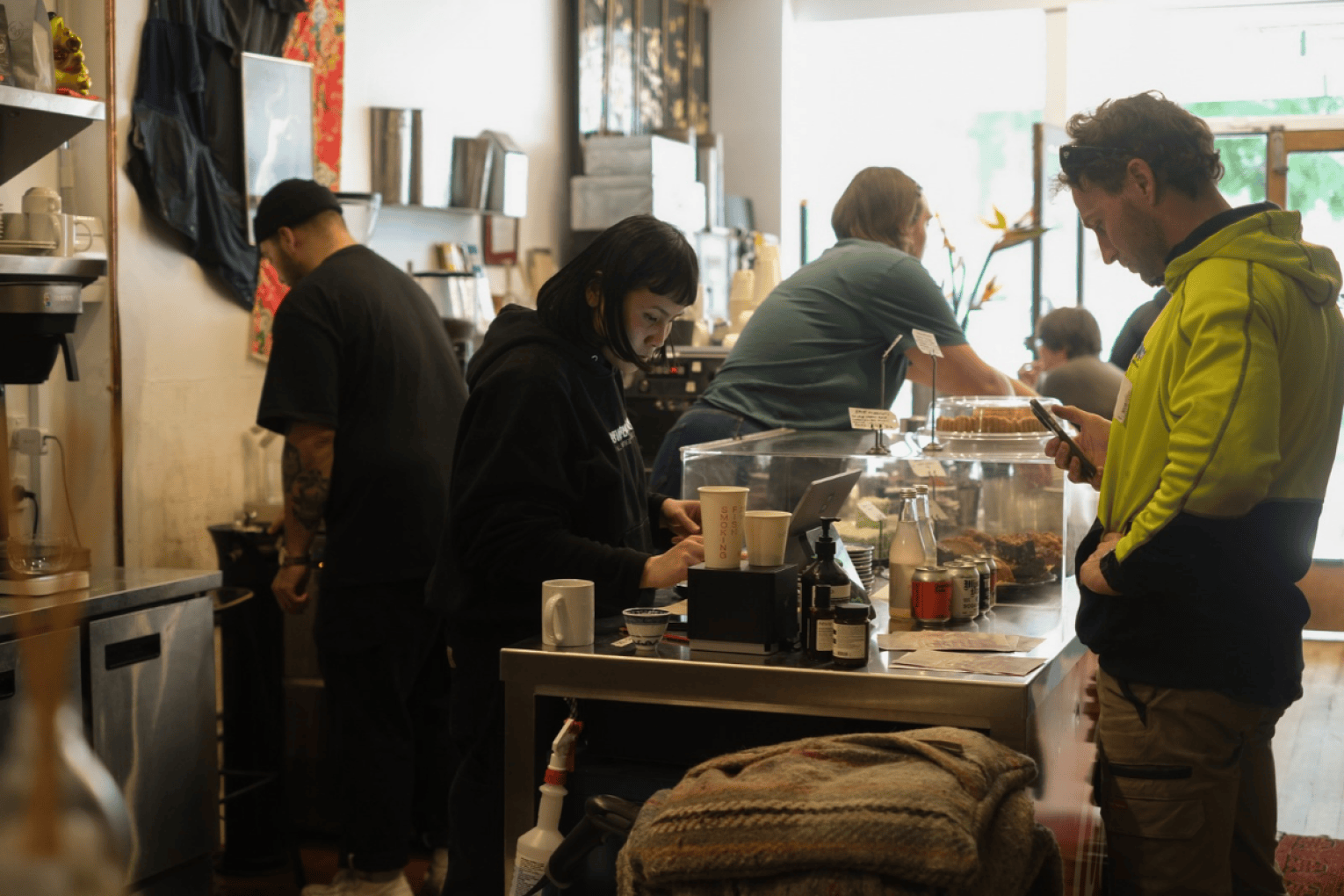
With traditional arts venues under pressure, two Adelaide ventures are creating alternative spaces where art, commerce and community can coexist.
During the past five years, a dizzying list of arts and creative spaces have shut their doors across Adelaide, crippled by rising rents and insecure leases. In their wake, artists are trialling new ways to offer physical spaces for community building alongside their arts practices.
CityMag catches up with Sharehouse Syndicate and Smoking Fish – two projects that launched in the last 12 months that are coming at the arts with alternative models for working artists and with community-building at their core.
Smoking Fish
Truc Truong is often surprised by the conversations that unfold at Smoking Fish, a deliberately uncategorisable cafe-studio-retail-community space where you can pick up your morning coffee and a pandan lamington and contemplate the window art (today it’s an Elmo plushie with his head in a knock-off Louis Vuitton bag and his feet in a pair of boots).
Truc initially pitched the idea of the space as a way to store her installation and sculptural works, picturing it as an extension of her studio.
“Here the art is around you – and that’s just real life,” she says, in true form, as an artist.
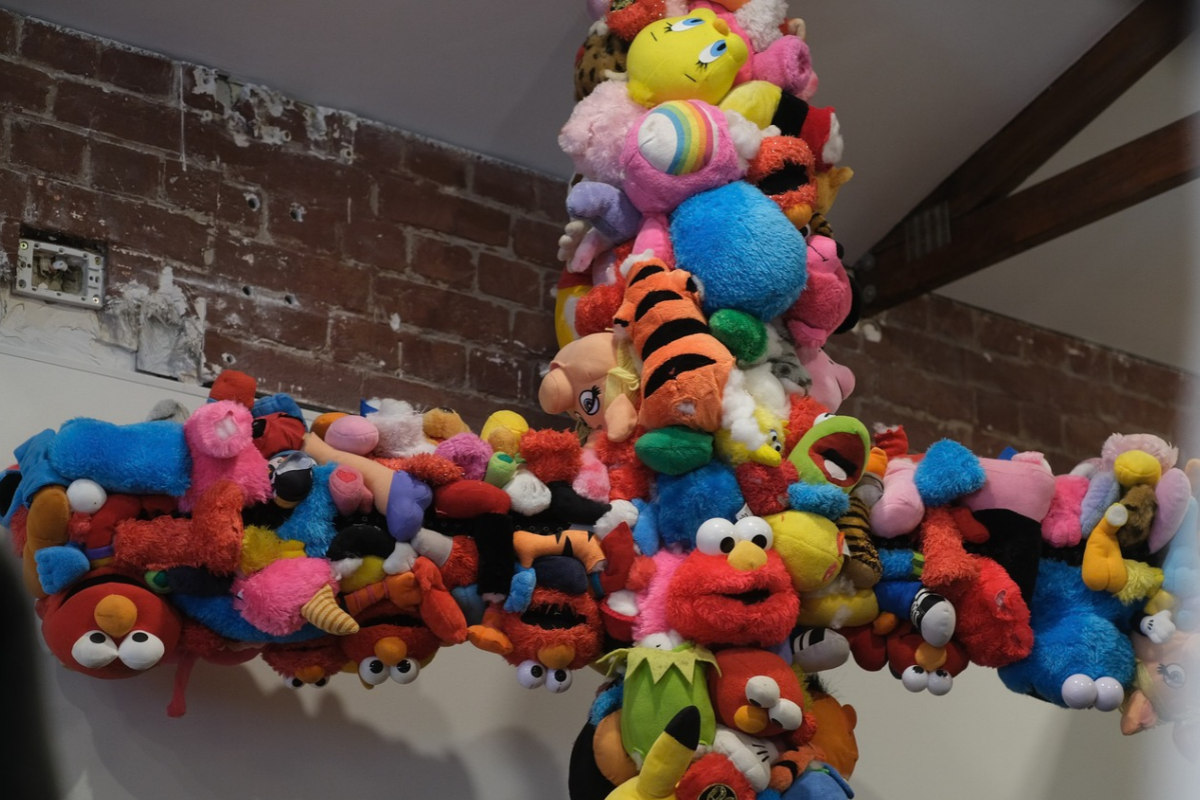
Throughout the shop front are Truc’s installations and sculptures in various states of play – today there’s a crucifix of plush toys, racks of clothes for sale in an adjoining room, fancy soaps, industrial lockers, birds of paradise, mandarins perched intentionally on a stack of heavy art books.
You might like
Truc can muse on her practice, peering over the coffee machine, but at the same time fosters a space for community dialogue and interaction with the ideas that sit behind the art, which reference decolonisation and globalisation, memory, migration and childhood.
On any given day, Truc’s clientele might range from creatives and young professionals, to lawyers and office workers.
“There’s people where the moment you mention art, they’re like, ‘Nah, not for me’,” she says.
“But here, it’s like everyone’s got their space and their coffee and they’ll chime in and out of the conversation when they want to. They don’t have to be convinced that this is art or that my political stances are theirs. But they get to be in the space and think for themselves. I wanted that, and I wanted that for my friends and family who feel very disconnected from arts institutions.”
The space has also hosted pop-up experiments for community events and activations, from market days and weekly mahjong sessions to sound performances.
Trying to sustain her arts practice, while community building and supporting other artists with employment is no mean feat. Truc says running a small business has been “crazy hard”.
“But at the end of the day the core is understanding how art naturally sits in our lives,” she says. “So, even when I’m making a batch of cookies, I’m thinking about what the value of this is.”
Sharehouse Syndicate
In Adelaide, there’s a hunger for creative physical spaces, and a lot of vacant buildings. A few months ago Nicholas Begakis, director of Renew Adelaide, posted on LinkedIn that Renew received more than 1600 Expressions of Interest from people with bright ideas to activate empty sites across the city, rent-free.
Subscribe for updates
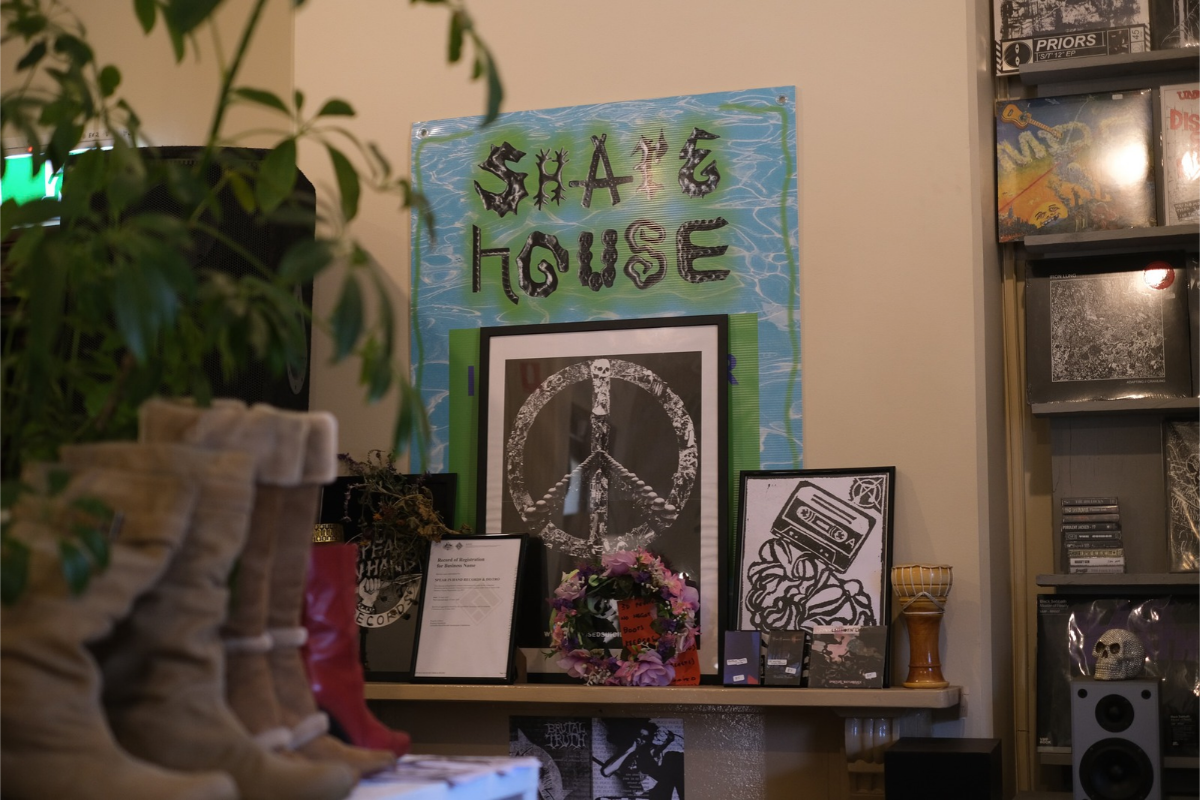
One of those sites was the old North Adelaide Railway Station, now home to concept store and artist collective Sharehouse Syndicate. Over the past eight months, Sharehouse has supported exhibitions, arts residencies, cultural exchanges, sound workshops, mutual aid markets and live music on site.
Artists and their expanded practices co-habit the old station, which includes nail art, tooth gems, haircuts and black coffee – creative ventures which Alycia Bennett, one of the seven co-directors of Sharehouse, says are crucial for artists trying to sustain a living and diversify their practices and income.
Alycia also emphasises the rarity for practising artists to have a rent-free space to build their independent businesses, particularly as working-artist parents.
“We can’t be in the studio every day but it gives us a chance to work towards retraining as new parents,” she says. “I don’t think we would have that opportunity otherwise.”
While the space is rent-free, the gigs Sharehouse runs help to fund the arts exhibitions and contribute to extra costs connected to running the space.
“The music supports the arts because the arts don’t really make money,” Alycia says. “I feel like this is why galleries find it hard to survive, because they don’t have something extra to keep them afloat.”
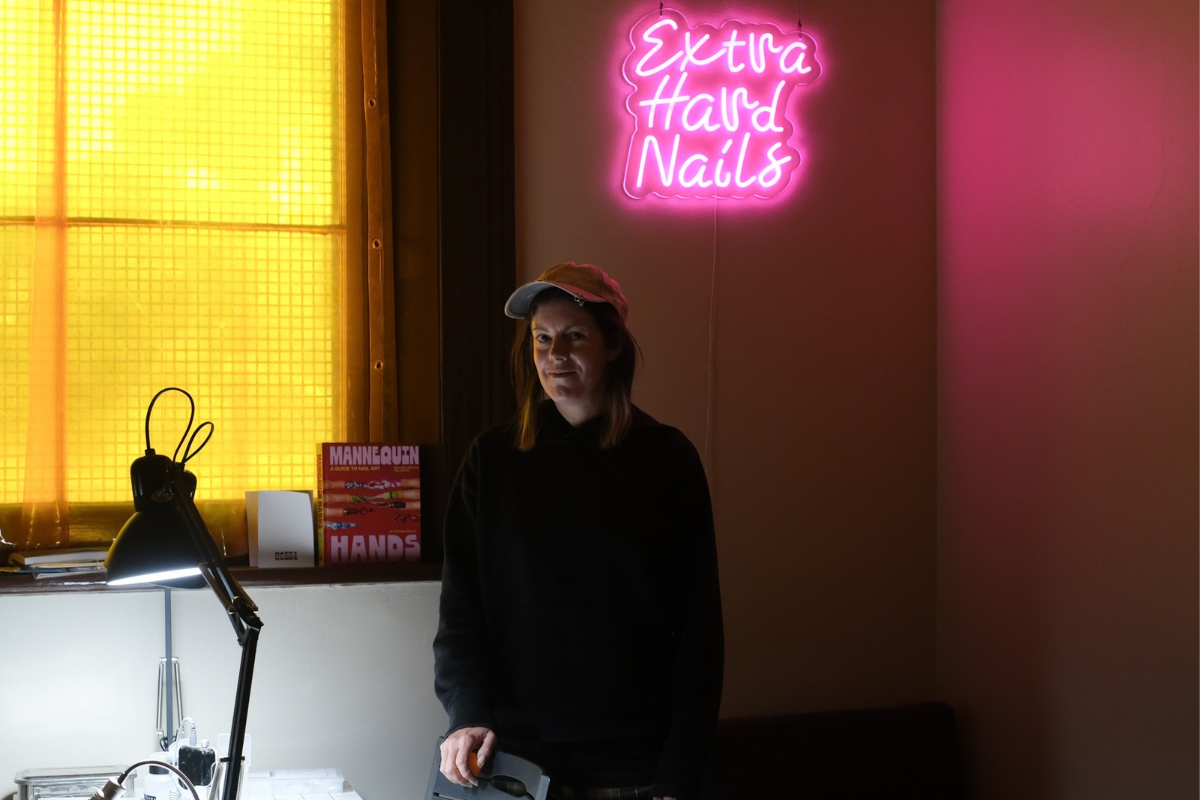
The concept for Sharehouse came about after Alycia, a textile, performance and sound artist, encountered nail concept stores and other DIY spaces overseas.
“There’d be an art exhibition or a punk gig on and at the same time there’d be people gathering watching nails getting done, or people getting haircuts and having drinks combined with these amazing artist markets,” she says.
“We’re just trying to do something a little bit different. There’s so many disused spaces around, and it creates value to activate them.”
Sharehouse also has an exhibition space, community printmaking facilities and an infoshop for zines and local wares. It’s designed to be accessible, responsive and foster alternative community models for artistic support.
“We have a thriving arts scene in Adelaide, but limited arts spaces to experiment,” Alycia says. “That’s what we’re excited to do with Sharehouse. These types of third spaces really give opportunities to young people in particular. If someone approaches us to have a show, the answer is probably gonna be yes.”
Sharehouse is waiting to see if the lease will be renewed. And if not, there’s talks of cohabiting with Adelaide Bike Kitchen, another community hub displaced from their original Brompton site earlier this year.
“I hope there can be acceptance about how important these community spaces are from the people making decisions, who own the land,” Alycia says. “You’ve just got to get on the front foot because it’s always shifting.”
Want to see more stories from InDaily SA in your Google search results?
- Click here to set InDaily SA as a preferred source.
- Tick the box next to "InDaily SA". That's it.