‘The Ugly Boy’ helping creatives tinkering with obsolete tech
As automated technologies become more integrated into our lives and creative industries reckon with the impact of AI, CityMag steps into the studio of three Adelaide creatives working at the coalface.
The Ugly Boy
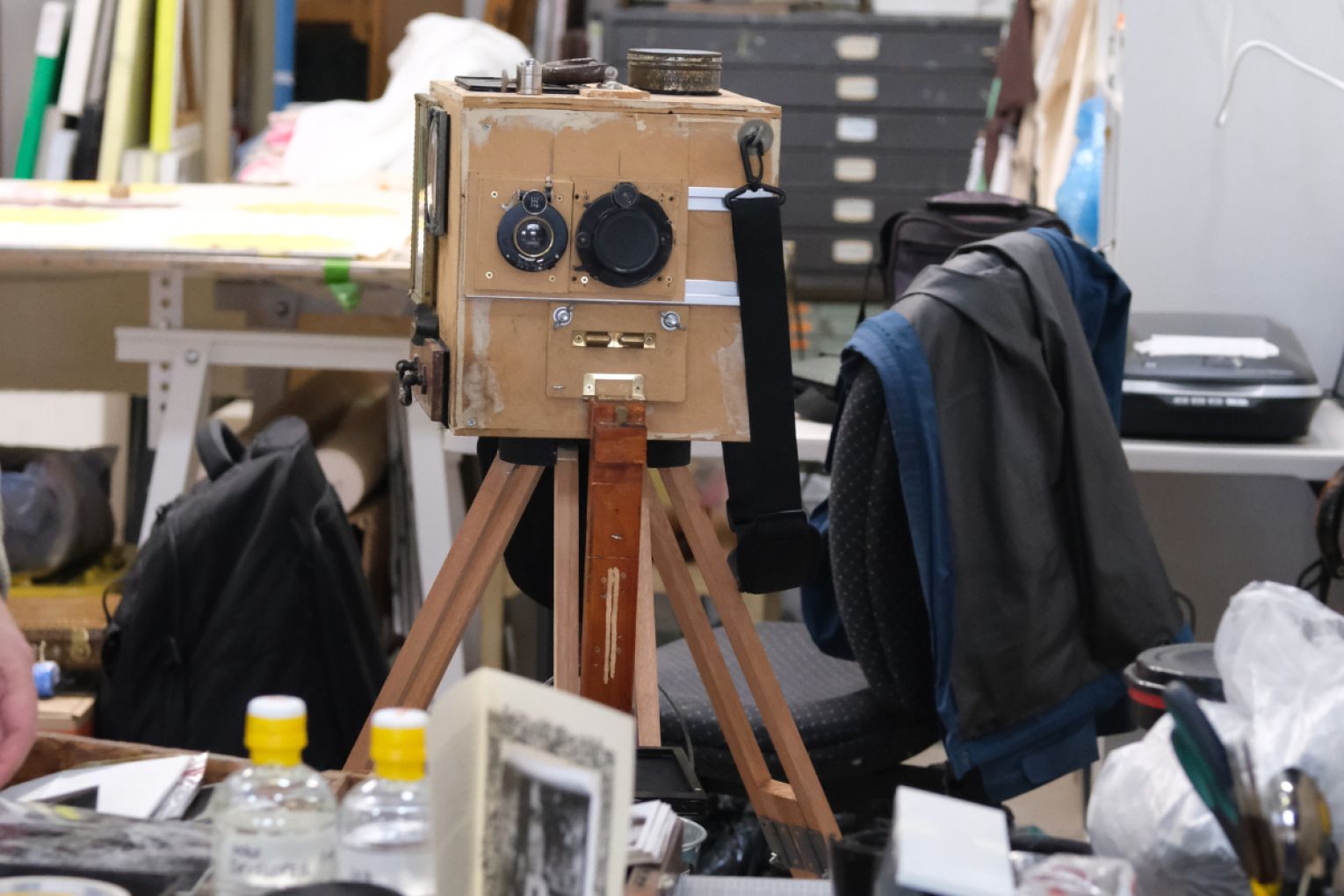
Based at The Mill, artist and art historian Andrew Dearman has set up a strange contraption in his studio – a wooden box with a lens on the front and a black sleeve draping from the back, propped up on a tripod. It’s known as a camara minutera – an early portable camera and darkroom for street photography. Andrew calls this “The Ugly Boy”.
“You take the photo and then you process the negative in trays in the dark with your hand through the sleeve,” Dearman says, demonstrating.
“You can’t see what you’re doing – it’s like embodied memory.”
Dearman started making cameras in 2014, drawn to the relationship between “chemistry and the body” in the making.
“There’s some kind of mark left in translation,” he explains.
Pinned to the side of the camera are two small monotone photographs. They have a haunting quality to them. Dearman explains that the materiality of the photographic process – the stuff that happens on “the other side of the screen” – influences how the images are interpreted.
You might like
“The process has lots of flaws. The inside of these boxes can get dirty. There’ll be spots all over the place from dust. For me it’s about the process of making, it’s not necessarily the end result.”
Dearman finds modern digital photography offers something else in the making process, different to the chemical and mechanical aspects of analogue image making.
“It’s an exchange that we haven’t quite figured out yet. But I think it comes back to the relationship of the body to place, and the idea of the moment.”
The New New Wave
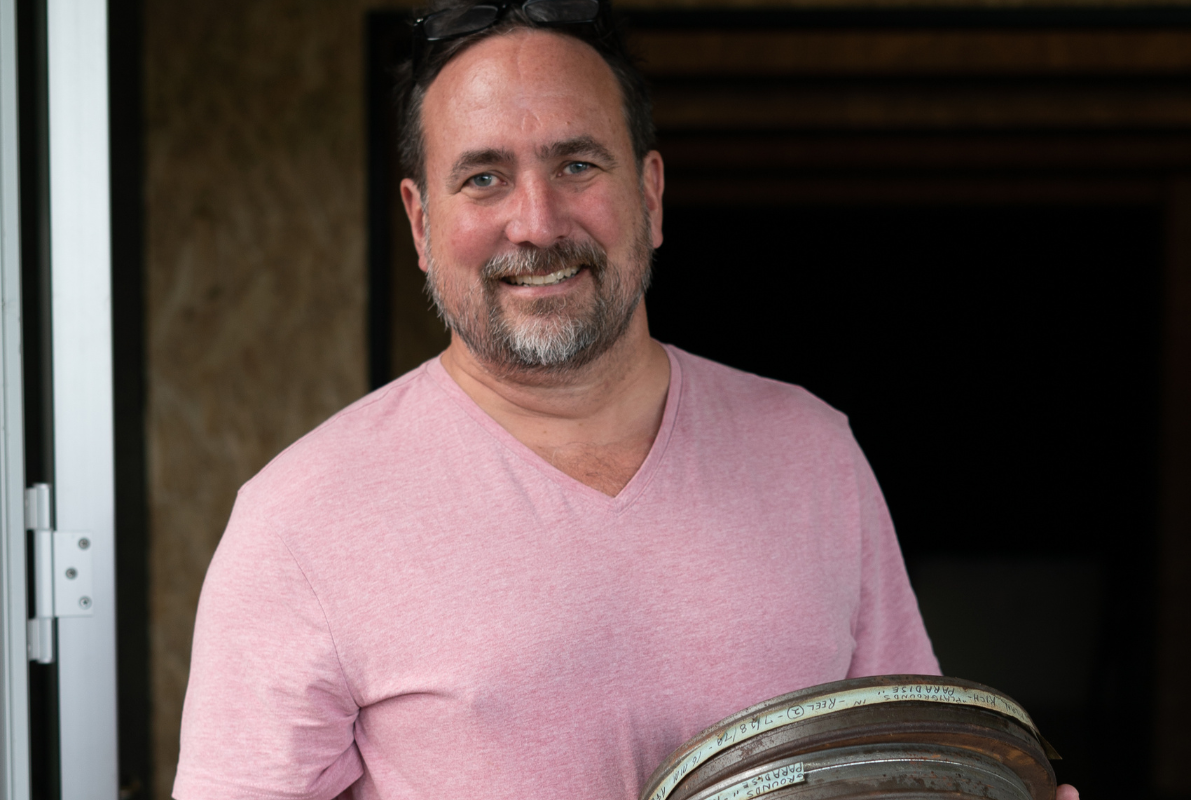
Film-maker Jolyon Hoff, of Light Sound Art Film, saw the transition from analogue film to digital during the late ’90s, shooting short films and music videos.
“We’d shoot on film, transfer to digital, then finish the films in digital,” he says.
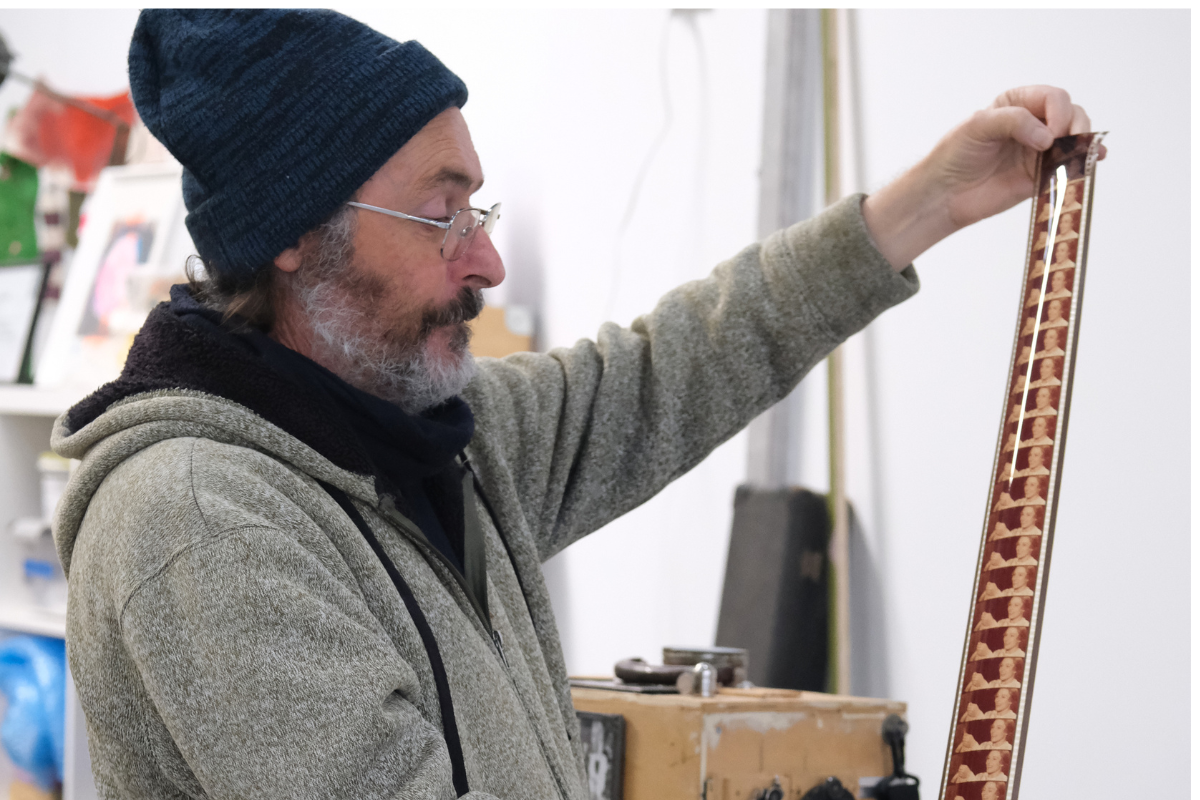
Film processing in Australia was expensive, and the process laborious and slow. “It was maybe $400 for 400 feet of film. It’s very delicate. It’s slow, needs a lot of light. The cameras are mechanical and heavy to use. You need to do very short takes and be intentional. Once you’ve shot it, you need to get it processed.”
That meant shipping film overseas, waiting for it to be processed, sent back, then transferred to digital or viewed on a lightbox.
“Working this way changes the whole process,” Hoff says. “There’s an incredible kind of friction, and out of that friction comes value. At every level you have to be thinking: ‘Why am I doing this?’
Subscribe for updates
“The question I have as a 50-year-old filmmaker, living through the end of film and the move towards digital filmmaking, is: why are young people going back to shoot on film?”
Hoff’s latest documentary in production, The New New Wave, follows young Australian filmmakers as they source and set up film processing labs and reclaim lost knowledge.
It’s a global trend – at the 2026 Oscars, six of the 10 films nominated for Best Picture were shot on an analogue format. Jolyon sees analogue as a form of resistance to an industry about to be disrupted by AI.
“There’s a huge amount of anxiety – it’s going to completely change the model for filmmaking across the world,” he says. “Young filmmakers aren’t necessarily anti-AI – they’re just looking for humanity.”
A spaghetti nightmare of cables
For Liam Somerville, video artist and cinematographer behind Capital Waste, distorting reality by misusing tech is what initially got him hooked on hoarding analogue video gear.
His studio is full of old analogue video effect consoles – teleprompters, VCRs, vision-mixers, surrounded by loops of leads and cables.
“I got started taking heaps of analog photos with shitty plastic cameras,” he says. “I was cross-processing, drawing on negatives. To capture, modify and reimagine reality was something I was interested in.”
The first time he started messing with videotapes, he dug out a Cheez TV tape recording from his childhood to add some VHS flavour to a music video for local band Hydromedusa.
“The first half an hour had been recorded over so many times that the quality of the tape had degraded to give lots of those chunky static lines. I edited a clip digitally and then bounced it to tape, then recorded from tape to tape until I got the right level of fuzz.”
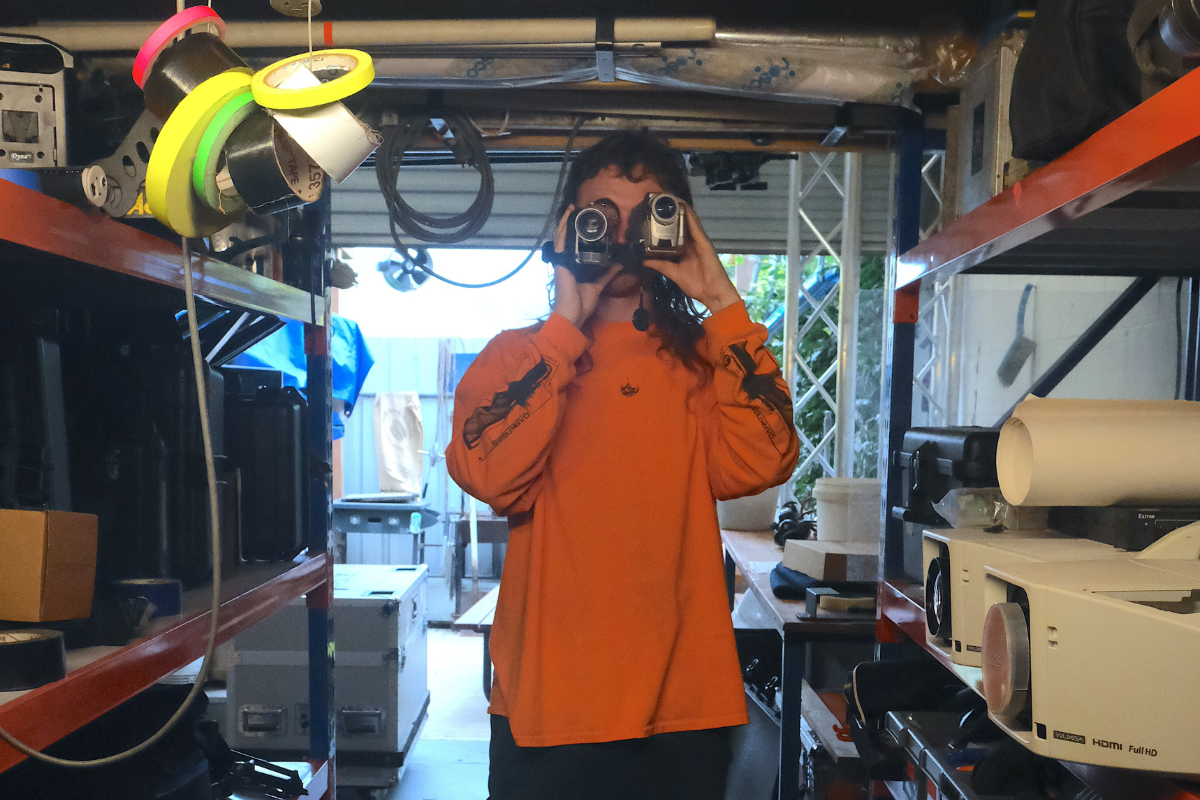
Every time Somerville hit record, he also hit the VCR player or poked the tape while it was playing to create glitches. He started collecting more “broken and busted tech”, experimenting, learning from Tumblr how to circuit bend.
“It takes heaps of time plugging stuff in,” he says. “Maybe it doesn’t work or looks like trash. It’s also old tech – things just slowly break and die or are a fortune to fix.
“I got a vision mixer, started doing feedback loops with this spaghetti nightmare of cables to create a low-quality image. That’s been everything ever since.”
More recently, Somerville’s been using game-rendering technologies, working across installation and projection beyond the screen.
“I’m always mixing in new technology. This is the only time you can mix VHS with real-time rendering. It’s a tactile, fun, hands-on way that I can continually collaborate with technology.”
Want to see more stories from InDaily SA in your Google search results?
- Click here to set InDaily SA as a preferred source.
- Tick the box next to "InDaily SA". That's it.