‘From darling to enfant terrible’: Driller’s decades of controversy in one SA exhibition

An artist and former nightclub owner – known for an iconic Frome Street mural – is drawing together 40 years of controversial artwork in Adelaide.
Driller Jet Armstrong is happy to take on the moniker of one of South Australia’s most controversial artists.
The well-known DJ, nightclub owner and artist’s latest exhibition, starting May 5, embraces his reputation, which he says “went from the current darling of the Adelaide Arts Centre [in the 80s] to the enfant terrible.”
Founder of the divisive art movement Daubism, Driller takes existing Australian landscape artworks and ‘daubs’ additional images or mediums upon them, making something radical, mischievous, and inherently political.
His works are provocative, asking about colonialism, appropriation, and artistic freedom. He is particularly fascinated by the idea of a stable image and if it’s possible to own something that he believes is inherently changeable.

You might like
Onto colonial landscapes, he layers First Nations-inspired motifs and forms, western pop art, and contemporary iconography. His focus is on intervention and change, his process about breaking down, destroying, and rebuilding into a new message.
In 1991, he exhibited a painting titled Crop Circle of Bannon Landscape. Believing the original artist to be deceased, he treated it as a found object, a practice followed by artists like Marcel Duchamp and Sherrie Levine. However, the artist was Charles Bannon, father of then SA Premier John Bannon, and still alive.
The Bannon family took Driller to court over it, ending in the forced purchase of the artwork and its return to Charles Bannon.
The story began national discussions around the moral rights of artists regarding copyright. As a result, the Copyright Amendment (Moral Rights) Act was passed in 2000, protecting an author’s moral right to a personal relationship with their work.
Subscribe for updates
“I dared to paint on someone else’s painting, and it caused a national outcry. I had fellow artists slagging me off completely about that, this is vandalism.”
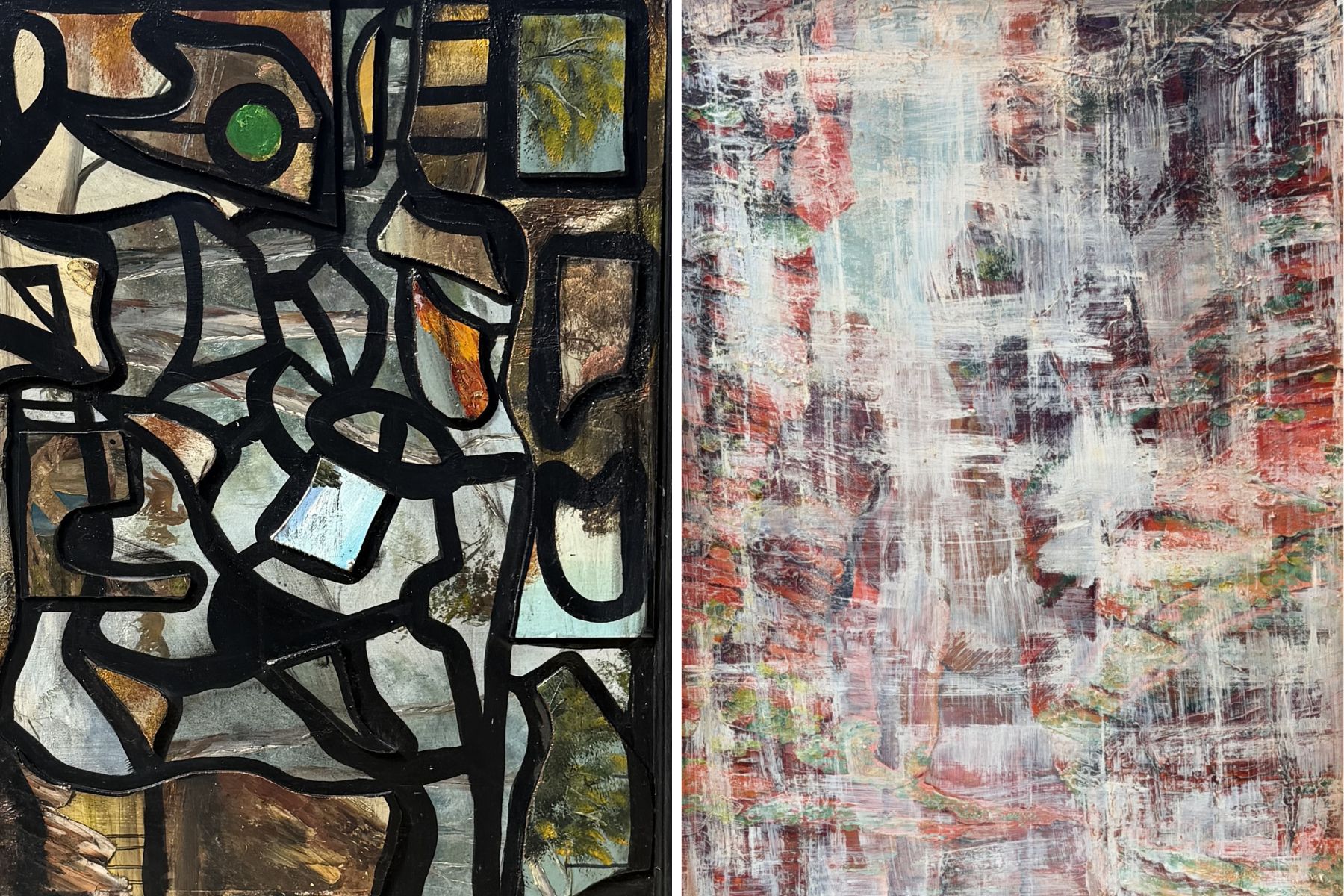
He is gleeful that Daubist works are also protected under the act. Visitors to the new exhibition will be able to view art including a 1992 artwork cited in a Federal Government discussion paper where his approach was criticised. The Federal Government later issued a formal apology to Driller for comments made about him.
Though born in the UK, much of his work is focused on Indigenous rights saying: “Every time I see an Australian landscape painting… what I’ve actually been presented with here is the notion that Australia was stolen on, which is terra nullius. If you look at these landscapes, there’s no signs of Indigenous culture anywhere.”
Using First Nations motifs has had both negative and positive reactions. A 2017 exhibition at the Hanhndorf Academy gallery closed after complaints about using Western Australian Wandjina spirit figures. Driller was frustrated as the exhibition had been opened by Ngarrrindjeri elder Carroll Karpany and was about Indigenous rights and white appropriation of land.
He later corresponded with Nyikina Warrwa (WA) woman Professor Anne Poelina about using Indigenous motifs. She is positive about his work, feeling it gives “meaning toward the need for decolonising our minds towards justice and freedom.”
Driller says he is indebted and thankful to Segwood Gallery for their support, and it has been an emotional time going through his forty-odd years of work in preparation.
“It’s been nice pulling out some favourite paintings that I actually found in storage that I forgot I had…I pulled out a work called The Bottle from 1995 and I thought, man that still stands up.”
The exhibition starts on May 5 and continues for 6 weeks.
Update: The exhibition has been postponed to begin on May 5, rather than the previously published April 5.
Want to see more stories from InDaily SA in your Google search results?
- Click here to set InDaily SA as a preferred source.
- Tick the box next to "InDaily SA". That's it.