‘Show up as you are’: The collective powering First Nations dance in SA
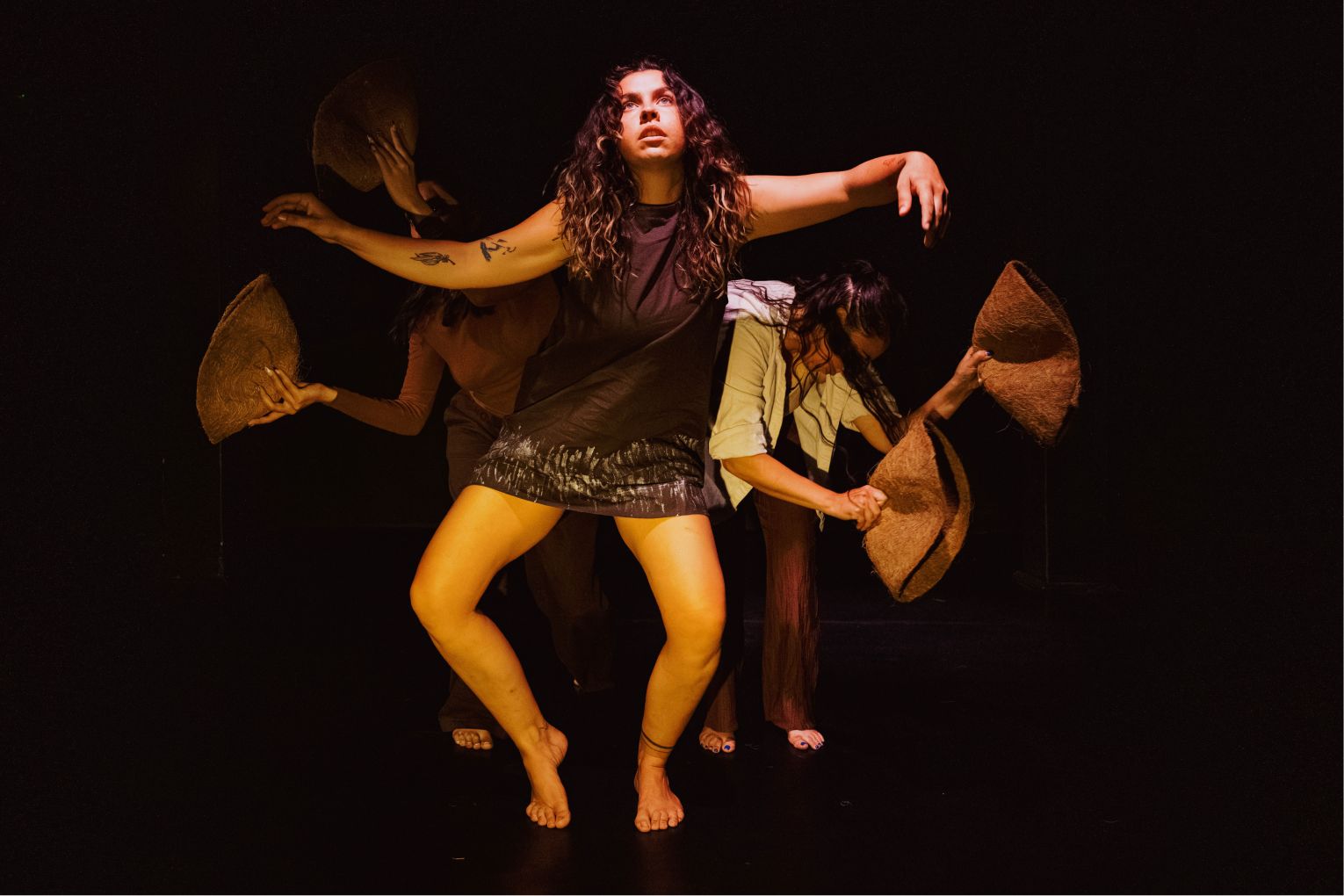
Founded by Caleena Sansbury and Kaine Sultan-Babij, WAYIN:THI is creating paid pathways, cultural connection and a new 50-minute work, Fibres, for Adelaide Fringe audiences.
For First Nations dancers Caleena Sansbury and Kaine Sultan-Babij, their shared dedication to artistic practice runs deep.
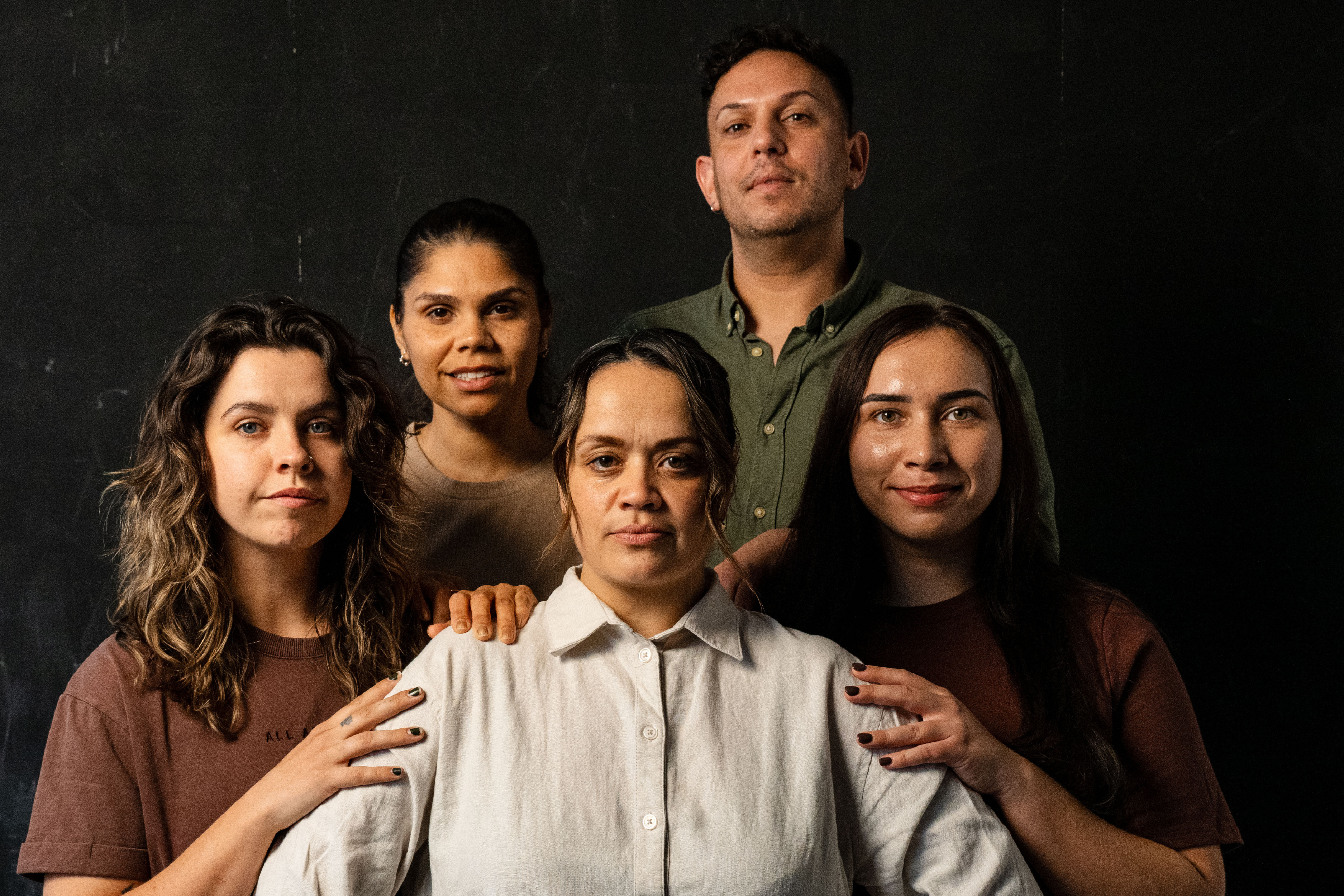
The duo are the creative leads behind WAYIN:THI – meaning “move and flow’ in Kaurna language – a bold new First Nations dance collective flourishing on Kaurna Country.
With support from The Mill, where the pair are both employed part-time to run the First Nations dance programming, they have fostered a diverse community of Aboriginal performance artists from many walks of life.
WAYIN:THI, explains Caleena, a Narrandjeri, Narungga, Kaurna woman, works as an “open invitation for First Nations artists in South Australia who are interested in dance to meet up and create stuff together”.
The collective was originally structured as a professional development space offering regular dance classes. However, Caleena explains,“it’s hard for everyone to commit because the artists all come from different places, with some having to work full-time jobs”.
After community consultation and chats with The Mill’s artistic director Katrina Lazaroff, the collective re-focused towards a performance outcome program. After a successful showing as part of NAIDOC week last year, offering paid performance work at local events became a no-brainer response to the reality of artists’ everyday lives.
You might like
“It was like, ‘OK, why was this not obvious in the first place? We need to give artists an opportunity to have income’,” Caleena recalls.
While finding events willing to budget for the true costs of putting on work is an ongoing challenge, Caleena is “glad to be a part of putting out the industry standard in that regard, for dancers in particular”.
Performance outcomes may be part of the practical viability of the collective, however the pair is dedicated to ensuring this never overshadows the importance of process in the rehearsal room.
Kaine, an Arrente man, describes the way the collective allows performers to “show up as you are”, in a “grounded” and “generous” space with a “strong sense of trust in the room”.
Furthermore, he relishes the collaborative shape of collective working environments, where he is reminded that “making art can be a shared and supported experience, not a solitary one”.
Kaine remarks that, within his experience working in First Nations artistic spaces, which includes dancing with Bangarra Dance Theatre, there has always been a sense of “really paying attention”.
Subscribe for updates
“First Nations-led spaces hold a lot of respect for process, for story and for people,” he says. “There’s a sense of care and responsibility that sits underneath everything, and that really shapes how the work comes together.”
For Caleena, who grew up learning cultural dance from a very young age, the “practice” of artistic practice is a form of cultural repetition, so that no one forgets the stories of the Country they belong to.
“It’s about keeping the Lore, the kinships, the stories and the reasons why,” she says.
She describes WAYIN:THI as a collective that creates cultural spaces similar to the ones she grew up in, where cultural legacy and connection to Country were embedded.
“When you go up to Community and you learn cultural dances, you see those little kids in nappies dancing. So I really want to create a space where the kids feel welcome and they’re just surrounded by the arts because that’s what I had.”
The concept of deep connection to self, story and Country has inspired WAYIN:THI’s brand new work, Fibres. This 50-minute dance piece opens at the Adelaide Fringe this weekend as part of the Gluttony program, and is produced by The Mill.
Caleena describes Fibres as a work that emerged organically through her and Kaine’s mutual interest in native plants and their uses, with Kaine taking the reins as lead choreographer.
“Fibres has come together slowly and quite naturally,” Kaine says. “It’s about connection – the things that hold us together, stretch us and sometimes fray.”
In an era of division, Fibres focuses on interconnectedness, and is a celebration of a “universal language” shared by indigenous cultures and histories across Australia.
“Every project I’ve ever done, you always find those connections with each other, similarities about what our ancestry did and still do,” Caleena says. “We obviously had this universal language where we all know something from each other … and that has been happening for thousands of years.”
Weaving cultural and contemporary dance, Fibres carries on the legacy of First Nations storytelling, which, Kaine says, “gives it a depth that you can feel”.
Fibres run until Sunday, February 22, at Tandanya Theatre. Tickets available through FringeTIX.
Want to see more stories from InDaily SA in your Google search results?
- Click here to set InDaily SA as a preferred source.
- Tick the box next to "InDaily SA". That's it.